










All Technical articles – Page 9
-
 Premium ❘ Feature
Trade Secrets: Making a Baroque cello bridge
A method that allows the luthier to create their own design rather than rely on a pre-cut template
-
 Premium ❘ Feature
Making Matters: How six bow makers crafted a bow in three days
Making a bow in three days is a tall order for anyone – but for six bow makers together? Pierre Nehr explains how April’s ‘Bow Rush’ event in Paris became an educational experience for all concerned
-
 Premium ❘ Feature
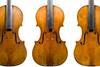
‘Interventions led to an almost total removal or retouching of the original materials’ - Comparing three 1734 Guarneris
Giacomo Fiocco explains the technical methods used to analyse a trio of 1734 Guarneris
-
 Premium ❘ Feature
Revealing Sartory's secrets: A look at one of the 20th century's finest bow makers
Often called the finest bow maker of the 20th century, Eugène Sartory was a fastidious artisan whose work shows efficiency and reliability. Richard Morency examines a bow from Sartory’s middle period to reveal his working methods
-
 Premium ❘ Feature
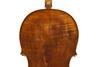
In Focus: A 1766 cello by Carlo Ferdinando Landolfi
Philip Brown looks at the Milanese maker’s mid-century instrument
-
 Premium ❘ Feature
François-Nicolas Voirin: The Second Tourte
The bows of François-Nicolas Voirin had more influence than those of any other bow maker after F.X. Tourte. In the first of two articles, Matt Wehling explores Voirin’s life and career, and examines why his bows were so successful with players
-
 Premium ❘ Feature
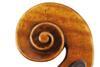
In Focus: A 1762 violin by Gennaro Gagliano
Yuri Pochekin examines the Neopolitan maker’s 18th-century instrument
-
 Premium ❘ Feature
Making Matters: Set the records straight
Acoustic testing can generate a huge amount of data on a single instrument. Rainer Beilharz shows how to record it in a meaningful way for visually oriented people
-
 Premium ❘ Feature
Long read: Salted Soundboards and Sweet Sounds
‘Salt improves the voice of all sorts of instruments,’ wrote scholar Bernard Palissy in 1580, and analysis of several samples of wood has shown that ancient masters did treat wood with substances which were then defined as salts. In our June 1991 issue, Rémy Gug investigated the subject of salt-impregnation ...
-
 Premium ❘ Feature
Trade Secrets: Designing and making a ferrule
This small part of a bow frog can have a huge effect on the bow’s final overall style
-
-
 News
NewsUK ivory ban comes into force
As of 6 June, anything made of or containing ivory must be registered before a sale in Britain
-
 Premium ❘ Feature
In Focus: A 1904 violin by Erminio Montefiori
Alberto Giordano looks at the self-taught Italian luthier’s 20th-century instrument
-
 Premium ❘ Feature
Fluorescence: Reflected glories
Viewing instruments in different kinds of light has become standard in documentation and assessment. Leonhard Rank explains how, in addition to ultraviolet light, researchers can now use infrared, and even parts of the visible spectrum, to reveal even more secrets
-
 Premium ❘ Feature
Making Matters: Historically Informed?
Are the gut strings used in HIP really true to those used by 18th- and 19th-century players? Kai Köpp examines the technical reasons why today’s strings might sound quite different from their predecessors
-
 Video
VideoThe Essence of a Sound: luthier Hans Johannsson at TEDx Reykjavik
Icelandic violin maker Hans Johannsson gives a talk exploring ‘a fascinating juxtaposition of an age-old traditional craft on the one hand and the pursuit of science and technology on the other’, filmed at a TEDx event at the Tjarnarbíó theatre in Reykjavik on 4 November 2018. The listing for the ...
-
 Premium ❘ Feature
Making Matters: Shaping the head
Violin makers have always been aware of physical issues like repetitive strain injury – but it’s just as important to take care of their mental health and wellbeing. John Beames examines some of the most common problems, and suggests some ways to combat them
-

-
 Focus
FocusOvercoming our addiction to tropical hardwoods: the latest alternatives
As ebony and rosewood become endangered, the likes of spruce, maple and boxwood are being scientifically modified to offer luthiers alternatives. Tom Stewart explores the brave new world of sustainable fittings
-
 Premium ❘ Feature
Trade Secrets: Carving a ‘Hill-style’ saddle
Care and accuracy are needed to make a two-piece ebony saddle – in this case for cello