


David Kettle reports from the 2025 edition of the world-renowned festival, where string works were much in evidence
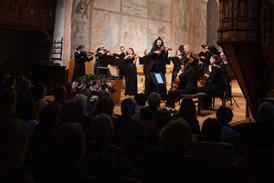
As the Scottish capital’s annual August festival madness detonated once again across Edinburgh’s concert halls, theatres and seemingly every nook and cranny capable of hosting any kind of performance, string music was once again firmly to the fore across the International Festival’s concerts.
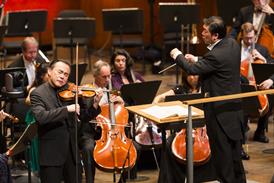
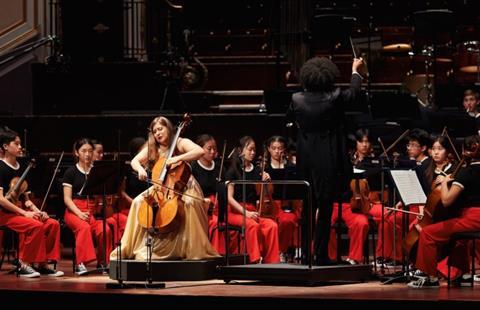
It has to be said, though, that there was a gentle slant towards string chamber music – with some particularly fine performances – and slightly away from string soloists in the Usher Hall’s daily orchestral concerts. Among those, cellist Alisa Weilerstein was part of a somewhat problematic performance of Shostakovich’s First Cello Concerto with NYO2, Carnegie Hall’s youth orchestra of players aged 14 to 17, on only the festival’s second evening (3 August).
Problematic not because of Weilerstein’s own muscular, sonorous account, which was full of vigorous vibrato and shone with conviction, but because the orchestra’s young players – spurred on by Rafael Payare’s urgent, arguably over-demonstrative conducting – simply struggled to match it, occasionally drifting apart in speed or rhythm, or even general mood.
It was a particular shame because it sapped attention from Weilerstein’s furiously committed playing – especially in a highly emotional third-movement cadenza – and the orchestral musicians had clearly regrouped for a fiery Prokofiev Fifth Symphony after the interval.
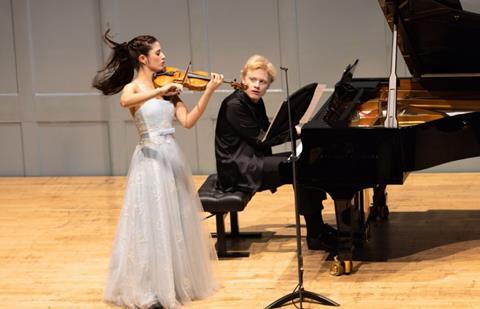
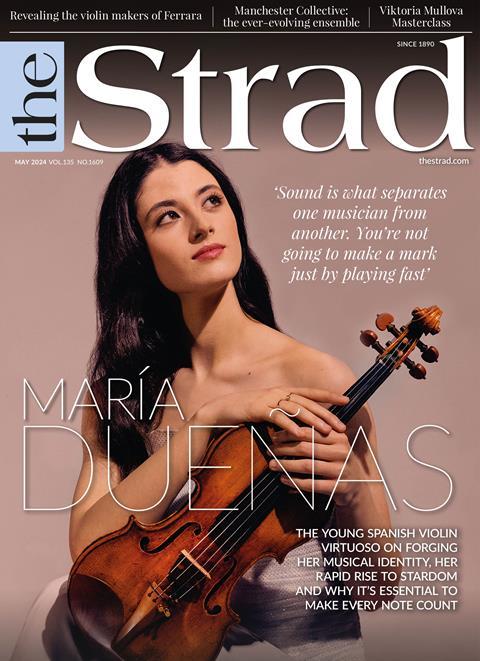
Over in the Queen’s Hall, however, there was no lack of drama – or insight or subtlety – among the International Festival’s morning chamber recitals. The tempestuous winds of passing Storm Floris threatened to overshadow – or even drown out – the recital by Spanish violinist María Dueñas and Russian pianist Alexander Malofeev (4 August), but those gales met their match in the musical duo’s own stormy, passionate playing.
Dueñas attacked her entry in Szymanowski’s Violin Sonata with gritted-teeth determination and an almost screaming intensity on her E string, surging through an exhilarating but exhausting Brahmsian finale before tempering her passions in the rather cleaner, more elegant Debussy Sonata that followed.
Her closing account of Franck’s Sonata was calmer still – Dueñas seemed to revel in the velvety richness of her sound in her powerfully projected second movement – though its ultimate sense of joy and release felt hard-won. Still, the concert left no doubts as to Dueñas’s phenomenal technique, and her forthright musical opinions.
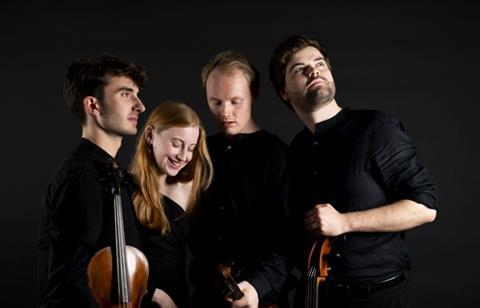
Expectations were high for the International Festival debut from the young, multi-competition-winning Fibonacci Quartet (9 August), and it proved an exceptionally rewarding concert on several levels. Repertoire-wise, the rough-edged First Quartet by Helen Grime plus Janáček’s ‘Intimate Letters’ and Smetana’s ‘From My Life’ quartets proved a bold, unconventional but deeply satisfying combination, and the Fibonacci foursome balanced intricate surface detail and more fundamental architectural awareness across all three pieces to persuasive effect.
Alongside the players’ apparently unstoppable energy, however, it was their clear love for the music that shone through – an affection that continued into their touching but stylish encore, a mash-up of ‘I Could Have Danced All Night’ and ‘On the Street Where You Live’ concocted by the quartet members themselves. It went down a treat with Edinburgh listeners, and topped off what was already an unforgettably accomplished, revelatory recital.
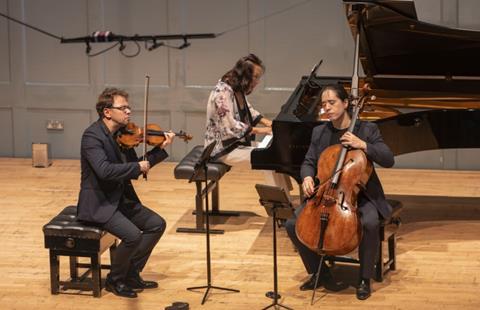
Equally memorable was the recital from the Sitkovetsky Trio (12 August), whose intensely felt, forcefully projected performances harked back to the fearsome intensity of Dueñas and Malofeev earlier in the festival. In the musicians’; hands, the opening Beethoven ‘Ghost’ Trio burst on to the stage with exuberant joy, even if they might have overdone the spookiness in its second movement.
They made a strong case, too, for the almost orchestral-level richness of Chaminade’s seldom heard Second Piano Trio – a piece we should probably encounter more regularly – and their closing Shostakovich Second Piano Trio ranged from fury and despair in a heartfelt chaconne to bitter sarcasm in a grotesque finale.
The only weak point in this confident, assertive concert was a more recent commission from Iranian-born, London-based Mahdis Golzar Kashani: To the Pointer Stars was eloquent and atmospheric (and a lot like Shostakovich at times), often dripping with melancholy beauty, but it also seemed to occasionally stall in its sense of forward movement. Nonetheless, it was a concert of deeply compelling performances.
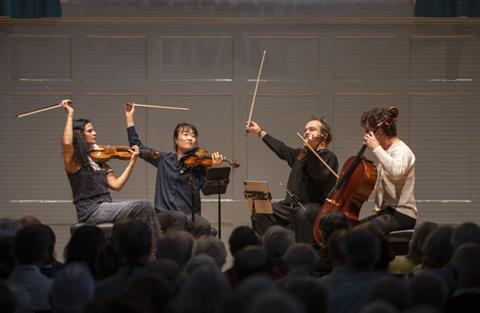
The Belcea Quartet’s recital of Mendelssohn, Beethoven and Mozart (20 August) seemed in some ways startlingly mainstream, and the foursome’s perceptive accounts stressed calm convictions and almost aristocratic assurance over superficial shock or provocation. But it was far from workaday, from the graceful counterpoint in Mendelssohn’s relatively rarely heard Four Pieces for string quartet to a particularly playful Beethoven op.135 Quartet, which showcased the prodigious talents of the Belcea’s four musicians, and a remarkably agile, persuasive Mozart ‘Dissonance’ Quartet.
The atmosphere shifted entirely for the quartet’s deeply personal, intensely felt encore: the slow movement from Webern’s Five Movements served as a brief but potent musical memorial to Belcea co-founding violinist Laura Samuel, for many years leader of local band the BBC Scottish Symphony Orchestra, who died in 2024 aged just 48. The Belcea found countless muted colours and sombre emotions among Webern’s aphoristic, angular writing, in what proved a deeply moving conclusion to its accomplished recital.
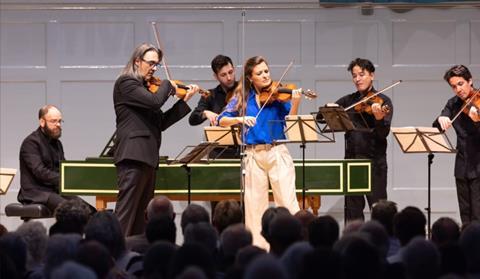
The Queen’s Hall’s morning chamber recitals came to a spellbinding conclusion with Leonidas Kavakos and the six-man Apollon Ensemble in four Bach violin concertos (23 August) – the A minor and E major concertos that have survived, plus G minor and D minor works reverse engineered from harpsichord concertos (themselves very possibly adaptations of earlier string concertos).
Though four back-to-back concertos might have been a bit too much similar music, Kavakos ensured a winning mix of period purity and more modern expressive freedom, and an enjoyable sense of connection with his backing band, who effectively served as co-soloists: among them, Brussels-born Noé Inui stood out for his deeply soloistic playing of enormous charm and character.
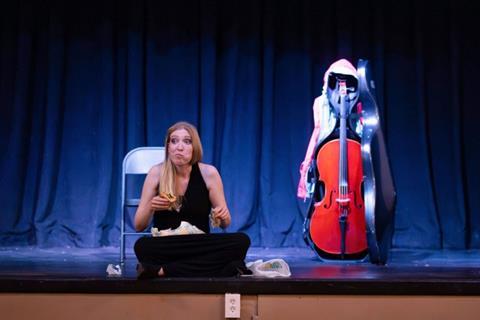
Among the chaotic, unpredictable wild west of Edinburgh Fringe shows, one string-focused performance particularly drew attention. Los Angeles-based cellist Karen Hall’s Delusions and Grandeur at Summerhall took Bach’s First Cello Suite (in an enjoyably convincing account) as its starting point for a witty, perceptive skewering of classical conventions (no, we really shouldn’t be applauding just the Prelude), plus an interrogation of a life – and, in fact, a whole identity – devoted to a particularly beloved instrument and its repertoire.
It’s rare to discover a show so music-focused amid the Fringe’s raucous stand-up and experimental theatre, let alone one with such perceptive things to say about the classical world and the people who inhabit it, but Hall’s deceptively profound yet entertaining creation had plenty to say to fellow string players about the paradoxes, frustrations and joys of their particular paths through life.
Read: The future is here: 72 hours at the Edinburgh International Festival
Read: Violinist Nicola Benedetti performs at NHS hospital
Read: Festival round-up: Edinburgh International Festival 2024






No comments yet