



Staff writer Rita Fernandes attended a gloriously varied five concerts at the 2025 edition, which included everything from breakdancing Bach to Arabic maqams on viola d’amore
Discover more Featured Stories like this in The Strad Playing Hub
There’s nothing quite like Edinburgh during festival season. Thousands of Fringe show posters are plastered haphazardly on city walls, lamp posts and anything else vaguely flat. And yet within this wonderful mess, the vibrant yellow of the Edinburgh International Festival cuts through, just as its bold performances and programming did during my three days there.
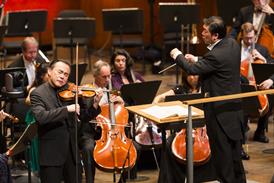
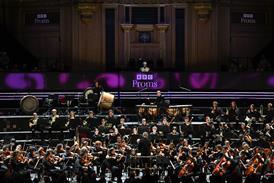
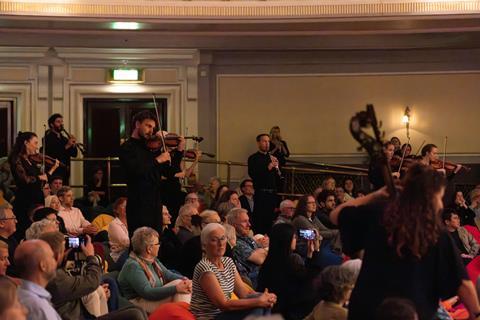
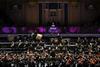
My visit kicked off with the inimitable Aurora Orchestra, which performed twice at Usher Hall on 18 August. At 2pm was a memorised performance of Shostakovich’s 5th Symphony. Though it was not strictly string-specific, as The Strad normally focuses on, I’ll make an exception given I was literally surrounded by four Aurora string players. The orchestra was dotted around the room in between the dozens of multicoloured bean bags the audience were sunken into.
The performance was accompanied by an explanation of the work’s history and composition. It could’ve felt inappropriate to lounge on a bean bag while hearing about purges of 1930s Soviet Russia, and yet it felt completely natural due to the performers’ sincere music making and hugely skilled ensemble playing.
The last movement was particularly moving in this layout. Just before it, conductor Nicholas Collon urged us to question the movement’s meaning – was it secretly rebellious or regime-endorsing? This echoed this festival edition’s theme: ‘The truth we seek’. And to be seated right in the middle of this triumphant ending, feeling at the centre of its creation, made this truth-seeking all the more visceral.
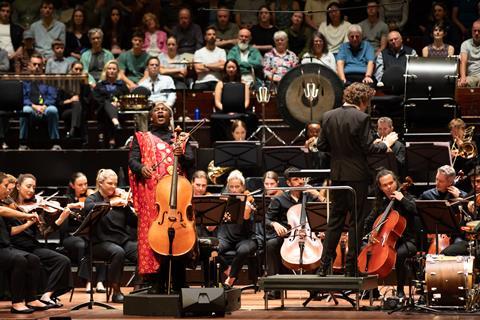
That evening, the orchestra was joined by the similarly inimitable South African cellist, singer and composer Abel Selaocoe. They performed his Four Spirits for cello, voice and orchestra, which draws inspiration from township life. The all-encompassing work flowed from tranquil moments, where we were serenaded by Selaocoe’s recitative-style vocals, to boisterous sections with elaborately interwoven rhythms throughout the orchestra and soloist.
Selaocoe’s immense vocal range was on full display, and every texture was used to express this thoroughly nuanced work. The cello was a natural extension of his voice, just as the orchestra felt like a natural extension of him. This was largely due to the work’s intricate and vivid orchestration, particularly in the more contrapuntal parts. Trumpet calls here, percussion escapades there – orchestral colours were chosen with precision.
In the last movement, the audience was invited to sing melodies that Selaocoe presented us, before soaring above the humming audience with his own vocals. This unique performer never ceases to amaze me with his contagious charisma and unparalleled audience engagement.
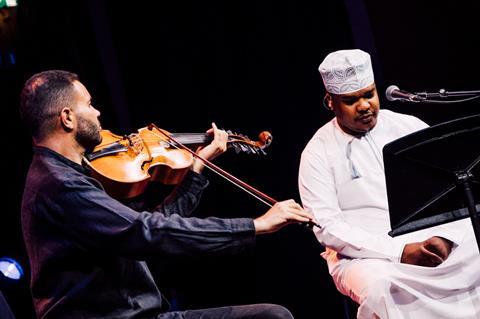
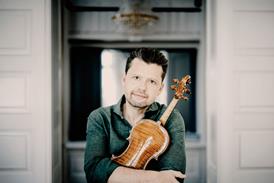
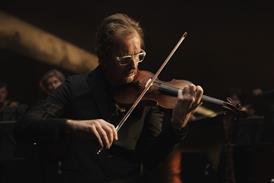
Moving north from South Africa, on 19 August I saw Tanzanian singer and composer Yahya Hussein Abdallah and Tunisian viola d’amore player Jasser Haj Youssef perform 13th-century spiritual Sufi poetry at The Hub. Abdallah performed the texts in a melismatic and expressively ornamented style, while Youssef accompanied on the viola d’amore using different Arabic musical modes, or maqams.
I say ‘accompanied’, but Youssef’s expansive use of the mellow Baroque instrument was the glue that held everything together. He played instrumental interludes between the poems, created a warm blanket of sound underneath Abdallah’s vocals, and after each line of poetry would expressively reiterate and expand on Abdallah’s phrase to offer perspective on the text. His flautando playing allowed for long, resonant bows and he made full use of the instrument’s twelve strings, at points becoming an ensemble by himself: fingerboard tapping, arpeggios while keeping a drone, you name it.
The performers deliberately did not give the audience translations of the poetry, which I found incredibly freeing. As a non-Arabic speaker, I therefore heard the unique sounds and cadences of the language as another musical element, and it made me rely on the wonderful artistry of Youssef and Abdallah to find meaning.
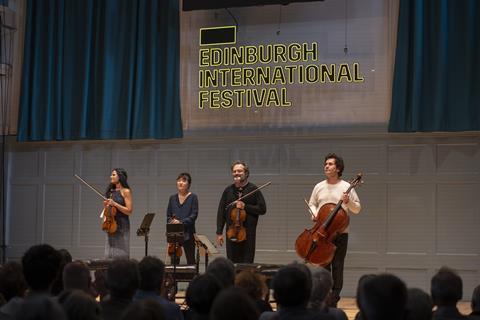
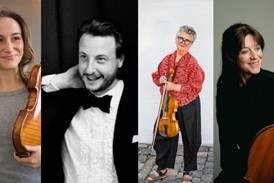
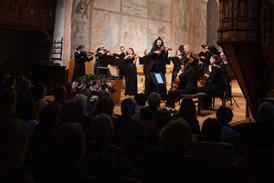
The next morning at Queen’s Hall, the Belcea Quartet performed a programme of Mendelssohn’s Four Pieces for String Quartet, Beethoven’s Quartet no.16 and Mozart’s ‘Dissonance’ Quartet. As was true for their whole performance, the quartet achieved a masterful balance between acting as one while having individual characters and timbres emerge as needed in the Beethoven.
Here, the group also established an unrelenting pulse, not necessarily in terms of tempo, but an ‘alive’ quality that felt like something was always bubbling underneath. And after the famous opening of Mozart’s ‘Dissonance’, the rest of the movement felt like one big arrow to the end. Though this drive was embodied by all members, it was particularly visceral in first violinist Corina Belcea’s whizzing passagework. And in the second movement, the quartet created a texture just loud enough to project, but quiet enough to bring attention to its beautifully fragile quality.
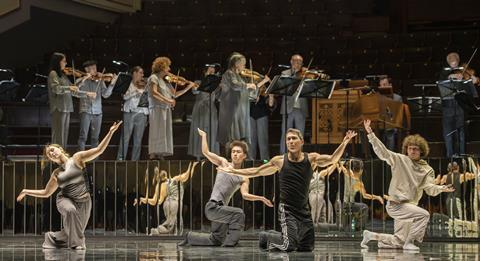
And finally, on the evening of 20 August, I attended a performance of breakdancing to Bach’s music. Fourteen dancers, both professionals and recent graduates, were accompanied by the Orchestra of the Age of Enlightenment. The first work with dance was Bach’s Concerto for Two Violins. Before I even had time to despair over the repertoire choice, I was totally transfixed by the dancing. As a violinist who has heard the work countless times, I nevertheless felt as if I was hearing it for the first time. The troupe moved gracefully and at times acrobatically to the music’s rhythms, with their dampened thuds on the stage floor bringing the music’s contours to life.
In the third movement, alternating couples came forward, representing the two violins, and similar choreography was used for the movements returning motif. This gave me, as a non-dancer, an accessible way to recognise the link between music and dance instead of only relying on abstract connections. That said, it wasn’t a mere stamping-to-the-beat exercise. At times, the choreography revealed things in the music that I’d never heard.
In the first movement of the Brandenburg Concerto no.3, the dancers added hemiolas absent in the score, but which gave an extra edge and push to the work. I’d never seen anything quite like it – the internal energy of Bach’s music embodied physically. The dancers’ conviction and clear appreciation for the music breathed life into the 18th-century works written more than 250 years before their dance form was created.
In just three days, I had attended an incredibly varied collection of concerts, all connected by a palpable enthusiasm for music. This is what struck me most about the mayhem of festival posters around the city too. More than being just colourful chaos, it was a physical manifestation of a deep appreciation for the arts. And the Edinburgh International Festival takes this to a whole new level. It not only celebrates the arts in every form and combination, but it is also creating new ways of enjoying it to be celebrated in the future. And if that future is any bit as engaging as what I witnessed in these past three days, I’m here for it!
TL;DR? Check out our Instagram reel of EIF here:
Read: The best seat in the house is a bean bag: 48 hours at the Edinburgh International Festival
Read: Sounding the alarm: Apollo Chamber Players on stories of censorship
Discover more Featured Stories like this in The Strad Playing Hub
The number one source for playing and teaching books, guides, CDs, calendars and back issues of the magazine.
In The Best of Technique you’ll discover the top playing tips of the world’s leading string players and teachers. It’s packed full of exercises for students, plus examples from the standard repertoire to show you how to integrate the technique into your playing.
In the second volume of The Strad’s Masterclass series, soloists including James Ehnes, Jennifer Koh, Philippe Graffin, Daniel Hope and Arabella Steinbacher give their thoughts on some of the greatest works in the string repertoire. Each has annotated the sheet music with their own bowings, fingerings and comments.
The Canada Council of the Arts’ Musical Instrument Bank is 40 years old in 2025. This year’s calendar celebrates some its treasures, including four instruments by Antonio Stradivari and priceless works by Montagnana, Gagliano, Pressenda and David Tecchler.






No comments yet