






![Ayanna Witter-Johnson [Jordan Woods] 7](https://dnan0fzjxntrj.cloudfront.net/Pictures/274x183/4/9/4/44494_ayannawitterjohnsonjordanwoods7_224583.jpg)

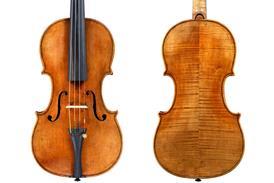





Siblings bring a unanimity of purpose to Schubert
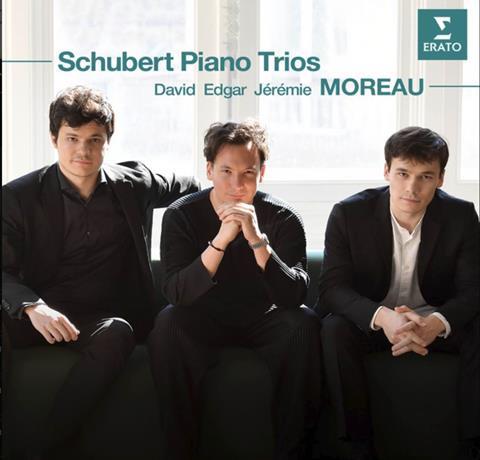
The Strad Issue: August 2026
Description: Siblings bring a unanimity of purpose to Schubert
Musicians: David Moreau (violin) Edgar Moreau (cello) Jérémie Moreau (piano)
Works: Schubert: Piano Trios nos. 1 and 2; Der Hirt auf dem Felsen; Auf dem Wasser zu singen; Du bist die Ruh; Ständchen, D957 no.4
Catalogue number: ERATO 5021732940261 (2 CDs)
Does the intimacy of chamber music mean that the genre naturally favours same-family groups? There’s no clear answer to that, but it’s safe to say that the playing on this double-disc issue is of an especially connected order. Whether on a micro or macro level – for example, nuances of tonal colour and phrasing, or the trajectory through large forms – there’s a clear sense of intuition here among the three Moreau brothers. (The remaining sibling, violinist Raphaëlle, joined them on a release back in 2020.)
The booklet offers no insights into the works themselves, and instead a rather puff-piece-y introduction from the three brothers, but in any case it’s the playing that does all the heavy lifting. For the two big Schubert piano trios, the eye seems always set on the longer game, so that the opening of the B flat major D898 might appear less resolute than in other performances, but these players’ choices seem always to fall into place. There’s a world of subtle articulation even within legato playing – with pianist Jérémie being as attuned to this as the string players – and there’s an overriding impression of transparency, both vertically and horizontally. The gorgeous song of D898’s slow movement gently sways, retaining an Andante feel, the conversational lines unfolding naturally. Another striking impression comes in the work’s Scherzo and Trio, which the brothers lay out with the elegant ritual of a formal garden.
In the E flat major Trio D929, the second movement’s march-like tread enters the journeying realm of Winterreise, and the spectral tremolos call to mind the C major Fantasy for violin and piano. The climaxes are underpinned by breadth rather than momentary surges, adding to the effect of a smooth long-range passage.
The four arrangements of Schubert songs allow for yet more melodic freedom and greater intimacy. ‘Du bist die Ruh’ is especially captivating, all the more so since, like the release as a whole, the sound is captured as if by the most affectionate eavesdropping.
EDWARD BHESANIA










No comments yet