




US correspondent Thomas May hears Rachel Podger and Tafelmusik in a spirited showcase of Baroque brilliance presented by Early Music Seattle on 8 November 2025
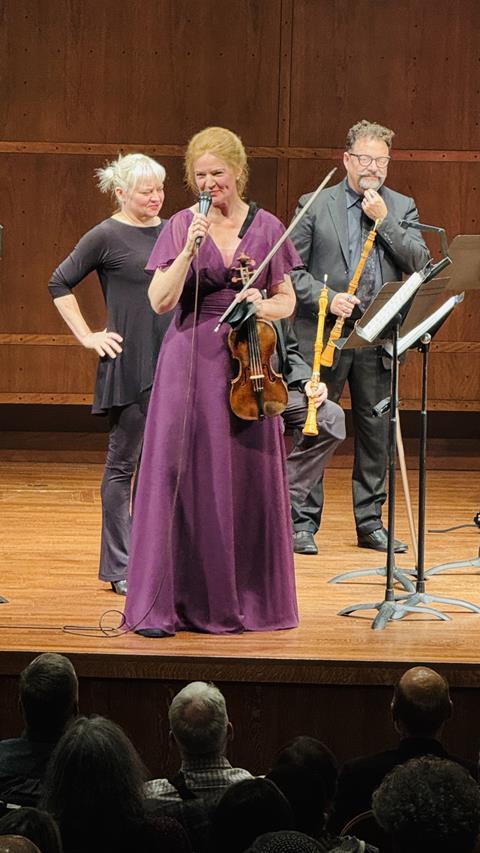
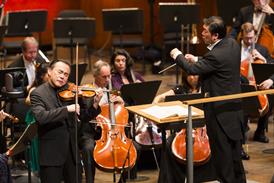
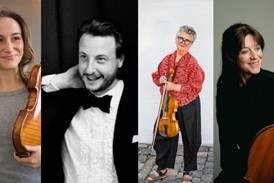
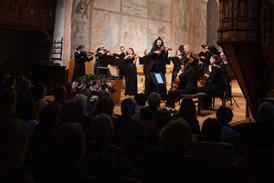
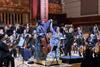
Early Music Seattle, the region’s principal presenter of period performance, welcomed Tafelmusik for the Seattle stop on its twelve-city tour of the North American West Coast – aptly titled ‘Brilliant Baroque’. With principal guest director Rachel Podger leading from her baroque violin, the sixteen-member ensemble offered a sequence of works shaped, in part, by an aesthetic of translation and rearrangement – whether from solo to chamber forces or from the opera stage to more intimate instrumental settings.
From her first cue, Podger led with the easy buoyancy and collegial give-and-take that are her hallmark. She also stepped forward as the soloist in Bach’s Concerto in G minor, BWV 1056R – one example of a form of ‘translation’, having been retrofitted from the F minor harpsichord concerto. Her calibration of a playful spontaneity with precision proved beguiling, ornaments flickering with an elegantly charming yet intentional ease. The Largo sang with unforced grace, while the finale’s vigorous bowing had a touch of theatre.
Bach was the topic of another fascinating example of ‘translation’ in Tafelmusik’s brand-new arrangement, made by bassoonist Dominic Teresi, of the monumental Prelude and Fugue in E-flat major, BWV 552 (‘St Anne’). In its original format for solo organ, it frames the third part of the Clavier-Übung as its grand opening and closing pillars.
Podger prefaced Tafelmusik’s performance with a deft elucidation of the piece’s layered Trinitarian numerology, recalling Albert Schweitzer’s description of the rushing semiquavers in the culmination ‘as if the Pentecostal wind were coming roaring from heaven’. Teresi’s arrangement exploited a kaleidoscopic spectrum of colour, with textures and timbres shifting and recombining across the ensemble in thrilling interplay.
A dance suite from Lully’s 1685 tragédie en musique Roland inspired crisply drawn, characterful rhythms and courtly panache. Concerto No. 6 in D major by Charles Avison, an 18th-century English composer who crafted a dozen of these works by arranging solo Scarlatti sonatas, was a delightful discovery for many in the full Nordstrom Hall. Each of the work’s four movements derives from a separate Scarlatti sonata.
Yet far from losing anything in Avison’s cross-border translation, the music gained in the process – a hybrid refracting Scarlatti’s quicksilver imagination through an English lens of orchestral refinement and melodic charm. Podger guided her colleagues to play with electrifying ensemble precision and drive, especially in the aptly named ‘Con furia’ third movement.
Telemann’s Concerto for Two Oboes and Bassoon in D minor showcased the ensemble’s wind principals in nimble, conversational form, the finale buoyed by a catchy ritornello steered with irresistible momentum.
Handel’s Concerto grosso in G minor, Op. 6 No. 6 – part of a cycle that has long been a Tafelmusik specialty – stood out for its unusual form, four movements framing a central musette, a balmy haven of repose in poignant contrast to the tragic weight of the opening. The players conveyed a keen grasp of Handelian theatre, with melodies phrased as if lifted from the opera house.
The programme closed with the Chaconne from Handel’s Terpsichore, a balletic prologue he wrote in 1734 for a revival of his 1712 opera seria Il pastor fido. As an encore came ‘the greatest ground bass of them all’, La Follia, as refashioned in Domenico Gallo’s Sonata No. 12 in G minor – offering a final, exhilarating whirl through the dance impulse Tafelmusik had channelled with such vitality throughout the evening.
Additional stops on Tafelmusik’s tour can be found here.
THOMAS MAY






No comments yet