














Celia Cobb reads the teachings of American violinist and pedagogue Jan Mark Sloman, who died in 2022

Notes to a Violinist
Jan Mark Sloman
90pp ISBN 9798994785003
Bally Mote Books $21.99
Notes to a Violinist is a posthumously published work by the violinist and teacher Jan Mark Sloman, who died in 2022 after a long and varied career as both a performer and a teacher. Over the course of his working life, Sloman had been in the habit of writing copious ‘notes’ about music teaching and learning, and in the years before his death, encouraged by colleagues, former students and family, he worked to collate these notes into book form (originally entitled The Sloman Method).
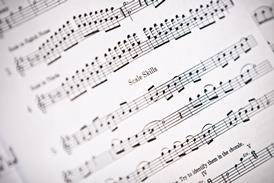
The first part of the book focuses on scales and arpeggios, and how to use them in a logical and sequential way for the development of both the left and the right hands. The next section provides a recommended order for tackling studies – the ‘Abbreviated Condensed Etude Sequence’ – with notes on 42 of what he considered to be most essential of the ‘big’ studies, beginning at Kreutzer 2 and finishing with the Dont op.35 caprices, taking in Rode and others along the way. There are also progressive repertoire charts of concertos and sonatas, and also of solo Bach, the study of which is described as ‘an essential part of serious violin instruction and skill acquisition’.
Sloman clearly loved an acronym, and the book is prefaced with a quick explanation of the most commonly used shorthands in the book, from RCM (‘Repetitive Correct Motion’) and ABT (‘Acquisition of Big Technique’) to my personal favourite, FFAS (‘Fourth Finger Avoidance Syndrome’). This heavy use of acronyms, together with some very pertinent analogies, allows something of the character of this pedagogue to shine through. Similarly, some key techniques are beautifully and precisely described: ‘Martelé … is best described as being like the word “bop”. It starts with controlled capture of the string, followed by release and motion with speed and energy, ending with the starting point for the next stroke.’
This book is essentially a reflection on a lifetime of teaching, and it provides a practical resource for serious violinists and teachers who are looking for tried and tested ways to achieve maximum expression though robust technical achievement in a systematic (but definitely not soul-destroying) way. Apart from being of obvious interest to those who knew and worked or studied with Sloman in Texas and beyond, this book has much to offer to those of us who were not fortunate enough to have met him. More than a mere collection of snippets of wisdom, it gives an impression of a dryly humorous character who was clearly a devoted and understanding instructor; one who thought deeply and carefully about how to develop methods and explanations to bring out the very best in his students.
CELIA COBB








No comments yet