






Anne Inglis reads Jessica Duchen’s biography of the British pianist, a leading figure in the London music scene during the war years who counted several string players as friends
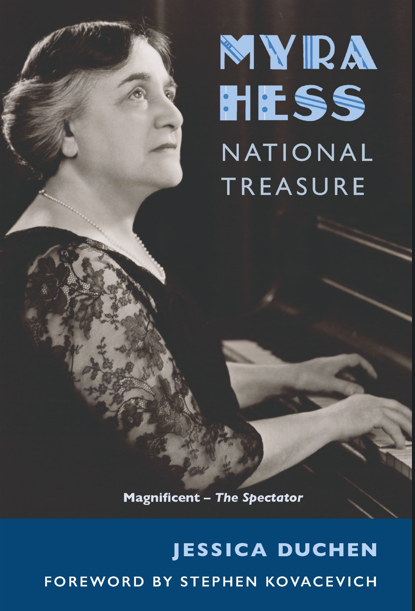
Myra Hess: National Treasure
Jessica Duchen
424PP ISBN 9781068776205
KAHN & AVERILL £40
It might be unusual to review a biography of a pianist in The Strad. But Myra Hess left a legacy that embraced all of us, with her role in establishing and maintaining the long-running series of concerts in London’s National Gallery during World War II. Her many associations with solo instrumentalists, composers and conductors combine with this fascinating story of working for the wider good. She called in her contacts, and the list of daily concerts at the gallery now functions, in retrospect, as a barometer of key performing musicians of the time, and gives a historical view of the repertoire that appealed to audiences.
I grew up knowing Hess’s importance in the National Gallery context, and that she toured the UK giving regional recitals, but little more than that. All is put right here. This is the best sort of biography: beautifully researched, detailed, balanced in the exploration of the parts of Hess’s life (going way beyond the NG association), encompassing her many contemporaries, and giving a splendid picture of music making at a time when the nuts and bolts of the industry (agents, recording contracts) were in their infancy.
We learn about Hess’s early life: her north London upbringing, her principal teacher Tobias Matthay, and her debut under Thomas Beecham. She spent much of her life in the US, travelling with a small female entourage and enjoying performing relationships with Toscanini and Bruno Walter. Her repertoire was primarily Classical and Romantic – her noted warmth of sound was well suited to Beethoven, Brahms and Schumann. She was also comfortable in the Baroque period; her celebrated arrangement (much trickier than it sounds, she’d say) of Jesu, Joy of Man’s Desiring became an almost self-defeating calling card. Today, people will often remember Jesu, Joy and the NG concerts to the exclusion of much else in Hess’s life.
Read: London Philharmonic Orchestra plays in National Gallery in COVID tribute to World War II concerts
Read: How a forgotten chamber masterpiece finally saw the light
Review: Myra Hess, Jelly d’Arányi, Felix Salmond, Gaspar Cassadó: Brahms, Schubert
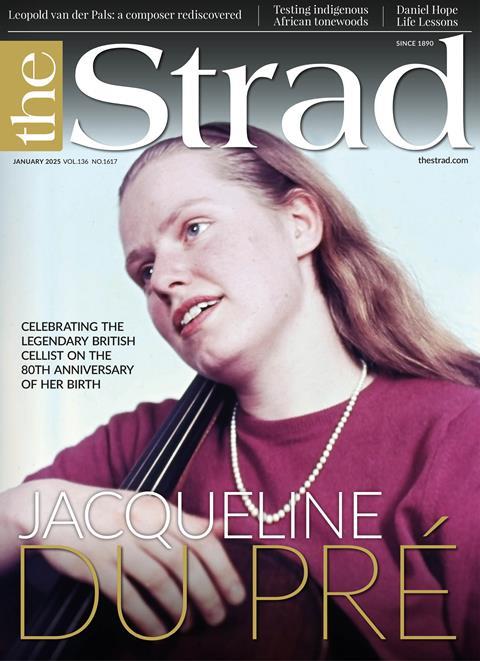
Hess’s relationships with string players were many, as demonstrated by the presence of the Allegri Quartet and Jacqueline du Pré at her funeral. She played piano trios with Jelly d’Arányi and Gaspar Cassadó, and d’Arányi joined her as a regular duo partner in 1918 until a falling-out which Duchen attempts to decipher (probably intolerance for d’Arányi’s ill health). She played with Casals, Kreisler, Tertis and the Griller Quartet.
One of the great feats of Duchen’s writing is her documentation of Hess’s programmes – difficult to bring off without sounding boring and repetitive. But she manages to make these lists interesting, and they are a terrific window on to the repertoire content of live music making of the day.
This book is a portrait of an era, and of a strong-willed and brilliant musician who created, collaborated and sometimes clashed with her musician partners. For anyone interested in the musical life of Britain during the first half of the 20th century this book is a must. Duchen’s aim was to ‘honour her’; indeed she has.
Anne Inglis








No comments yet