
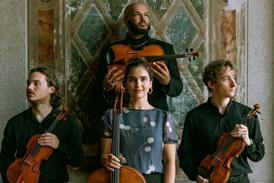


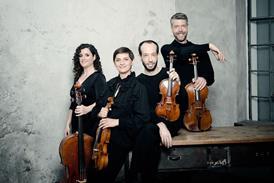
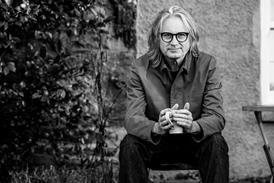



The Apollo Chamber Players’ upcoming album, We The People, was curated in honour of the 250th anniversary of American independence. Founder of the ensemble Matthew Detrick looks at how the string quartet medium is one that similarly celebrates and promotes democracy
Read more Featured Stories like this in The Strad Playing Hub
Thomas Jefferson saw cities as ‘laboratories of democracy’, where a diversity of people and ideas best reflected the manifestation of an emerging republic governed by ‘We the people’. Now 250 years later, I believe the string quartet medium represents the foundation of bold, relevant and democratically-inspired contemporary classical music.
Unlike an orchestra, where hierarchy is inherent, the string quartet is crafted around four equal musician citizens. Each voice carries responsibility while leadership shifts organically from one moment to the next. Critical to reaching interpretive flow is active listening – a reminder that democracy depends as much on listening as speaking. The string quartet is, perhaps, the most democratic ensemble in classical music.
I’m often asked why we call ourselves Apollo Chamber Players rather than Apollo Quartet. While the string quartet remains our artistic core, the name reflects a broader philosophy of collaboration and the freedom to invite additional – and diverse – voices into the conversation.
Many of Apollo’s most memorable commissions have been for string quartet. Our inaugural commissioned work, Fantasy on Bulgarian Rhythms by composer Karim Al-Zand, is a buoyant, folk-infused work that channels the dynamism of Bulgarian saxophone performer Yuri Yunakov.
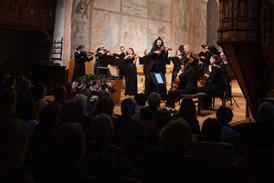
One of my favourite memories from these early years took place at the premiere of Fantasy on Bulgarian Rhythms in 2013, in the Shepherd School of Music’s Duncan Recital Hall. It was special to welcome members of the local Bulgarian community to this performance, many of whom had never experienced a live classical music concert.
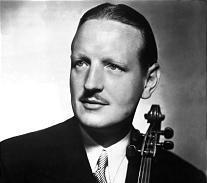
Kenneth Goldsmith, my mentor and long-time Shepherd School violin professor came up to me after the concert and excitedly proclaimed, ‘Wonderful playing! But you must know that I had to politely ask a family to leave – they were eating take-out pizza at the back of the hall!’
I chuckle with pride every time I think of this story, not because I condone pizza-eating during concerts but rather as a testament to the versatility of the string quartet to attract new listeners and express the music of a culture.
The response to Fantasy inspired us to continue our commissioning with a bold new venture – 20x2020. Launched in 2014, 20x2020 was an audacious, multi-year project to commission 20 new folk music-inspired works by the end of the decade. We launched this initiative with Libby Larsen’s Sorrow Song and Jubilee, a string quartet composed as an homage to the creative partnership of Dvořák and African-American composer Henry Thacker Burleigh, who introduced Dvořák to Black spirituals and dances.
Curated alongside Sorrow Song on the premiere was a string quartet work by a forgotten Black composer named Florence Beatrice Price. We discovered her unpublished Negro Folksongs in Counterpoint at the University of Arkansas in 2014, years before Price’s extraordinary renaissance in today’s concert halls.
Through the course of 20x2020, we explored the music of myriad cultures and nationalities. While some commissions featured traditional instruments like the Vietnamese đàn bầu (a one-stringed zither instrument), many lived within the architecture of a string quartet. Our jazzy Three Goat Blues commission by Israeli–American composer Gilad Cohen has since entered the repertoire and seen hundreds of performances in its original and adapted versions.
This far-reaching enterprise grew Apollo in both size and reputation as we crafted a trajectory of artistic adventure through thematic and collaborative innovation. We soon realised, however, that the fullness of what we’d embarked upon was greater than one quartet – a rich and nuanced musical experience with each commission telling stories that reflect the multicultural world in which we live.
That the end of this project coincided with the start of the Covid pandemic was potentially troublesome. However, we regrouped and finished 20x2020 boldly, with a new string quartet commission by Jennifer Higdon, one of the world’s most-performed living composers. A string quartet adaptation of her expansive opera Cold Mountain, In the Shadow of the Mountain emerged as one of our most intimate and personal works.
These and later commissions did more than diversify Apollo’s repertoire. They changed the questions we began asking as artists. We came to understand that commissioning new music is not simply an artistic exercise but an act of cultural stewardship – and patriotism. Which voices do we elevate? Which histories do we aspire to preserve while telling the complex story of America?
Commissioning also led us to one of the most pressing questions of our time: What does resistance look like in the cultural sphere during an age of American authoritarianism?
For Apollo, our response has been to lean even more deeply into being a connective tissue for the arts community and our city and nation at-large. Our Silenced Voices season responded to increasing book bans with commissions by Allison Loggins-Hull and Marty Regan. While Allison’s BAN incorporated the sounds of books being slammed shut, intermingled as a sixth ‘voice’, Marty’s The Book of Names featured the powerful, pro-democratic words of George Takei, asking us to ‘never lose our moral compass’ even when democracy leaves us jaded and apathetic.
Our ninth album, We the People, takes this advocacy a step further. Released to coincide with America’s 250th birthday, the project explores not only the promise of our democracy, but also the people and stories that continue to shape it. While today’s headlines are often dominated by artificial intelligence, our album instead asks listeners to rediscover another kind of A.I. – ancestral intelligence.
One of the album’s centerpieces is And Still We Cross, a new commission by Daniel Bernard Roumain featuring narrator and civil rights activist Kenneth Morris, Jr. – a direct descendant of both Frederick Douglass and Booker T. Washington. In his words and performance, Kenneth reminds us, ‘Their blood runs through my veins.’ Democracy is not merely an inherited idea, but a living responsibility carried from one generation to the next.
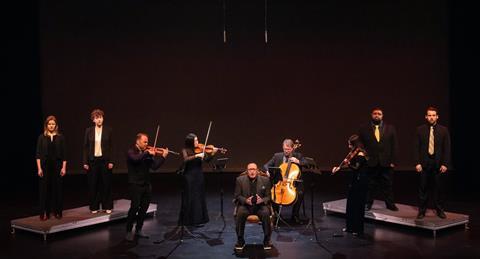
Here the string quartet again proved itself a remarkably democratic medium. Joined by narrator and vocal quartet, it became something larger without losing its intimacy and immediacy. It elevated these voices, becoming a powerful change agent capable of carrying personal testimony, collective memory, and musical expression together.
One commission on We the People continues to resonate with me more deeply than almost any other. Afghan-American composer and rubab virtuoso Homayoun Sakhi’s Tolo (‘Sunrise’ in Farsi) is the most soulful and touchingly optimistic work on the album.
During his last visit to Houston for the recording session, Homayoun shared a story that left me speechless. As a young boy in Afghanistan, he watched his best friend gunned down by the Taliban, only feet away. I asked him how he has managed to remain so hopeful after experiencing such violence. His answer was as simple as it was profound: ’You have to believe tomorrow will be a better day… the sun will always rise again.’
Earlier this year we performed Tolo at St. Andrew’s School in Delaware, where, unbeknownst to us, several Afghan refugee students were in attendance on scholarship. Sharing Homayoun’s music – and, in a sense, a piece of home – with those young people, thousands of miles from Afghanistan, stands as one of our most cherished memories.
Democracy needs passionate allies, and courage is a team sport. As we celebrate the beautiful complexity of this nation at 250 years and look to the future, we hope the soft power of a string quartet can help change hearts and minds. Apollo Chamber Players will continue to stand as an arts leader, a multicultural laboratory fighting for human dignity and cultural harmony.
Apollo Chamber Players’ new album We The People will be released on 3 July












No comments yet