




The cellist and composer discusses ways of creating sonic architecture and narrative while developing the role of the instrument in contemporary music
Read more Featured Stories like this in The Strad Playing Hub
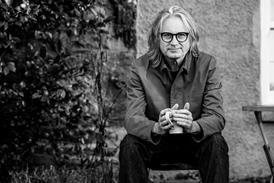
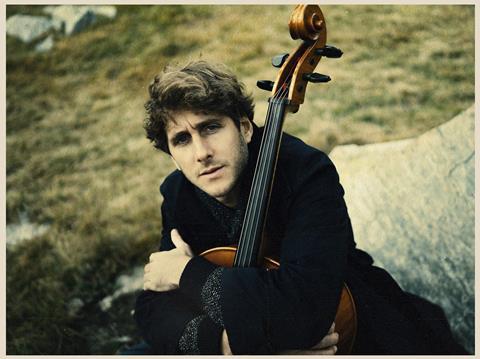
Argentinian cellist and composer Sebastian Plano has built a singular career at the intersection of classical performance, composition, and sonic experimentation.
Born in Rosario into a family of musicians, Plano studied at the United World College of the Adriatic, the Boston Conservatory and the San Francisco Conservatory before establishing himself internationally through a body of work that spans concert music, film scores and recordings.
His collaborators have included composer and pianist Nils Frahm, while his music has earned recognition from audiences across both the classical and contemporary music worlds.
His latest album, Solo, marks a return to the instrument at the centre of his artistic identity. Composed and recorded entirely for unaccompanied cello, the album traces a deeply personal journey shaped by decades of movement between Argentina, Europe, and North America.
Across 15 original works, Plano explores the expressive possibilities of a single melodic voice, drawing on improvisation, minimalism and the cello’s uniquely vocal qualities to create music that is both intimate and expansive.
To accompany the release of Solo and its corresponding sheet music collection, Plano reflects here on the artistic and technical challenges of writing for solo cello, balancing composition with improvisation, and the instrument’s evolving place in contemporary musical culture:
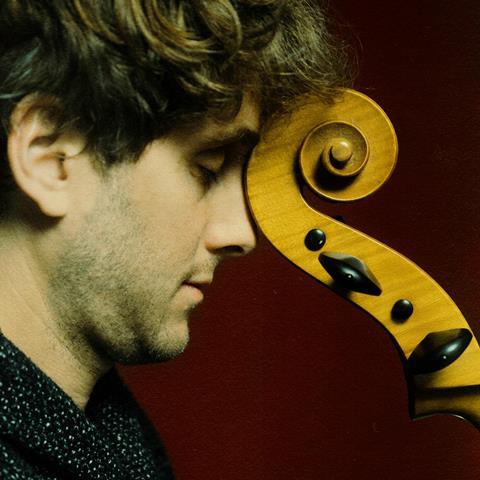
Writing for a solo instrument requires a fundamentally different approach to structural thinking in composition; it can be compared to writing a monologue, which, given its simplicity, can be very powerful. It wasn’t the first time I had written for solo cello, though my earlier works were more contemporary in style. With Solo, I focused on a more minimal, melodic approach, shaped as a single continuous musical line that runs throughout the entire album.
A key technical challenge is sustaining the listener’s attention over time without the conversational interplay of multiple voices. My main focus was on voicing, as well as the tone and colour of the sound. I also employed a range of bowing techniques to bring dynamism across the album.
One technique I used frequently is arpeggiated bowing, which I find both expressive and architecturally rich. It expands the sonic space and can create the illusion of a full ensemble, producing bass, harmony, and melody simultaneously. This rolling gesture has an inherent pulse, and I wanted some of the pieces to feel charged with energy and push forward as the album progresses.
I also employ a linear, horizontally unfolding sound language, more akin to a minimalist sonic landscape, that can suggest or evoke an a cappella singing line. In general, the approach is largely narrative, combining varied rhythmic figures with expressive bowing techniques.
Small-scale motivic development was also an essential method I used to hold the pieces together. For instance, a melodic fragment introduced early on can later be stretched, compressed, inverted, or fragmented, giving the listener a sense of recognition. In this way, a phrase or detail can return with a different meaning as its context evolves.
The use of silence was also a powerful element, this is both, where non-harmonic tension and release lives, a charged space, like the held breath between sentences. Despite its challenges, the cello’s range makes it a highly rewarding instrument for solo writing. Its low, middle, and high registers offer both a rich, grounded bass foundation and a warm, expressive voice well suited to melody.
Balancing written composition with improvisation
I improvise extensively as part of my compositional process. It is in these moments that music flows most naturally and creatively, and when I feel my body and the instrument become one. While working on Solo, there was a great deal of improvisation involved, which brought with it a particular challenge.
The challenge I soon encountered was that, in many cases, the improvised recordings had a strong musical flow but lacked a clear sense of journey, of departure and arrival. I would then continue by writing these improvisations down on paper and developing the piece from that point onward. Then, once the music was transferred onto paper and I had to read it, that fluidity and spontaneous energy in my playing would suddenly disappear.
I soon found myself oscillating between two impulses: the desire to preserve musical spontaneity and the need to establish a structure that could shape the narrative I wanted to achieve. I’ve come to understand that I had grown so accustomed to music as something instinctive and full of surprise, and that this quality doesn’t emerge in the same way when reading music.
With Solo, the real difficulty was holding onto that raw, alive energy without letting the music lose focus or direction. For me, it has always been particularly about muscle tension and how my body feels much more relaxed while improvising than when I have a written score in front of me.
Sound, touch and the physical intimacy of the solo cello
Tone and colour in the sound were particularly important while working on Solo. Each piece represents a moment in time, almost like a sound postcard from the past. I was strongly drawn to finding the right tone and sound approach for each piece. Sound colour, vibrato, and other subtle expressive details were essential in shaping the musical language and in conveying the message I wanted to express.
Simplicity was also a key focus for me. I wanted these pieces to be comfortable to execute and technically accessible, allowing the player to step away from technical difficulty and instead focus on expressive storytelling.
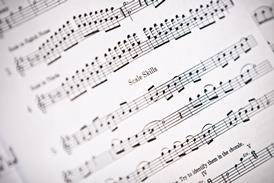
All 15 pieces on the album are included in a music book that will be released alongside the album. My wish is for each player to make these pieces their own and express them in their own way. Solo is a collection of pieces that share a journey of movement and transformation; these are universal stories, and the book is an invitation for cellists to explore their own musical journey and express each piece in their own voice.
The cello’s evolving role in contemporary music
There is comparatively little new repertoire for solo cello that embraces a simpler, more melodic language, especially when contrasted with the contemporary output available for instruments such as the piano. I’ve often felt that this leaves an interesting gap in the cello world, one that isn’t explored enough.
That is what drew me to this idea in the first place. I wanted to write music that feels contemporary but still very singable and clear in its expression, music that doesn’t overcomplicate itself and instead gives space for melody and immediacy to come through.
On a global level, I think we are starting to see a growing cohort of cellists who are simultaneously rigorous in their technical foundation and genuinely experimental in their practice, for example, cellists who can play the Dvořák concerto and then perform in a basement with a laptop and a loop pedal.
At the same time, I believe there is much more to be explored in the evolving role of the cello in contemporary music today, particularly through sound experimentation and production techniques. However, I still find that conservatory education remains largely oriented toward the standard repertoire and the standard career path, which is orchestral audition, solo recital and chamber music.
I believe it is important to broaden musical education to include areas such as improvisation, electronics, and self-production.
I believe there is much more to be explored in the evolving role of the cello in contemporary music today
Read: Asja Valčić: improvising is like composing in the moment
Read: The sound of lamenting: strings in new sound worlds
Read more Featured Stories like this in The Strad Playing Hub











No comments yet