







The violinist spoke to Davina Shum ahead of her Aspen Music Festival debut about how Colorado’s magnificent landscapes helped inform her recital programme of Schubert, Mozart and Brahms
Read more Featured Stories like this in The Strad Playing Hub
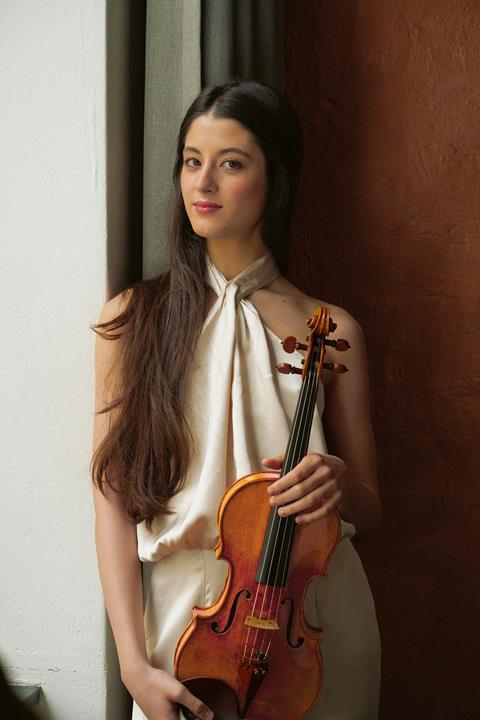
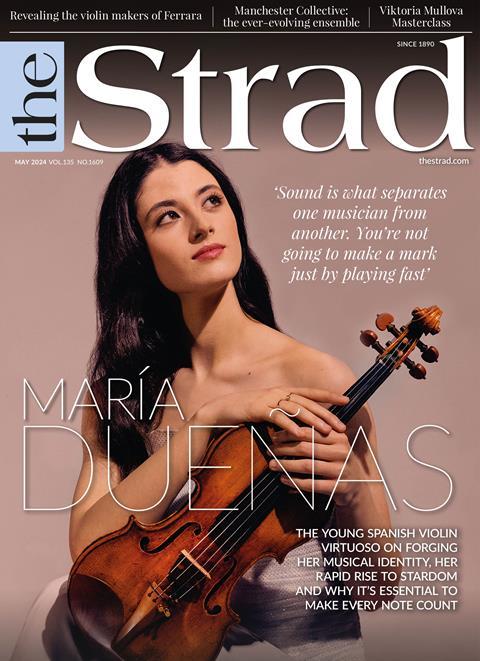
María Dueñas is no stranger to concert halls and festivals around the world. Just six months ago in January 2026, I watched her perform the Beethoven Violin Concerto to a full David Geffen Hall with the New York Philharmonic. In July 2026, I had the chance to see her again in performance, but this time in recital, making her Aspen Music Festival debut.
We had a chance to chat as she finished off her rehearsal in Aspen’s Harris Concert Hall, with her duo partner for this programme, the pianist Eric Lu. Listening through the door, I could hear the unmistakable lyricism of Morgen! by Richard Strauss – a strong suggestion that the pair were preparing an encore for that evening’s concert comprising works by Schubert, Mozart and Brahms.
Only days prior to our meeting, Dueñas was making her Ravinia Festival debut in Illinois, and now finds herself immersed in the beautiful landscape of Colorado. ‘It’s inspiring,’ she says. The rehearsal space that she was in the previous day was amid the mountains, so she took the opportunity to go on a hike after rehearsals.
Many composers took inspiration from nature – Dueñas speaks about how Mendelssohn, a keen painter, compiled a book full of his paintings of nature scenes. Brahms spent his summers composing in the Austrian countryside, while Beethoven took walks in Heiligenstadt during the onset of his deafness, enjoying peace and solace that informed his pastoral compositions.
Composers aside, how do performers take inspiration from nature? ‘I always have some music in my head,’ Dueñas says. ‘Just going for a walk in nature, music flows and I don’t have to think about it. I think it’s great to breathe and to be practising while looking at a mountain. It’s incredible and inspiring.’
The Colorado landscape may be inspiring for musicians, as well as lovers of skiing and extreme outdoor sports – Buttermilk Mountain in Aspen has been the site of the X Games action sports competition every winter since 2002 – it’s famously a popular place for city-dwellers to get some fresh air. Dueñas even describes the festival as having a ‘vacation feeling’.
‘It doesn’t feel like a job. You come here and enjoy being in the moment. And the festival feels like a community – they’re very proud of their artists that return because it really feels great to be here.’
At an elevation of over 2000m, performing, and even existing in Aspen has its challenges. Visitors are encouraged to avoid altitude sickness by boosting hydration with electrolyte powders – Dueñas sips from a bottle containing a bright green liquid to help boost oxygen levels, saying it helps her adjust to the conditions, bar a little bit of tiredness in the evenings.
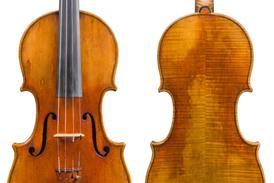
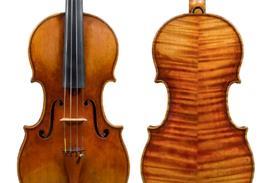
Her instrument, the 1718 ‘Michelangelo’ Stradivari violin on loan from the Karolina Blaberg Foundation, also requires careful attention at altitude. In this environment, she describes the sound of the violin as a bit dry.
‘The bow doesn’t grab the string as well. I always have to adjust with the bow, or move the bridge a little bit.’ She knows how to move her bridge by a few millimetres to adjust the sound – a task that strikes fear into the hearts of many string players. ‘It’s dangerous, but it’s necessary sometimes to adjust the sound a little.’
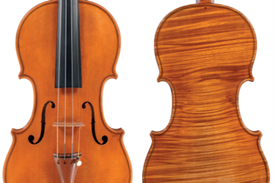
Dueñas chose the Stradivari to perform this German-Austrian recital programme, over her other violin, a 1779 Guadagnini. ‘I feel that [the Stradivari] violin has the depth needed. The Guadagnini is a bit more lightweight, so it would be great for Mozart or maybe Debussy. It has a more impressionistic sound, but the Strad has the depth that Brahms needs. It’s a mature sound.’
A mature sound needed for a programme concluding with Brahms’s Violin Sonata no.3 in D minor. ‘I feel that Brahms should be like the end of a journey,’ she says, a resolution following the Schubert Sonata in A major ‘Grand Duo’ and Mozart’s Violin Sonata in E minor. Starting with Schubert is not the easiest, she says. ‘It’s very delicate and tricky.’
She describes the Mozart sonata as not typical for the composer. ‘He wrote this sonata right after his mother died. It’s in E minor, which is also an unusual key for him.
‘I feel in general, Mozart was a very youthful person, very young and playful. He was also not a composer that composed biographically based on what was happening in his life. He would get some commissions and just write. So this sonata, I feel more of the personal influence of his mother, and we need to show this side of him.’
Dueñas and Lu prepared this programme having been assigned to play together by the festival, without having played together before, and with limited rehearsal time – something that Dueñas describes as a challenge. What’s it like performing an intense recital with a new partner? ‘You feel a bit naked because you don’t know the person at all. So you have to be very reactive on stage and be able to improvise a little bit to catch each other in the moment.’
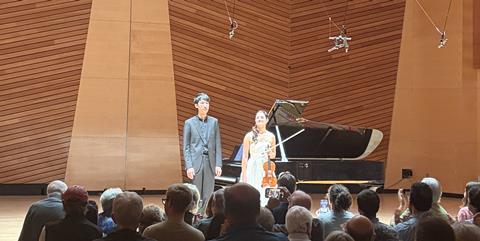
Later that day – and after a siesta for Dueñas – I took my seat to watch the recital, which Dueñas performed entirely by memory. Despite the new partnership, Dueñas and Lu exercised great camaraderie onstage, exchanging filigree passagework with matching virtuosity in the Schubert. The Mozart provided a dark insight into the composer’s psyche following his personal tragedy, as described by Dueñas earlier in the day, with intense, driving stabs that followed the sinewy, haunting opening arpeggios.
The duo played the Brahms sonata weaving turmoil with balance – there was no danger of the violin sound being swallowed up in the Harris Concert Hall’s fine acoustic. Following a standing ovation from an appreciative audience, comprising regular concertgoers and students of the Aspen Music Festival and School, the duo treated listeners to the aforementioned Morgen!.
So while performing at Aspen is described like a vacation by Dueñas, is there such a thing coming up for the 23-year-old? A busy summer season beckons, including a European tour with the European Union Youth Orchestra under the baton of Elim Chan, plus a residency at the Rheingau Musik Festival, as well as chamber music, a recital and a Beethoven Violin Concerto performance. But Dueñas, despite making Vienna her home for the past twelve years, will take a few weeks off in her native country of Spain. ‘Spain feels like home culturally and I have lots of family there. It’s always nice to go back and breathe by the sea.’
Returning back to nature, albeit in a different form – Dueñas takes inspiration from nature, on and off the stage.
Read: Making her mark: violinist María Dueñas
Read: Bravo James! Ehnes and NY Phil impress at rainy Vail
Read more Featured Stories like this in The Strad Playing Hub












No comments yet