







From free state-school music lessons to film soundtracks, chamber music and composition, cellist Caroline Dale reflects on the unexpected opportunities, mentors and moments that have shaped an extraordinary career
Discover more Featured Stories like this in The Strad Playing Hub
When I took part in BBC Young Musician in 1978 (which I found out about through a tiny advert at the back of the Radio Times) I was the only musician to reach the final who hadn’t come through the Menuhin School or equally impressive specialist music schools. I was profoundly lucky enough to be taught cello through my state school’s free music provision, which included peripatetic lessons. As I kept getting through it began to feel surreal: suddenly we were in the car to Manchester, meeting Yehudi Menuhin and being interviewed on camera by Humphrey Burton. I remember being among these incredible string players and thinking: what is this world I’ve been flung into?
A week after I played the Elgar Concerto on television, Jacqueline du Pré wrote to me. She wanted to meet and talk about life, love and cello. By then her MS was severe, but she’d still come and sit in the audience whenever I played at the Queen Elizabeth Hall or Wigmore Hall. Years later I had the privilege of being her cello ’voice’ for the film Hilary and Jackie.
I think about the opportunities and free access to music that I had in Middlesborough a lot now, because it’s largely gone. A state education really suited me: I loved sport as well as music. My mother learnt cello alongside me, and became good enough to teach beginners up to around grade five; by the time I left for the Royal Academy of Music, she was already watching pupils share instruments because there weren’t enough to go round. The arts are usually first against the wall when budgets are cut, and bursary schemes, wonderful as they are, are patching over something that used to be standard provision in Middlesborough.
After the Academy I spent two years abroad on a scholarship, studying with Pierre Fournier in Geneva and spending time at the Banff School of Fine Arts in Canada. Banff is where something shifted: classical, jazz, ballet and musical theatre all under one roof. It planted the idea that I didn’t have to be just a solo classical cellist. Back home, London Contemporary Dance got in touch, and soon I was going round the country playing in pits, thinking ’this is really good fun!’ Some people wondered why I had gone in a different direction, and asked why I wasn’t just doing cello concertos.
It was through working with London Contemporary Dance, that the composer Barrington Pheloung, who was the musical director, rang and asked if I fancied recording some music for a Channel 4 film. I’d never played in a studio or worn a pair of headphones to play. Barry went on to score Truly Madly Deeply, and then Hilary and Jackie, both of which I played solos on the soundtracks. This in turn led to me playing solo cello for George Fenton (The Old Oak and I, Daniel Blake), Dario Marianelli (Atonement), and Thomas Newman (1917), among many others.
When Nigel Kennedy asked me to join his quartet, another strand of my music really started. At Real World Studios he asked whether I’d ever thought of composing. I said I’d be no good at it: after Brahms, Beethoven, what could I offer?! He said: why not? Not too long after, I met John Reynolds, Sinéad O’Connor’s drummer and producer, who asked me to come and improvise some cello in his studio. We clicked immediately. Together with Justin Adams, Ghostland was born, and I started writing my own music.
People ask whether playing to a microphone feels different from playing to a hall. I don’t think it changes how I play, as I always try to perform as if there’s no other take coming, because you never know which one will be used. What changes the way you play is the audience.
Recording has taught me just how much subtlety a microphone picks up, and I can bring that quietness into a hall too. And an audience brings something a studio can’t fully match: I’ve rehearsed Messiaen’s Quartet for the End of Time and found it beautiful, but with people in the room it reduces you to tears.
What I didn’t expect was how differently my brain behaves when I’m composing rather than interpreting. I found that out properly making Such Sweet Thunder, my first solo album. I could sit down and play freely anything written by someone else, but when I tried to play my own piece, I found it more challenging as I was still thinking like the person who’d written it, not the person performing it.
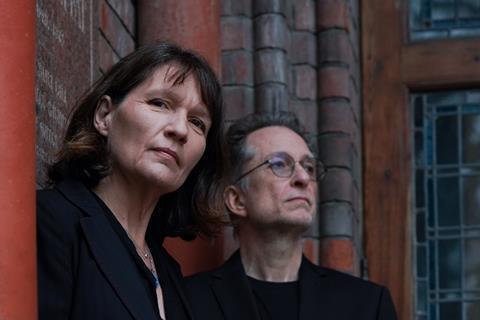
Cloud Chamber has brought together all my experience from the silver screen to the chamber music and classical solo performances. Gavin Greenaway and I have around 60 years of soundtrack work between us, and I think that’s exactly why the album came together so easily: we didn’t need to explain ourselves to each other.
In a session, I really love that my job is creating the emotion that these amazing composers are after. With Cloud Chamber, it’s wonderful that I have this connection with Gavin and we’re creating emotion that he has written – for recordings but also for a live audience.
My advice for a young musician would be: Try to say yes to every opportunity, as you’ll never know where it might lead.
I’ve never had a five-year plan, and every strand of what I do, from the classical work, the soundtracks, and now Cloud Chamber, has always come from a curiosity of exploring different genres. You genuinely don’t know where an opportunity would take you, and it would lead somewhere extraordinary. As Nigel Kennedy said, ’why not?’
Skylines, Cloud Chamber’s debut album, is out on 9 October. Listen here. The live album launch will be held at Kings Place on 12 October with further dates across the UK. Details and ticket links here.
Read: Geneva Lewis: the sport of chamber music
Read: Géza Szilvay: bridging tradition and innovation in string pedagogy
Discover more Featured Stories like this in The Strad Playing Hub


















No comments yet