












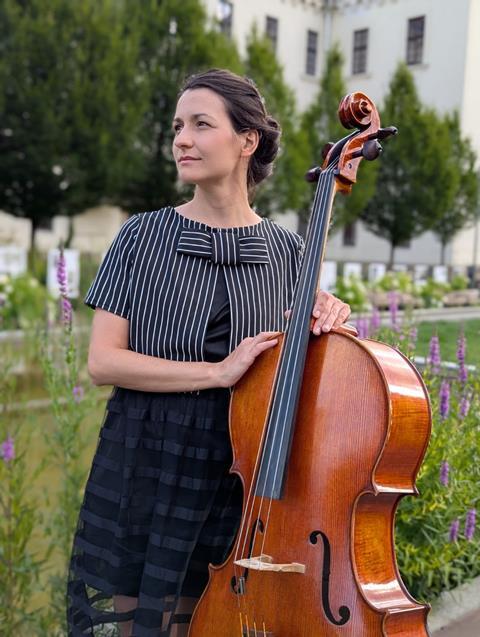
What happens when a high level of excellence becomes the precedent for continued future success? Cellist and researcher Joanna Latała advocates prioritising adaptation, learning and progress over results-based measures of value
Discover more Featured Stories like this in The Strad Playing Hub
Watching tennis this year, I have been struck by how quickly admiration becomes expectation. When leading players win, we celebrate their brilliance. When they lose, we immediately ask what happened. Novak Djokovic, whose approach to competition inspired my interest in mental training in sport, lost in the opening round of the 2026 US Open, his first opening-round Grand Slam defeat since 2006.
It left me thinking about the expectations surrounding an established performer. Once someone has repeatedly shown us exceptional ability, how much room do we leave for a different result?
I recognise this in the musical world. A young musician wins a competition, receives congratulations and gains new opportunities. Yet before the next performance, satisfaction may give way to a question: can I prove that I deserved it?
An orchestral player may feel something similar after years of being trusted to deliver. Their ambition may have little to do with outplaying colleagues, but they can still feel obliged to meet their highest standard every time. In both cases, an achievement has become an expectation.
What happens when being excellent is no longer something a musician does, but something they feel they must constantly prove?
When success becomes the new minimum
The definition of success can begin to move faster than the musician can reach it. A student who once dreamed of entering a particular conservatoire gains a place, then feels disappointed at being an ordinary member of an exceptional class. A competition prize brings little satisfaction if it was not first prize. Even first prize may soon feel insufficient without another success to confirm it. The achievement remains on the CV, but loses its power to reassure the person who earned it. Each new goal seems to promise a sense of arrival that disappears as soon as the next comparison becomes available.
There is nothing unusual about wanting to develop beyond an achievement. The question is whether we can acknowledge it before deciding what comes next. A musician can be pleased with a performance and still hear what needs work. Yet if satisfaction is permitted only when nothing remains to improve, it becomes almost impossible to experience. We may start treating everything we have learnt as merely what should have been expected of us.
If every achievement immediately becomes the new minimum, when does a musician ever get to feel successful?
You can quickly start to hate and despise the potential you have, to perceive it as a burden — Golf Is Not a Game of Perfect by Bob Rotella
When performance becomes a test of identity
For someone used to being called gifted or exceptional, this can reach beyond professional ambition. A disappointing result may raise the fear that they are no longer the person others believed them to be. Before a concert, ‘I want to play well’ can become ‘I must show that I am still good enough.’ Imagine approaching an exposed solo while wondering whether colleagues will notice that you are less secure today. The sound and direction of the phrase now compete for attention with an imagined judgement. The performance carries the additional task of defending an identity.
About a month after the US Open, I found myself watching Djokovic in Beijing at the China Open, absorbed once again. Seeing him winning the tournament reminded me how incomplete the story of one defeat can be. He was still discussing health difficulties during the tournament, so this was hardly evidence that every problem had disappeared. It was simply a reminder that an earlier result had not settled what could happen next. We can recognise this when watching someone else’s career, while finding it much harder to allow that same openness in our own.
My experience: the pull of familiar practice habits
I have recently noticed how strongly the need to be ready can affect my own practice. When the repertoire is demanding and preparation time is short, I feel an almost overwhelming pull towards the approach I relied on as a student: repeat the passage, start slowly with the metronome and gradually increase the tempo. The familiar promise is that enough repetitions will make it secure. Yet I also have mental practice methods that, in my experience, help me learn this kind of material more efficiently. Choosing them under pressure can feel surprisingly difficult. I can feel anxiety and frustration building as I worry that I will not be ready in time.
The resistance feels physical, even though I can reason through why I want to work differently. Part of me recognises a more useful approach for the time available; another part insists that the old way has got me through before. I have to make a deliberate effort to interrupt that habit and learn the passage differently. Repetition and metronome work have their place. What unsettles me is how difficult it can feel to choose another method when the familiar one offers reassurance. I know I need to adapt my preparation, yet the demand to be ready makes the process of changing it feel risky.
This experience has made me think about the space we allow ourselves to keep learning once we are professionals. We still encounter repertoire that demands a different approach, and circumstances in which established routines no longer fit. At the same time, rehearsals and concerts require us to be ready. When previous success becomes an obligation to remain consistently secure, even a useful adjustment can feel like a threat to that obligation. We may know intellectually that development involves change while struggling to tolerate its uncertainty in the practice room.
It’s not that I don’t know what to do, it’s that I don’t do what I know! — The Inner Game of Tennis by W. Timothy Gallwey
Performing your best and needing to be the best
There is an important difference between wanting to perform at our best and needing to be the best. Being the best depends partly on who else is playing and how others judge us. Preparation and musical decisions offer more specific things to work on. Even ‘performing at our best’ needs a humane interpretation: it cannot mean reproducing our finest-ever playing every evening. A serious commitment to quality includes assessing what the music requires today and choosing how to prepare it under the circumstances we actually have.
Teachers, colleagues and musicians themselves can help make that distinction practical. After a competition, the placing need not be the end of the conversation. What became more secure during preparation? What happened when something went wrong? What deserves attention next? It should also be possible to name what went well without immediately cancelling it with a criticism. Acknowledging progress gives us something concrete to build on. It allows the next concert to have a particular learning purpose, rather than becoming another attempt to settle whether we are good enough.
Acknowledging progress gives us something concrete to build on
Conclusion
High standards can remain part of a musical life without determining a person’s worth. We can take a disappointing performance seriously, listen to criticism and change our preparation without making that evening a judgement on everything we are. An exceptional result does not create a permanent obligation to be exceptional. A less successful one does not erase the work, ability or experience that preceded it. Each performance gives us something to understand and respond to; our value as people is not something we should have to earn again every time we walk onto the stage.
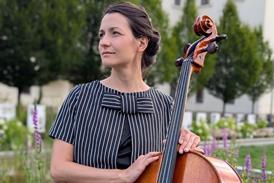
Joanna Latała is a Polish-born cellist and researcher specialising in mental training for musicians. Based in Scandinavia, she has performed at venues such as Carnegie Hall and Berliner Philharmonie. In 2023, she founded the platform Achieve Performance Mindset, where she shares insights on performance psychology to help musicians build mental resilience.

Read: Fear of winning: why preparation alone is not enough
Read: Enhancing musical performance: the power of pre-performance routines
Discover more Featured Stories like this in The Strad Playing Hub














No comments yet