




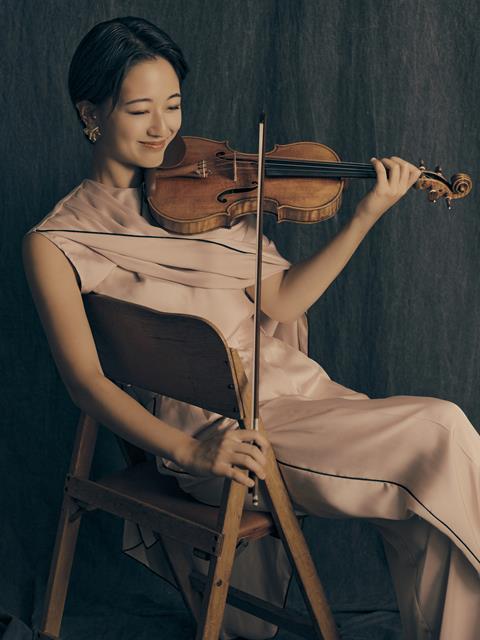
How does one develop one’s own interpretation of solo Bach, when the repertoire comes with such interpretative inheritance? Violinist SongHa Choi reflects on a recent performance of Bach’s Partitas in The Hague, as well as finding a sense of voice shaped by the moment
Read more Featured Stories like this in The Strad Playing Hub
One of the paradoxes of performing the music of Bach is that playing alone rarely feels solitary. The silence before the first note carries traces of everything that surrounds this repertoire, which includes centuries of interpretation, habits passed on through different schools, and the clarity of the score itself.
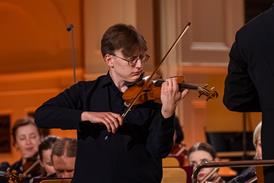
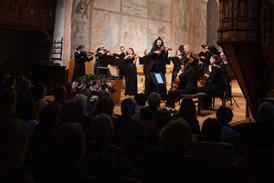
Last month, after performing all three Partitas in a programme titled Partitas in the Spotlight at Amare in The Hague, I found myself thinking again about how my relationship with these works has been shifting, especially after playing the full set in a single concert for the first time this year. The concert became a natural moment to pause and reflect, not on one performance but on how these pieces continue to reshape themselves depending on where I am and how I listen.
My earliest encounters with the music of Bach, like many young musicians’, were shaped by competitions. In most early rounds it is almost always required to play a movement of Bach, so this repertoire enters your life before you have had time to understand what these pieces really contain. That environment demanded discipline, precision, and a kind of structural transparency that I still rely on.
It also created a particular mindset around the music of Bach. Among students it was common to hear the half-joking advice to ’offend as few people as possible,’ which simply reflected how varied and personal everyone’s opinions were. The goal was not to avoid expression but to avoid choosing something that someone might interpret as too much of one direction or another. I am grateful for that early training as it taught me to listen carefully, but it did also make me realise how quietly that cautious way of thinking had settled into my hands.
As I started to dive into the Partitas, I became increasingly aware of the interpretative inheritance around them. The Romantic tradition offers long, singing lines and a conscious separation of voices, which is often achieved by shifting high up a single string, even through multiple position changes, to keep the colour consistent. Vibrato is a structural tool that shapes tension and release, and the sound world is warm, expressive, and deeply sustained.
The historically informed approach brings a very different instinct that emphasises clarity of dance rhythm, rhetorical articulation, lightness, and little or no vibrato, with tempi rooted in the character of the dances themselves. The sound is shaped as much by the equipment, which includes the bow, the strings, and the set-up of the instrument, as by stylistic intention. Today, most players blend these influences to various degrees, and these traditions are not concepts but things that live directly in the hand and the ear.
Conversations with colleagues made this even more vivid. Everyone seemed to carry a different sense of what the music asks for. Some emphasised articulation, others harmonic direction, and others the motion or nature of the dance. None of these perspectives necessarily contradicted each other, but they simply revealed how deeply personal this repertoire becomes. The pieces feel different in every place I bring them. A small room, a large concert hall, or an old church creates its own atmosphere. I realised that I react differently to each setting, and the music responds to those changes. Even so, it always feels raw and naked.
In the middle of the preparations, I arrived at a lesson with my professor, Kolja Blacher at Hanns Eisler Hochschule für Musik in Berlin, carrying a list of questions about bow strokes, tempo flexibility, ornamentation, and all the details that accumulate around the Partitas. I played through a movement from the B minor Partita, expecting the usual discussion.
Instead, he reminded me that while these questions are important, the Partitas are also simply extraordinary pieces of instrumental music. If I listened closely to the writing itself, rather than trying to satisfy every stylistic expectation, many decisions would become clearer. It was not a dismissal of historical awareness. It was a reminder that focusing too much on rules can create its own kind of distortion. That comment helped to clear away the noise surrounding the score.
If I listened closely to the writing itself, rather than trying to satisfy every stylistic expectation, many decisions would become clearer
That insight reshaped the way I approached the rest of my preparation. Instead of trying to fit neatly into one tradition or avoiding stepping too far in any direction, I began paying attention to what the music seemed to suggest on its own terms. I looked at where the harmony naturally leads, how a phrase breathes, and how tension gathers and releases. The more I viewed the score this way, the more flexible the Partitas felt. A line could move with the buoyancy of a dance or unfold like a vocal phrase, and the structure remained intact either way.
The abundance of recordings and resources, which once made Bach feel overwhelming, began to feel freeing. I also became aware that this abundance can be restricting, yet it is something our generation is lucky to have as a source to learn from. They do not offer answers so much as they reveal the breadth of legitimate possibilities. Hearing such a range of approaches, whether live, in rehearsals, or in fragments from masterclasses, made me realise that consistency is not the point. The same movement can work beautifully when played with rhetorical clarity or with long, singing lines. The writing supports multiple truths.
Over time, I began to feel the beginnings of a sense of voice, not a fixed one and not something I would claim as an identity, but a temporary understanding shaped by where I am right now. It did not come from trying to innovate or align myself with a particular tradition. It came from listening to what felt essential in each movement, which included the shape of the harmony, the motion of the dances, and the way a sequence unfolds.
The slower movements made this especially clear. When I have played the Allemandes, they have shown me different things depending on the space and the moment. Sometimes they move like continuous lines of thoughts and voices, and sometimes they settle into a sequence of breaths. Neither feels more correct. Each reveals something different about the structure. The point is not to choose between them forever but to understand why each perspective works.
I began to feel the beginnings of a sense of voice, a temporary understanding shaped by where I am right now
What this past season taught me is that interpretation is less about arriving at a fixed answer and more about learning how to begin again with clearer ears. Bach seems to invite this kind of ongoing recalibration. He offers enough structure to keep you grounded and enough openness to allow your thinking to evolve. The more I played these works, the more I felt encouraged to let go of the cautiousness that competitions once instilled, not by rejecting it but by placing it in the broader context of everything else these pieces contain.
These concerts felt like early experiments in what will eventually be a lifelong process. I do not expect the insights from this year to last unchanged, and that feels right. Bach’s music has already absorbed so many interpretations before us that it seems natural for each performer’s understanding to shift as well. What I think now is provisional, and I hope it remains that way.
Perhaps the most valuable part of playing Bach is recognising that the pieces continue to reorganise themselves depending on where you are, what you have learnt, and how you listen. Each performance feels like the beginning of something rather than the conclusion of it.










No comments yet