









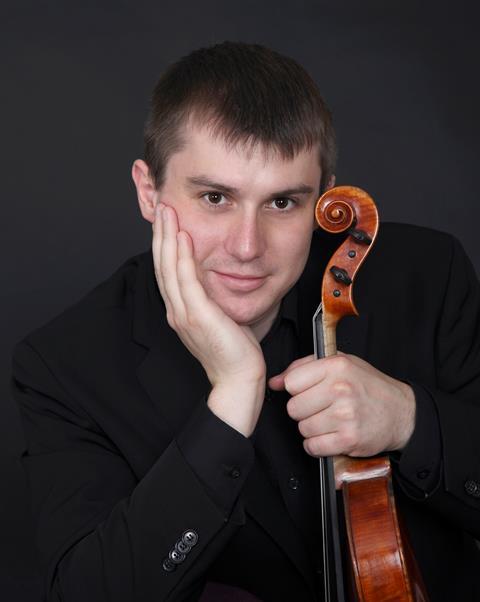
Violist Peter Mallinson explores the history of music making in intimate, domestic settings, providing the inspiration for the new album A Musical Soirée
Read more Featured Stories like this in The Strad Playing Hub
The making of music in a private setting has a distinguished pre-history. In Ancient Greece, instrumental music and song were an essential feature of symposia in aristocratic households; contemporary accounts describe the performance of skolia or drinking songs, and Athenian pottery often depicts both hired entertainers and guests playing the aulos (a double-piped reed instrument) or the barbiton (a long-necked lyre).
The development of Hausmusik, from professional entertainments at royal courts to amateur gatherings in Victorian parlours, is a continuation of this tradition. A Musical Soirée takes the listener on a 300-year journey, offering a programme of pieces which give a glimpse into the varied and very special worlds of domestic performance.
More than two millennia after the Greeks had gathered to drink, debate and make music, the court of Anna Amalia, Duchess of Saxe-Weimar and niece of Frederick the Great, was to become one of the most celebrated cultural centres in Germany, attracting the leading musicians, philosophers, and writers of the time, including Goethe and Schiller.
A staunch supporter of the arts, Anna Amalia (1739-1807) was nevertheless much more than a patron being entertained; she was herself a contributor to this cultural creativity. Her Divertimento in B flat major is an exciting part of musical history, not only from a doubtless biased violist’s perspective (the piece is predominantly led by the viola), but also because its attributed date of composition (c.1780) makes it one of the earliest chamber pieces composed for the modern clarinet, almost certainly pre-dating Mozart’s ’Kegelstatt’ Trio of 1786.
It is no surprise that music played such a significant part in these cultural centres, animated by a spirit of exchange. What Goethe said of the string quartet in a letter to Carl Friedrich Zelter in 1829: ’four reasonable people conversing with one another’, applies equally to all forms of chamber music.
Typically featuring one player to each part it is an exercise in musical dialogue, each contributing to a whole greater than the sum of its parts. And, one might argue, the audience also had its part to play, a privileged and receptive witness, the final (indispensable) element in a process of enrichment and enlightenment.
It was this sense of involvement that we found particularly powerful in August Klughardt’s Schilflieder. Klughardt (1847-1902) was music director at the same Weimar court that Anna Amalia had presided over 100 years earlier. Musical styles had changed dramatically, and this work suggests a quite different relationship with its audience.
Inspired by the late-Romantic Schilflieder of Nikolaus Lenau - the poet’s outpouring of grief at separation from his beloved - each movement of Klughardt’s work is, at one level, an expression of raw emotion. But it has a vulnerability too, reaching out through its modest chamber forces to an understanding listener.
An exact contemporary of Klughardt, but inhabiting the quite different world of English chamber music was the amateur violinist and influential patron, Walter Willson Cobbett (1847-1937). His 1929 Cyclopedic Survey of Chamber Music is still considered one of the main authoritative sources on the subject. The Cobbett Medal for service to chamber music, which he endowed, is still awarded every year.
And his series of ’Phantasy’ commissions and competitions inspired such works as Vaughan Williams’ ’Phantasy’ Quintet and the Bridge ’Phantasy’ for Piano Quartet, now firmly established in the repertoire. A committed sponsor of composition, he was an advocate too of domestic performance, and recalled with delight his many collaborations with both amateur and professional players, who ’gratified [me] by expressing their personal pleasure at taking part in my home music-making, and proved their sincerity by repeated visits’.
Harry Waldo Warner (1874-1945), Susan Spain-Dunk (1880-1962), and York Bowen (1884-1961) are all composers who benefitted from the generosity of Cobbett, both as a result of his initiatives and his friendship. All three won prizes in his Phantasy competitions, but all three were also performers. Featured on this disc are works by each of them which demonstrate their unique compositional voice, but which also give us an insight into their virtuosic capabilities.
It seems particularly fitting that Warner’s Divertimento in D ’Olden Style’ is dedicated to Raymond Pitcairn. Pitcairn was a lawyer, businessman, and generous patron of music. His Glencairn home was specially designed to provide a space for friends and members of the community to enjoy musical performances. The ceiling of its concert room was fitted with approximately 11,000 acoustic tiles, the resultant quality of sound earning the praise of Stokowski, Walter, and Toscanini.
One might say that this gives a whole new meaning to the comment often attributed to Goethe: ’Music is liquid architecture; architecture is frozen music’. In this way, as in others, Glencairn and the Schloss Weimar were part of the same tradition.
Music, no less than other performing arts, depends (and thrives) on support, both financial and moral. From Louis XIV to Ludwig II, Nadezhda von Meck to Elizabeth Sprague Coolidge, individuals have played a defining role in the sponsorship of musical composition. But no less vital support is given to performers, and not just by those who preside over a royal court or aristocratic salon.
Hausmusik does not require a grand setting for its effect; its energy and convivial spirit will thrive wherever just a few like-minded people, players and listeners, come together for a shared experience. Anna Amalia, Cobbett, and Pitcairn, all linked in different ways to the music on this disc, understood the conditions and unique value of chamber performance. As do many others today, as we can vouch from experience.
On its journey to the recording studio, much of this programme has been performed in private settings, from a converted barn where, in a series of concerts arranged by Deborah, amateur and professional musicians give recitals to the local community, to the purpose-built music room added to a suburban house where Mary invites musicians and friends to enjoy together an afternoon of music-making.
Such individuals, no less than the storied patrons of the past, keep alive the true spirit of Hausmusik, ’frozen music’ thawed in the intimacy of a home.
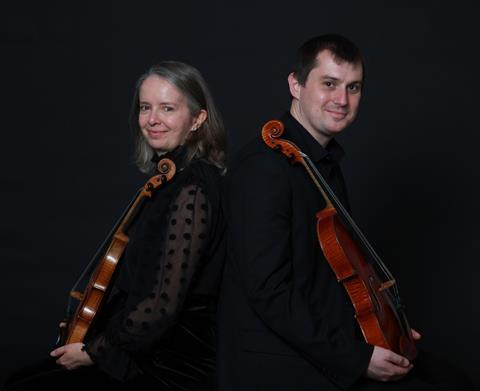
A Musical Soirée, featuring violinist Shirley Turner, violist Peter Mallinson and pianist Lynn Arnold, is out now on Meridian Records and available on Apple Music and Spotify.
Read: Earth Day with ecofeminism: exploring nature-inspired works by women composers
Read more Featured Stories like this in The Strad Playing Hub











No comments yet