










James Bash reports back from the Musicus Fest 2025, which took place in November and December, and speaks to founders Trey and Chui-Inn Lee about how chamber music has a place in Hong Kong
Read more Featured Stories like this in The Strad Playing Hub
Known primarily as a business hub where East and West converge, Hong Kong is an intricate matrix of skyscrapers, highways, and people amid a collection of mountainous islands and harbours. It is also home of the Musicus Society, which was founded in 2010 by visionary cellist Trey Lee and his sister Chui-Inn Lee. That has led to a flourishing chamber music scene with international artists, workshops and masterclasses in schools, concert series in historical sites, and an annual chamber music festival at Hong Kong City Hall.
Currently operating with a budget of $12m HK (£1,145), Musicus Society brings musicians and ensembles from around the world, such as Louis Lortie, Christopher Warren-Green, Pekka Kuusisto, the English Chamber Orchestra, to Hong Kong. The organisation has also funded tours in Europe, featuring top-tier young professionals who are natives of Hong Kong.
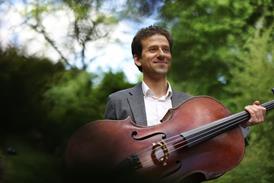
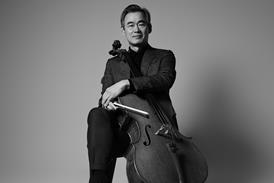
Winner of the 2004 International Antonio Janigro Cello Competition, Trey, who is based in Berlin, maintains an international career with recitals and concertos with major orchestras, spanning Europe, North America, and Asia. He gave the world premieres of Bright Sheng’s The Blazing Mirage and Finnish composer Kirmo Lintinen’s Cello Concerto and has recorded on the EMI label and the Signum Records label.
Yet in the early 2000s, Trey knew that Hong Kong was just a blip in the classical music world.
’Wherever I was performing, especially in the West,’ said Trey during my visit to the city, ’I was the first Hong Kong musician that anyone had ever met or heard. I found myself often explaining Hong Kong’s classical music scene, because no one knew of this aspect of Hong Kong. So I thought that music would be a great way to communicate and foster more cross-cultural collaboration and understanding.’
Trey had also noticed a rising interest in classical music in his hometown.
’I always saw many young people studying music,’ said Trey. ’Schools that have resources required their students to learn how to play at least one instrument. But I didn’t see these young people continuing to make music as a profession. There were many factors working against that: tradition, societal pressures, and family expectations to make a living. I thought that there needed to be a platform to show that you can pursue music – to show the parents also. It is all about music and us – as a community together; hence, Musicus.’
So, Trey talked to his sister, Chui-Inn, and together they decided to launch the Musicus Society.
’You need a unique idea,’ said Chui-Inn. ’You have something that the community feels is a need but no one is doing it. Then you start cold calling. That was my training at IMG – International Management Group. I was the GM of IMG China.’
Chui-Inn the quickly set about to form a team to recruit funders.
’Because Trey is an international soloist, he had some corporate sponsors; so we asked them to support our newly formed organisation,’ explained Chui-Inn. ’They agreed that this was an excellent idea for Hong Kong. So, they joined the effort and supported us with sponsorships.’
That core group allowed Musicus Society to bring professional musicians from overseas to give concerts and collaborations in Hong Kong. With a solid basis, Musicus Society was ready for what came next.
’In 2013, the Hong Kong government announced a grant to support fledgling arts organisations,’ said Chui-Inn. ’The government would give us two dollars for every dollar donated. By the next year, we succeeded with that match.’
’Then two years later, in 2016, other organisations knocked on our door to work with us,’ added Chui-Inn. ’That’s when the Hong Kong Jockey Club came to us. They really liked our Heritage Program. So, they became a major sponsor.’
It turns out that the Hong Kong Jockey Club, a vestige of British colonial times, is a non-profit organisation that promotes horse racing and gambling. It donates its proceeds to charities, including health, medical, educational, and cultural groups. According to Wikipedia, the total amount in 2022-2023 was $35.9 billion HK.
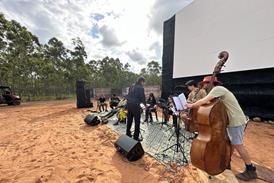
Musicus Society’s Heritage Program places chamber music concerts in historical sites.
’Hong Kong’s history is totally unique in the world because of the East-West fusion,’ said Trey. ’Placing concerts in historical sites has become our most popular program. Audiences want to access sites that had been off-limits. Because of the concerts, they get to go to these places, and through music, we tell the story or complement the site. It is kind of a rediscovery for everyone.’
The first Heritage Program concert took place at an orphanage in the centre of the city.
’The orphanage has traditional Chinese architecture,’ said Trey. ’It was the first time that the building was open to the public. Everyone was curious. We paired the music with the time when Dvořák was in New York City. Similar to immigrants coming to America, many orphaned girls came to Hong Kong from mainland China.’
’Another programme took place at the Christian-Buddhist Centre – up in the hills of Kowloon. It was founded by a Norwegian missionary who wanted to establish a center of mutual understanding between faiths. It’s a blend of styles – Scandinavian Chirstian and Chinese Buddhist architectural styles. So, our programme offered Grieg’s Peer Gynt.’
’The Heritage concerts have become so popular that the tickets sell out 30 minutes after they become available online,’ noted Chui-Inn.
Musicus Society has also experienced success with its school visitation programme.
’We go to under-resourced schools, where families don’t have the money to study music,’ said Trey. ’We bring in artists to perform. That has given many students the opportunity to hear classical music live for the first time.’
’We have more than 120 schools that want us, but we only have enough resources to go to 30 schools,’ added Chui-Inn. ’With more funding, we hope to improve on that.’
’We also have ensemble training where students sit side by side and perform together with professionals from overseas,’ said Trey. ’This has never been done before – to play professionally on a world-class level – even if it’s for one moment on stage. I had that experience in the US at summer camps and at festivals. So, I know that this kind of experience would inspire the young musicians and parents too.’
The highest level of Hong Kong musicians – those who are attending conservatories around the world in pursuit of a career – are members of Musicus Soloists Hong Kong. Musicus Society also sponsors annual competition called the Young Artist Audition, which was won this year by violist Hoi Yan-lok. He is studying in Vienna, Austria, and has performed with the Verbier Festival Orchestra and the Vienna Symphony Orchestra. After winning this year’s competition, he gave a recital in Hong Kong and played with the Musicus Soloists Hong Kong in the Musicus Fest finale, 7 December at Hong Kong City Hall.
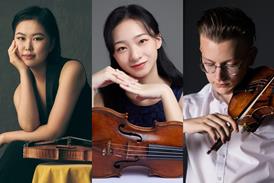
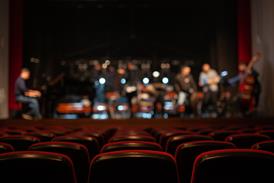
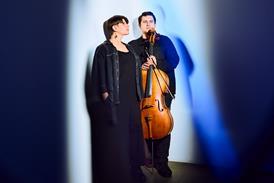
This year’s Musicus Fest opened with a concert that featured Trey Lee and the English Chamber Orchestra. Although I missed that performance, I was able to attend a one-hour family show (6 December) and the festival finale (7 December) in which Lee and Musicus Soloists Hong Kong collaborated with Angela Chan and Jacques Forestier, co-winners of the 2024 Joseph Joachim Violin Competition at the Concert Hall.
To make things perfectly clear, the Hong Kong City Hall is not the headquarters of the city’s government. Instead, it is a complex of buildings that provides some municipal services, a parking garage, a library, and performing arts venues, including the Concert Hall. Built in the 1960s, the hall has seating for 1,430 and excellent acoustics.
In the family show, Marco Polo’s Musical Encounter of East and West, the Venetian trader brings Chinese musical instruments back to his hometown. Several performers gave examples of music that allowed listeners to compare sounds from Eastern and Western instruments, and the final scene wrapped it up with a festive ’Carnival of Venice.’
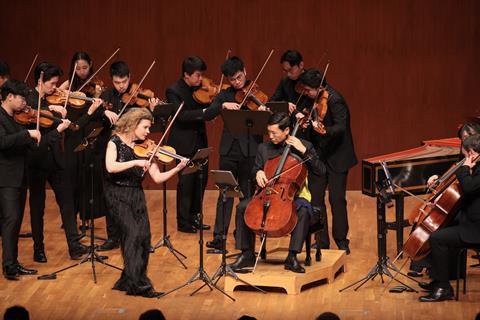
A nearly full house greeted the Musicus Fest finale, which began with Lee and Finnish violinist Minna Pensola teaming up with the Musicus Soloists Hong Kong to deliver a stellar rendition of Vivaldi’s Concerto for Violin and Cello in F major. Pensola’s cat-like movements – often crouching and stepping forward – were imbued with an intensity that was mirrored by Lee with equal panache. Lee’s lithe phrasing in the second movement (Largo) was sometimes overshadowed by Australian cellist Martin Smith but still effectively calmed the mood before the scintillating Allegro, in which Pensola and Lee echoed each other with wild runs.
Canadian violinist Jacques Forestier followed with an invigorating account of Tartini’s Violin Sonata in G minor (’Devil’s Trill’) in an arrangement by Fritz Kreisler that incorporates string orchestra. Forestier established a poetic atmosphere prior to his eloquent duet with harpsichordist Shane Levesque. Then came a dramatic transition to continuous trilling passages that were diabolically interspersed with notes that seemed to leap out of nowhere — all of which were executed impeccably by Forestier.
Equally impressive was Angela Chan’s performance of Locatelli’s Violin Concerto in D major, Op. 3, No. 12 (’Harmonic Labyrinth’). Chan, a native of Hong Kong, negotiated the minefield of challenging passages with elan. The bird-like sounds she elicited in the first movement were just a tantalising prelude to the treacherous journey of the final movement, in which she shredded bow hair. She conquered every mountain with immaculate finger work and a riveting fierceness that brought down the house.
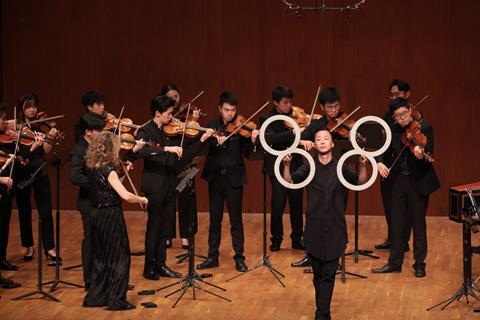
Interspersed between the Tartini and Locatelli pieces were Satie’s Gymnopédies Nos. 1 and 3 in an arrangement for string orchestra by Wolfgang Birtel. They were accompanied by flow artist Chris Lam, who balanced objects in a hypnotic way that perfectly meshed with Satie’s music. With his long arms, Lam used sets of rings to create all sorts of intriguing visual constructs, and the music almost disappeared into the background.
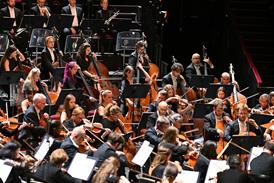
After intermission, Pensola and the Musicus Soloists gave a passionate performance of Beethoven’s Symphony No. 5 in an arrangement for string orchestra by Carl Friedrich Ebers. The violas ably took over the French horn parts with gusto, but I missed the horns all the same. Overall, the ensemble playing was tight and precise and made the quicksilver runs sparkle. Superbly crafted dynamics enhanced the music-making, and the performance generated sustained acclamation from concertgoers.
It’s been a trying time in Hong Kong because of the recent tragedy in which several high-rise apartment towers that primarily housed seniors were consumed by fire. As a gesture of comfort, the festival artists, including Chan and Forestier, played Piazzolla’s Ave Maria with great sensitivity, allowing the music to breathe and acquire depth. The audience waited almost a full minute before responding with subdued yet heartfelt applause.
Read: Masterclass: Schumann Five Pieces in Folk Style op.102, first piece
Read: Postcard from Hong Kong: Musicus Fest
Read more Featured Stories like this in The Strad Playing Hub


















No comments yet