
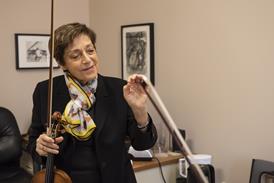

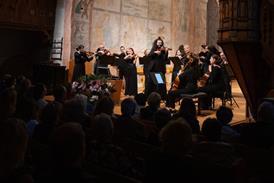


Ahead of Up Close and Musical’s sixth-season opening concert, violist Shiry Rashkovsky shares how repertoire, pacing and collaboration helped shape a programme that gives equal prominence to the violin, viola and cello
Discover more Featured Stories like this in The Strad Playing Hub
Balancing three voices in a chamber programme is a beautiful task. The opportunity to highlight each instrument’s voice while spotlighting the individual players’ unique musical identity for the launch of Up Close and Musical’s sixth season was one that artistic director Shiry Rashkovsky relished, but was not without its challenges.
As a violist, I am acutely aware of the roles we all play in chamber music. I often find myself flying between supportive, harmonically and rhythmically driving, and soloistic positions, and it’s one of my greatest sources of joy to integrate these with colleagues who inspire and push me musically.
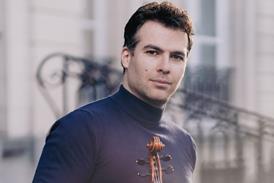
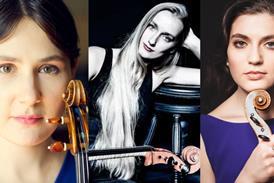
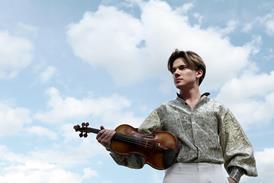
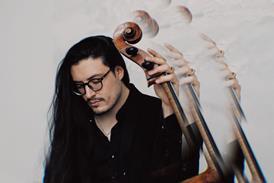
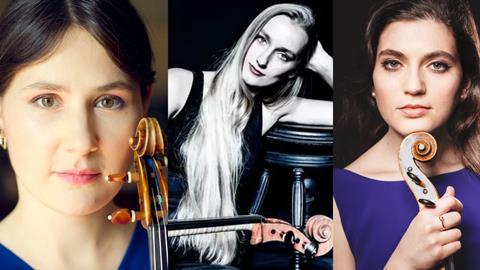
Running my own series has afforded me the opportunity to programme creatively, and with Up Close and Musical’s newly expanded season and larger venue partner, The Amadeus, I have taken the chance to bring together long-standing, internationally-based friends, violinist Fanny Clamagirand and cellist Margarita Balanas for a varied chamber programme for our opening night.
But how to go about programming an evening which gives space for each instrument’s voice to come to the fore? And what of the programme’s position in the larger framework of the season – how might it balance with the other repertoire, instrumentation and indeed genres?
The most obvious proposition might be to simply programme a selection of strings trios and be done with it, but I think this misses the beauty of having three soloists come together, each with their own dynamism and attitude.
For such an occasion, duo repertoire can meaningfully carry idiosyncrasy, give room for individual virtuosity and allow each instrument to counterbalance the other in different combinations. It provides greater variety for the listener, as does the obvious visual effect of the different pairings, and supports the effectiveness of the programme as a whole.
For the players, it affords the luxury of exploring the relationship between each instrument, bringing forth playfulness and surprise as new intricacies are discovered, a rare occasion as this repertoire is not often programmed; and for me as a violist, the drive to promote works where my voice is centred and elevated is, at minimum, primal.
How then can an effective programme be put together? The ethos at Up Close and Musical is fundamentally collaborative: artists are invited to curate their own programmes, and indeed a major consideration in the structuring of the series is the artists’ unique programming styles.
Fanny, Margarita and I discussed various works and their merits at length (189 WhatsApp messages over what felt like 32 years but was probably shorter), with clear talking points emerging early on: how much should each of us play; which works would be more familiar, or more challenging, to a UK audience, and what balance of the two were we building towards; and, practically, which repertoire was already known to us, and therefore more reasonable to programme for a single performance alongside works that would be newer. The options we found were rich, and varied.
We opted to open with canonical composers, Mozart and Ravel, considering that these would root the season’s launch in core repertoire before its boundaries, and adjacent genres, would be explored. Mozart’s Duo for violin and viola, K423 begins with a joyfully resonant G major chord, evenly balancing soprano and alto voices with a charming interplay of solo and accompaniment.
The Ravel Sonata for violin and cello follows with acute athleticism and angular virtuosity, both parts often entertaining the same register in tight synchronicity. In both of these works, each voice comes to the fore lyrically, percussively, in depth and breadth of sound or rhythmic tension; and the stylistic difference between the two pieces highlights the technical extremities of each instrument, and provides interest and excitement for the listener.
But the space to explore comes with a hefty time-stamp, with the Mozart running at 17’, and the Ravel, 21’; a substantial first half. This presented a new challenge for the series: previously, concerts were programmed to last 60’ without interval, with two concerts an evening; in its newly expanded season, concerts take on the traditional two-half format.
We needed to find a foil for the first half, with some shorter works to build momentum towards the culmination of the programme, Dohnányi’s Serenade for String Trio (which, as a violist, I was happy to play, thanks to a winning solo in the second movement).
Caroline Shaw’s Limestone and Felt, a particular favourite of mine, opens the second half with six minutes of intermingled viola and cello pizzicati and sul pont arpeggiated lines; Grażyna Bacewicz’s spritely Easy Duets on Folk Themes for two violins (my own transcription for violin and viola) would then provide a connection to the folk and dance elements of the Serenade.
I’m a big believer in using pacing to build a programme – piece order is key.
I am certain that the WhatsApp chain will pay off. There’s nothing better than collaborative music-making, which should really read as tautology; giving space to illuminate each voice makes for exciting programming for the audience, and for the musicians.
The opening concert of Up Close and Musical takes place on 13 November 2026.












No comments yet