







The Portuguese chamber group releases a new album comprising Schubert’s ‘Trout’ Quintet and Dvořák’s Piano Quartet no.1. Filipe Pinto-Ribeiro shares his love for these two landmark works for piano and strings
Discover more Featured Stories like this in The Strad Playing Hub
On 30 October 2026, the DSCH–Shostakovich Ensemble releases its new album of Schubert’s ‘Trout’ Quintet and Dvořák’s Piano Quartet no.1.
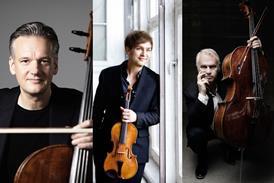
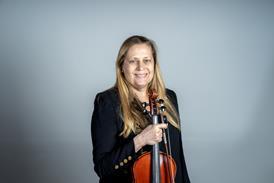
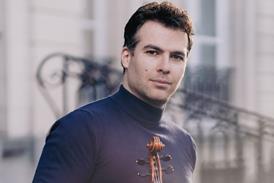
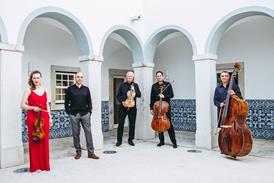
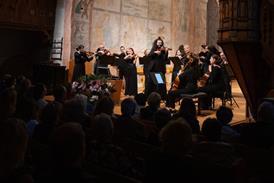
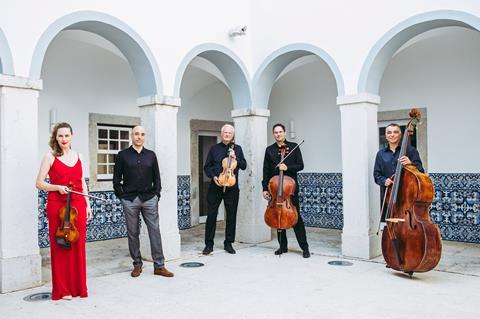
The Lisbon-based group, comprising pianist Filipe Pinto-Ribeiro, violinist Esther Hoppe, violist Lars Anders Tomter, cellist Christian Poltéra and double bassist Tiago Pinto-Ribeiro, presents two monumental examples of Romantic chamber music repertoire. Both the Schubert and Dvořák reveal different yet complementary approaches to Romantic chamber music, highlighting the composers’ abilities to create expansive melodies, explore instrumental colours and balance emotional depth with moments of musical exuberance.
The recording follows the ensemble’s previous discography of the world premiere recording of Shostakovich’s complete chamber music for piano and strings, released in 2016, as well as Beethoven’s Piano Trios op. 11 and op. 38, released in 2021.
Filipe Pinto-Ribeiro spoke to The Strad about the ensemble’s experience with these works, including the unique challenges of piano and strings chamber music repertoire, plus what he hopes listeners will get out of the new recording.
You have paired two greats of piano and strings chamber repertoire together – Schubert’s ‘Trout’ Quintet and Dvořák’s Piano Quartet no.1. Why did you decide to record these pieces and what is the ensemble’s history with these works of repertoire?
Filipe Pinto-Ribeiro: These are two masterpieces of the chamber music repertoire, but with very different histories. Schubert’s ’Trout’ Quintet is, of course, one of the most beloved and frequently performed chamber works ever written, whereas Dvořák’s First Piano Quartet remains something of a hidden treasure. It is an extraordinarily rich, inspired and generous work which, in my view, deserves a much more prominent place in the repertoire.
There are fascinating connections between them. Dvořák deeply admired Schubert, and I think that, in these works, one can feel a certain kinship in their melodic generosity, their lyricism, spontaneity and sense of joy. Both composers have this remarkable ability to let music unfold with complete naturalness, while beneath that apparent ease lies an extraordinary richness of invention.
There is also a striking structural connection: both works include a movement conceived as a set of five variations – in Schubert, famously, on his song Die Forelle, and in Dvořák on the beautiful theme of the slow movement. Yet their individual voices are unmistakable, which makes the dialogue between the two works all the more fascinating.
We have performed both pieces on several occasions over the last years, together and in different constellations, and the idea of recording them together grew naturally from that experience. As the DSCH–Shostakovich Ensemble celebrates its 20th anniversary, it also seemed a particularly meaningful pairing: returning to one of the great landmarks of the repertoire while placing beside it a work of exceptional quality that deserves to be much more widely known.
Could you share some of the challenges of working with piano in a chamber setting – such as balancing a range of registers (particularly with the double bass in the ‘Trout’), as well as tuning to equal temperament? How much of an adjustment is it for the string players playing with piano than say, string quartet?
Filipe Pinto-Ribeiro: The question of balance with the piano is always fascinating. Chamber music is a continuous process of listening and responding, and that works in every direction. The piano has to find its place within the sonority of the strings just as much as the strings respond to the particular resonance, articulation and colour of the piano.
The ’Trout’ is especially interesting because the double bass fundamentally changes the architecture of the ensemble. It provides a depth and foundation that gives the cello even greater freedom to inhabit a more lyrical register, while the piano can move between transparency, brilliance, intimacy and a much broader sonority. The real question is not simply how to ’balance’ five instruments, but how to find the right proportion, weight and colour within each texture.
Recording at the Reitstadel in Neumarkt, one of Europe’s most highly regarded venues for chamber music recordings, was particularly rewarding in this respect. Its exceptional acoustics combine clarity, warmth and natural resonance. In such a space, you listen not only to one another, but also to how the room receives and transforms the sound, subtly influencing balance, phrasing and colour.
The same applies to intonation. Piano and strings approach pitch differently, of course, but in performance this becomes part of a much broader conception of sound. Intonation, articulation, resonance, vibrato, timing and phrasing are ultimately inseparable.
After many years of playing together, these elements are no longer approached as isolated questions. There is a knowledge of each other’s sound and musical language that allows much to happen intuitively. That does not mean arriving at a fixed solution – quite the opposite. It creates the freedom to listen and respond to one another, allowing each interpretation to remain alive and to emerge with its own character.
What do you hope listeners will get out of your new recording?
Filipe Pinto-Ribeiro: Chamber music represents one of the highest artistic ideals: it brings together distinct musical personalities, while requiring each of us to listen with the same intensity with which we play. It is built on mutual respect, trust, freedom and responsibility – towards the music and towards one another.
Over many years, we have shared a very wide repertoire, in different combinations and across very different musical contexts. That accumulated experience inevitably shapes the way we communicate. You come to know someone’s sound, their sense of time, the way they breathe through a phrase, even the direction in which a musical idea may be moving before it is fully expressed.
The purpose of that familiarity is not to make performances more predictable. Quite the opposite: it creates the trust that allows even greater freedom and spontaneity, leaving room for something new to emerge in the moment.
I hope listeners can feel that in this recording – a shared musical understanding shaped over many years, but also the immediacy and sense of discovery that make chamber music so compelling.
Above all, I hope they experience the extraordinary beauty and humanity of these two works. For those who already know and love Schubert’s ’Trout’, I hope Dvořák’s First Piano Quartet will be a genuine discovery – a work to return to, and one that will increasingly find the place in the repertoire that we believe it deserves.
And perhaps the journey can work in both directions: hearing these works side by side may also invite us to return to the ’Trout’ with renewed ears, revealing affinities between Schubert and Dvořák while allowing each work to speak, unmistakably, in its own voice.
The DSCH–Shostakovich Ensemble’s new album Schubert: Piano Quintet D. 667, “The Trout’ / Dvořák: Piano Quartet No. 1, Op. 2 is out on 30 October 2026 on LAWO Classics.
Read: Are fine instruments really worth it? Four professors share their thoughts
Discover more Featured Stories like this in The Strad Playing Hub













No comments yet