
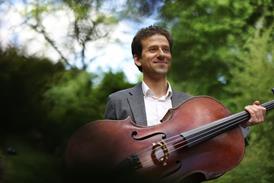

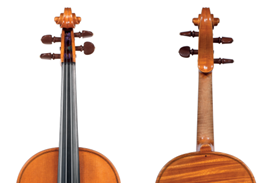
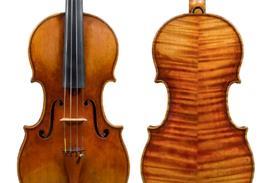



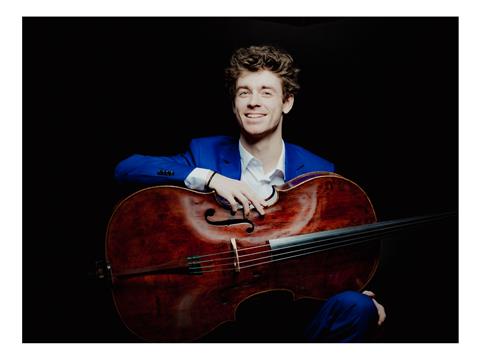
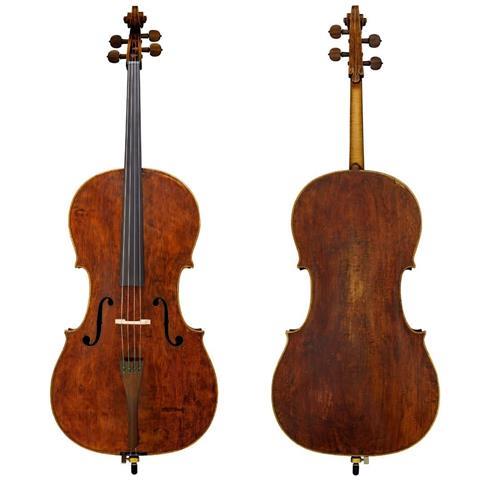
The young French cellist Raphaël Jouan reflects on a rare and transformative encounter with a 1710 Matteo Gofriller cello. Thanks to a generous loan, Jouan was able to record his new Dvořák album on this exceptional instrument, which was previously in the hands of the renowned cellist Antonio Meneses.
Read more Featured Stories like this in The Strad Playing Hub
Meeting the ‘Meneses’ Gofriller
From the very first note, I was struck by the power of the Gofriller combined with an extraordinary ease of response, by its grain and its rich, clear tone, which remain present even in the smallest detail. I think you could call it love at first sight!
I was looking for a special voice and pure raw power for this concerto, and I also needed a cello that would not require a long period of adjustment, as I was due to record only three months later. After just a few seconds of playing, I knew these conditions were met.
I remember then trying the opening of Dvořák’s Silent Woods, also included on the disc, in D flat major – an ungrateful key in terms of resonance and projection, beginning in registers with relatively few overtones. I was astonished by how richly coloured the Gofriller sounded there: not a single note felt undernourished. It promised some fascinating explorations in the weeks to come!
Adapting to the instrument
The cello still has Antônio Meneses’s original set-up: a specific bridge and tailpiece, as well as his usual choice of strings. I immediately felt that it is an instrument that has been magnificently played for decades, which largely explains its instinctive ease and reactivity.
The next three months represented an extremely stimulating period of exploration! I familiarised myself with an approach that differs from my usual habits: I did not need to search for the sound, but rather to let it emerge and guide it. The instrument has such a naturally rich tone that it needs to be ‘released’ rather than driven. For this, I was greatly helped by the Lamy fils bow (1930), which like the cello, was graciously loaned by the Canadian company Canimex from its collection, and which allows the instrument to resonate freely.
Throughout this exploration, the cello constantly pushed me further and showed me that I can always go beyond what I thought possible. I played the concerto for my former teacher, Danjulo Ishizaka, who himself performed on a Stradivari for many years, and he gave me precious advice on how to push certain intentions, nuances and subtleties even further. An entirely new sound-world began to emerge.
The cello’s ease of response is combined with an exceptionally rich tonal palette. It felt like playing a chameleon-like instrument, which adapted to me at least as much as I adapted to it. I had the sensation that there is no real limit: whenever I pushed it in a specific direction, the path ahead seemed endless. The range of sound and expression available to me became considerably broader, with new possibilities of phrasing, colour and timing.
Recording the Dvořák
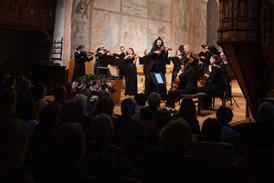
The Dvořák Concerto is renowned not only for its technical demands but also for its balance challenges, due to its dense orchestration. This is also what makes it so interesting, and the conductor David Reiland and I approached many sections as a dialogue, almost in the spirit of a sinfonia concertante. With the depth of its lower register, the focus of the upper register and the warmth of the middle register, the cello’s wide palette allowed me, together with the orchestra, to offer as many soundscapes as possible within this dialogic approach. I felt that the musicians were very responsive to this unique voice, and many came to speak to me about it during the break at the first rehearsal.
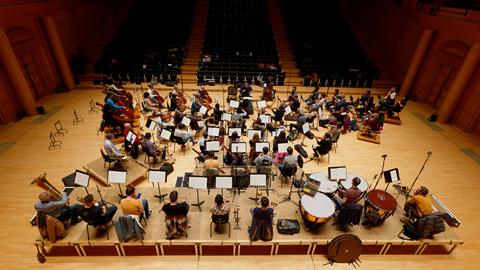
I would also like to highlight the intimate musical moments. In the recording studio, microphones largely removed the issue of balance and allowed me to go much further than in concert in the search for delicate, poetic colours. The clarity of the Gofriller’s timbre always preserves a sense of a living sound, enabling to push contrasts to their furthest extremes.
Frédéric Briant, the sound engineer, was extremely satisfied with the cello sound, which he explained is always a challenge to capture. He did a superb job: both the subtleties and the power translate clearly on headphones, creating a genuinely immersive result.
I was fortunate to be recording on completely familiar ground: my hometown of Metz; the exceptional Arsenal concert hall; the conductor David Reiland who supported me throughout the years of building this project; and of course the orchestra I have known since childhood, having grown up with my parents as members – which is still the case!
Throughout the recording sessions, I felt nothing but supportive and benevolent energy. During breaks, many musicians came to listen in the control room and I felt that they were fully invested. We lifted each other up, and the sessions remained consistently vibrant and luminous, helped greatly by the sensitivity and guidance of artistic director Dominique Daigremont.
The loan from Canimex
I had been searching for an instrument specifically for this project for some time. Thanks to the support of the French company Cello Invest and its director, Ailbhe Chereau O’Rourke, my search was brought to the attention of Mr Dubois, president of Canimex, who agreed to support me for this album.
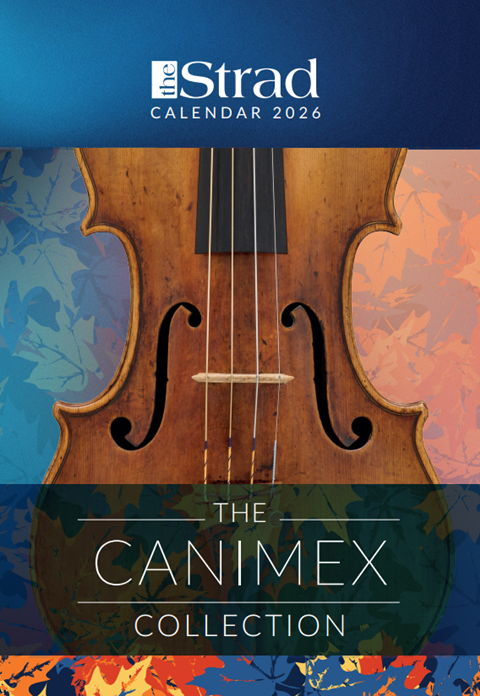
In early December 2024, I was invited to travel to Drummondville (Québec), where Mr Dubois presented me with several cellos and bows. I was already familiar by reputation with Canimex’s impressive collection (featured in The Strad 2026 calendar), but I could never have imagined that it would culminate in an encounter with the ‘Meneses’ Gofriller.
Looking ahead
In early 2026, I learnt that Canimex had agreed to entrust the instrument to me once again for the album launch concerts, and I returned to Drummondville, Quebec, at the beginning of February to collect it.
I vividly remember being reunited with the instrument: I smiled as soon as I saw it, and even more when my bow touched the strings! I lived a powerful passion with it during our time together, and being able to make the same voice resonate again for the album’s concerts is deeply moving. I am very much looking forward to the forthcoming performances!
I hope that listeners of our Dvořák album will feel the joy I experienced in sharing this sublime music through such an instrument, and sense how much this singular voice supported me, the conductor David Reiland, the Orchestre National de Metz Grand Est and the La Dolce Volta recording team in conveying our story as honestly and fully as possible.
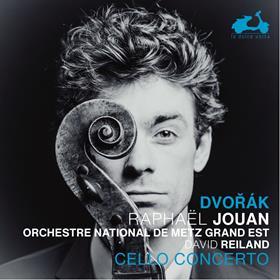
Raphaël Jouen’s new album with the Orchestre National de Metz Grand Est conducted by David Reiland, and featuring Dvořák’s Cello Concerto in B minor, Rondo in G minor and Silent Woods is out now on La Dolce Volta LDV152
Read: Beauty unbound by history: cellist Tommy Mesa explores the many voices of his 1767 Gagliano
Read: The Strad Calendar 2026: 1710 ‘Meneses’ Matteo Gofriller cello
Read more Featured Stories like this in The Strad Playing Hub










No comments yet