











Lutherie – Page 25
-
 Premium ❘ Article
Trade secrets: making and fitting purfling
A solution to the awkward problem of how to insert strips around the neck heel area, by Hans Pluhar
-
 Premium ❘ Article
In focus: Paul Dörfel
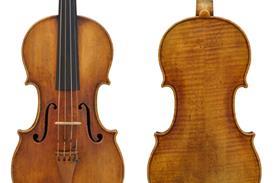
A 1920 violin made by the Markneukirchen-based luthier Paul Dörfel. Written by Bruce Babbitt
-
 Premium ❘ Feature
Persoit, the illusion solution
One of the most mysterious French bow makers, Persoit had a number of idiosyncrasies that give his works a uniquely light appearance. Through a detailed study of a single bow, Paolo Sarri shows his creative answer to the problem of bulky heads
-
 Premium ❘ Feature
At the dawn of it all: making in Füssen
Nowadays best known for its neo-Gothic castles, the town of Füssen in southern Germany has possibly the oldest lutherie tradition of any in the country. Thomas Riedmillertraces its influence, from the foothills of the Alps to England, Vienna and Prague
-
 Premium ❘ Feature
Vuillaume's Early Years: The Making of a Master
Jean-Baptiste Vuillaume was the most successful French luthier of his time, but the first years of his career are still shrouded in mystery. Jonathan Marolle examines some of his earliest instruments to uncover the evolution of his technique and style
-
 Premium ❘ Feature
Michel Collichon: The Magnificent Ten
Just a handful of instruments by Michel Collichon have survived to the present day – but they demonstrate the skill and techniques of a master innovator. With a tenth example recently identified, Shem Mackey explains the appeal of the 17th-century viol maker to modern-day luthiers
-
 Premium ❘ Feature
Jacob Stainer: reviewing the situation
It has long been assumed that Jacob Stainer received some training in Cremona – but the theory rests on slim evidence. Rudolf Hopfner explores a middle-period violin using micro-CT technology to cast doubt on what we think we knowWolfgang Schneiderhan
-
 Premium ❘ Article
Trade secrets: cutting f-holes
A methodical way of completing this elegant but delicate part of the making process by WILLIAM CASTLE, luthier based in Whitchurch, Shropshire, UK
-
 Premium ❘ Article
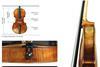
In focus: a 1937 violin by Paolo De Barbieri
Paolo De Barbieri was born in 1889 in Genoa. In 1902, aged 13, he left a note on the kitchen table which read ‘Back in a minute’: he left home for about six years to work as a cabin boy. He completed his military service in the navy and in ...
-
 Premium ❘ Feature
Varnish analysis: shining examples
Identifying the varnish recipes of the early makers has been a long-held dream among researchers. Now, a team at the Arvedi Laboratory of Non-Invasive Diagnostics, headed by Marco Malagodi, has used a new form of micro-CT scanning to delve further into an instrument’s coatings than ever before
-
 Premium ❘ Feature
Stradivari’s moulds: Variations on a theme
Twelve violin moulds from Antonio Stradivari’s workshop still survive, but how do they correspond to the master’s oeuvre? In the first of two articles,Philip Ihle and Andrea Zanrè present the results of an exhaustive survey to match forms to finished instruments
-
 Premium ❘ Feature
Stradivari’s corners: Music of the spheres
The publication of high-accuracy violin photography has opened up new possibilities for researching Cremonese masterpieces up close and en masse. Philip Ihle examines Antonio Stradivari’s purfling corners across 136 examples and reveals their relationship with the luthier’s forms
-
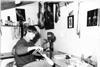 Premium ❘ Feature
Stefan-Peter Greiner on individuality in violin making
For Stefan-Peter Greiner, instrument making is not about copying; it’s about individuality, experimentation and intuition. In conversation with Pauline Harding, the German luthier discusses his ideas on sound adjustment, ‘Stradivari frequencies’ and creating the ideal working environment
-
 Premium ❘ News
Auction Report: January 2020
Old Italians and a modern bow proved popular at this autumn’s auctions, as Kevin MacDonald reports
-
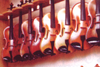 Premium ❘ Feature
Buying the right instrument for you
Whatever your needs, whatever your budget, there's an instrument out there for you. Laurinel Owen suggests some ways to find it
-
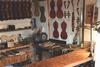 Premium ❘ Feature
Trade Secrets: a peninsular bench extension
Ideas for a workplace addition that is completely accessible from all three of its sides
-

-
 Premium ❘ Feature
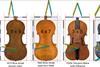
Making Matters: the DNA of design
David Beard argues that the old Cremonese makers had a geometric system of design ‘recipes’ to create the vast number of different instrument patterns we see today
-
 Premium ❘ Feature
Seeing red
Madder root has been used since ancient times to provide a deep red pigment – but the process of making it remains mysterious. For the past three years Hugh Withycombe and Guy Harrison have tested different methods to get the recipe just right – and can now reveal their findings
-
 Premium ❘ Feature
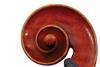
On the borders of greatness
Giuseppe Sgarbi’s instruments have a unique vibrancy and individuality, while still respecting the traditional Cremonese forms. Lorenzo Frignani examines his career, as well as that of his son Antonio, to suggest why his work deserves more recognition than it has in the past