

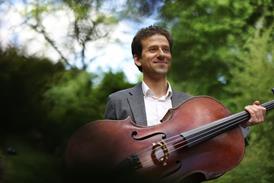
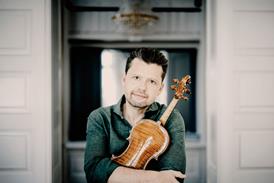
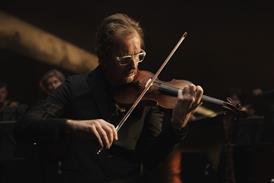

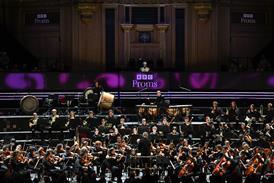





For the German–Canadian cellist, the theatricality of Lutosławski’s Cello Concerto opened up a fascinating relationship between soloist and orchestra
Discover more Featured Stories like this in The Strad Playing Hub.
Read more premium content for subscribers here
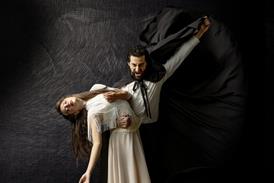
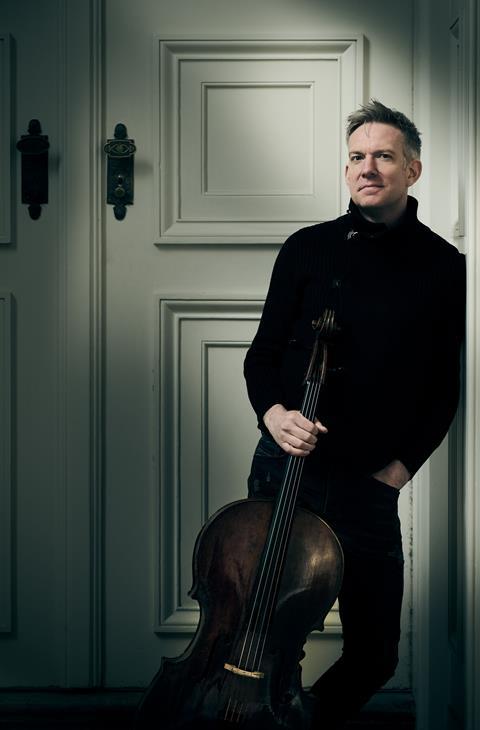
I was 30 years old when I started practising Lutosławski’s Cello Concerto for the first time. Franz Welser-Möst invited me to perform it with the Bavarian Radio Symphony Orchestra, and as I started learning it, I suddenly realised it was grabbing me like no other work had ever done before. I knew that Lutosławski had described the piece as representing the struggle of the individual against the masses, which for me means the antagonistic conflict between the cello and the orchestra.
What really appeals to me is that we don’t know anything about this individual, even whether they’re a hero or a villain. So, when this piece grabs hold of me, I feel like I become a fighter in an arena, battling the orchestra. And I’m normally a peace-loving guy, so there’s a feeling that the music is showing me a side of myself that I don’t normally confront. For me, this is probably where the real magic of this music lies.
I didn’t have long to learn the piece, so I contacted Heinrich Schiff, who had played it many times with Lutosławski conducting; he also conducted it a lot himself. We spent three hours going through the concerto and he was incredibly generous; he was a very hands-on tutor, both telling and showing me what the composer wanted.
Lutosławski was adamant that it should not be played as abstract ‘new music’ but that the sound quality was paramount, as was every nuance in the score. Heinrich said that the composer loved the theatre, which is where the dramatic tension between soloist and orchestra might come from, and the maths was important to understand. As Heinrich talked, it seemed as though he felt a responsibility for the music, and was on a mission to relate the composer’s wishes, which for me was super inspiring.
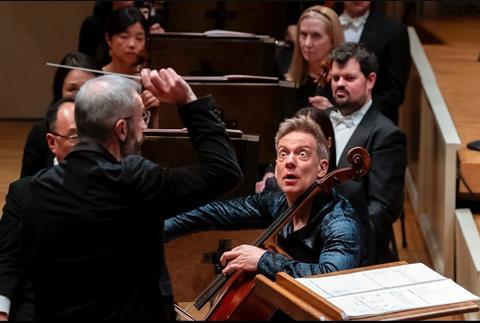
At the time, I was fascinated by Hamlet. I was watching as many productions of the play as I could, and seeing the different approaches each actor took to the character. And it was so interesting to me that the same piece could be told from so many different angles, and why couldn’t I do that with Lutosławski? The composer’s centenary came in 2013, three years after I’d performed the concerto with the BRSO, and I was able to play it 25 times in that one season. That meant I could explore it from all the different angles I could think of: if an orchestra has a very confident brass section, then suddenly the concerto becomes brutal, or if the strings are stronger, then it shifts its perspective that way.
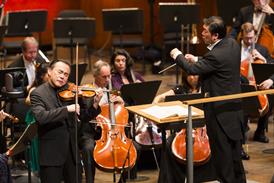
One thing I noticed from performing with different orchestras is the different way they react to aleatoric music. Even though it’s now a classic way of writing, they might initially laugh about it – but very quickly realise how seriously they need to take it. There are points when an aleatoric section will begin, and in the first rehearsal, the conductor will indicate it with a strong down-beat. Then, very often, the whole orchestra will just stop! None of the players wants to be the one to be seen doing something wrong, or going beyond what’s allowed. But when they understand it, they’re able to play it the way the composer intended.
I last played the concerto with the Chicago Symphony in 2024. I memorised it for the first time for that performance, which was a very difficult process! But I felt that having a wall of paper between me and the audience would detract from the music’s immediacy, especially if I’m playing the part of a protagonist. If I heard someone was learning the piece for the first time, I’d probably recommend they try to memorise it right away; it makes it much easier in the long run.
INTERVIEW BY CHRISTIAN LLOYD












No comments yet