









The Antonio Mormone competition’s violin edition took place over an exacting thirteen-month period. Lauren Wesley-Smith attended the finals in Milan to hear the top three contenders
Discover more Featured Stories like this in The Strad Playing Hub.
Read more premium content for subscribers here
The Antonio Mormone International Prize may be the most thorough competition I’ve ever encountered. After all, how many others have a semi-final round lasting ten months? One thing is certain: after numerous assessments in semi-final marathons and with incognito judges attending their concerts, Elli Choi (US, b.2001), Hawijch Elders (Netherlands, b.1998) and Anna Im (Korea, b.1997) all earned their places in the final round of this year’s violin edition.
It’s a golden summer with soaring temperatures in Milan when I attend the finals (17–22 June), but thankfully there’s air conditioning in the Sala Verdi of the Milan Conservatoire, the hall where most of the performances take place. The rounds are well spaced across the week, allowing time for people to go and enjoy lemon granitas, and making it easier for everyone to absorb each round without being overwhelmed. Good thing, too, because there are four categories to consider: the concerto counts for the most in the jury’s voting, followed by the solo recital, the chamber recital and the performance on a historical violin.
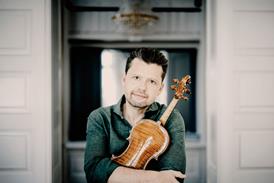
‘As a violinist, I don’t usually like competitions,’ artistic director Edoardo Zosi tells me bluntly. ‘Too often, the technical aspects are too important. We want the jury to give importance to the feeling of each performance, and how it moves both them and the audience. We don’t need another typical competition: we need something else.’
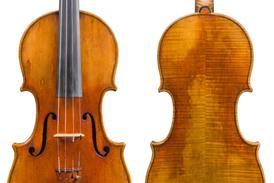
In the recitals, I’m immediately struck by the warm, rich tone of Elders with her 1755 Gagliano, best showcased in Prokofiev’s Violin Sonata no.2. Choi’s programme shows her versatility; she is lyrical in the Leopold Auer arrangement of Lensky’s aria from Tchaikovsky’s Eugene Onegin and dazzling in Ysaÿe’s Solo Violin Sonata no.6 in E major.
Im matches technical mastery with a silvery sound, demonstrating dramatic range in Lutosławski’s Subito and sentimentality in Clara Schumann’s Three Romances. All three violinists additionally perform the unaccompanied Sonatina V by Fabio Vacchi, an intense and moody work that was commissioned especially for the competition.
‘Winning a competition only opens the door to a career’ – Ning Feng, jury member
The chamber music round yields some of the biggest contrasts between the finalists, as they each perform Beethoven’s Trio in C minor op.9 no.3 with violist Benedetta Bucci and cellist Massimo Polidori. Im blends seamlessly with the other voices – perhaps too much so sometimes – whereas Elders attacks aggressively, pushing at the edge of the ensemble. Choi’s performance sits between the two approaches, as she plays with both style and fire. When I ask Bucci and Polidori about the experience of playing with the finalists, Bucci tells me, ‘On the one hand it’s so beautiful, and on the other it’s so difficult – because everything changes: the way you play, the way you do dynamics, and the phrasing.’ Polidori adds, ‘The level is so high. It’s been a pleasure, and very interesting to play with them.’
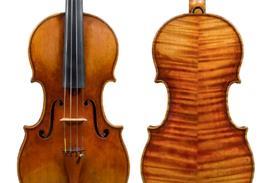
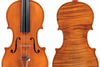
The most unusual part of the competition is the historical instrument round, where the finalists take turns playing the same sonata on the same violin – after having only two hours to familiarise themselves with the instrument. It’s a 1757 Carlo Ferdinando Landolfi violin from the conservatoire collection, which up until a month ago was sealed away in a display case. Luthier Tiziano Rizzi has overseen its rehabilitation, with Zosi routinely playing the instrument to restore its sound. Regrettably, it sounds like it needed more time truly to regain its resonance, but it certainly levels the playing field; in my opinion, Im draws the best sound from the old violin in her rendition of Schubert’s ‘Grand Duo’ Violin Sonata in A major D574.
There’s a day’s respite as the finalists have their rehearsals with conductor Massimo Zanetti and the Orchestra of the Accademia del Teatro alla Scala, the renowned opera house’s ensemble for talented young musicians. Italians joke that Milan’s regional speciality is sushi, and over a seafood dinner that lends some truth to the matter, I get the chance to speak with the winner of the previous (inaugural) edition of the competition, Chinese pianist Ying Li. ‘Winning this competition back in 2021 launched a career for me in Europe, and when I went back to the US I signed up with management there too,’ she tells me. ‘What makes it special is that it didn’t feel like a competition: I could just think about being an artist and play music instead of being a competitor. I’m very lucky to be part of this family, and I can’t wait to see what comes next for the winner of this edition.’
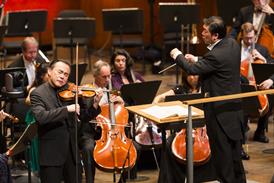
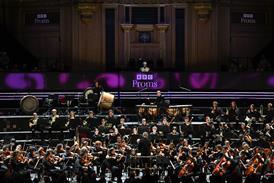
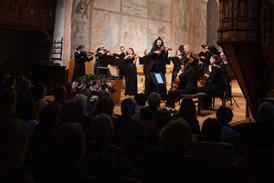
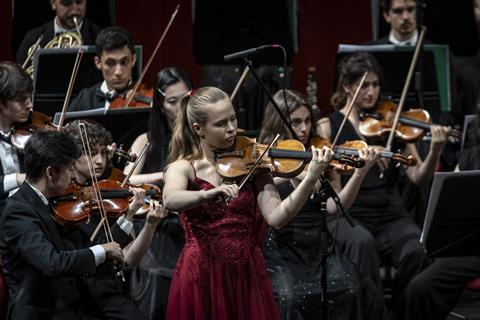
The final night arrives, and the excitement is palpable as we settle into the red velvet seats at the Teatro alla Scala. Im is first, playing the Sibelius Violin Concerto. Her technique is impressive, but there’s an element of strain to the performance, not helped by the orchestra’s rushing in the excitement of the third movement. Elders, however, is in her element, dazzling with all the pyrotechnics of Paganini’s Violin Concerto no.1. It’s a favourite with the audience, eliciting the most applause that night. Choi gives an assured performance of the Brahms Violin Concerto, confident and in control, though the young orchestral players seem to be tiring by the end of the long concert.
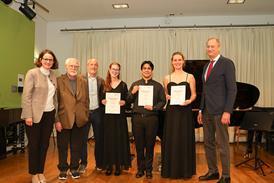
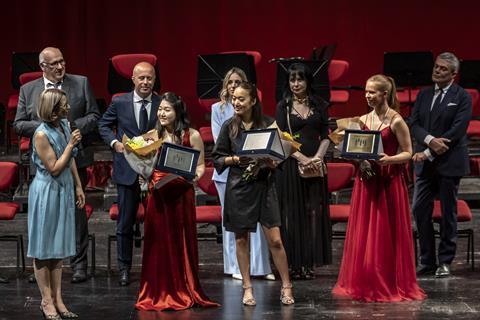
Even after all I’ve heard, I feel I can’t reliably predict who will take home the prize, and there’s a protracted period as the jury deliberates. In the end, the first prize goes to Elders; she wins €30,000 in cash, artist management and an album recording with Universal, as well as the prize for the best performance of Vacchi’s commissioned work. Im receives the award of the young jury – a panel of young musicians who’ve watched every performance during the finals – while Choi wins the audience prize, based on public votes collected throughout both the semi-final and final rounds. Both Im and Choi also receive €5,000 cash prizes.
‘I am really happy, but also quite tired because it was a really intense week!’ Elders tells me afterwards. ‘It’s a unique competition, not only because of the duration, but also because of the range of what we played. It was a challenge, but I’m just happy with what I could do, and excited about what’s to come!’
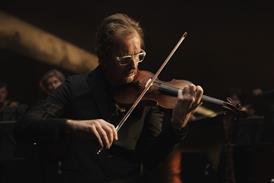
Jury member Ning Feng is a veteran of competitions, having won Genoa’s Paganini Competition in 2006, and it’s interesting to hear his perspective on how things have changed. ‘It’s a different era now: we have so many competitions nowadays and so many great young musicians, and this is something incredible, but winning only opens the door to a career,’ he says. ‘One still has to proceed step by step with passion, dedication and love for music. We have one winner today, but I’m sure all three of them will have a brilliant future.’
I have to agree with him on that. It’ll be another eight years before the next violin edition of the competition, but its multifaceted approach to showing instrumentalists in their entirety is well worth remembering.
Read: Results announced for the 2025 Antonio Mormone International Prize#
Read: Postcard from Hanover: Joseph Joachim Violin Competition
Discover more Featured Stories like this in The Strad Playing Hub.
Read more premium content for subscribers here
The number one source for playing and teaching books, guides, CDs, calendars and back issues of the magazine.
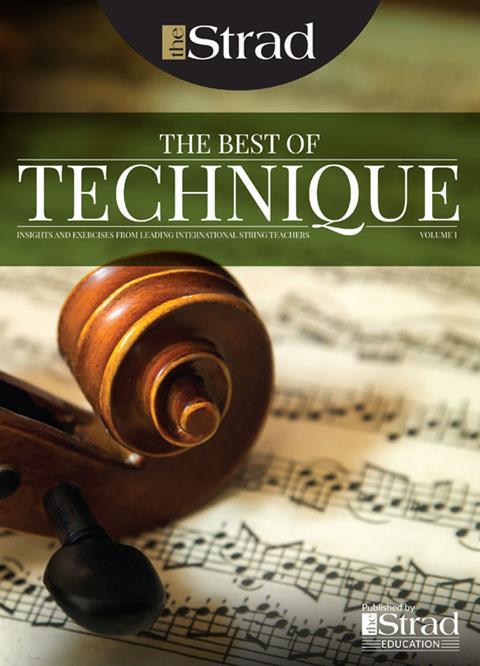
In The Best of Technique you’ll discover the top playing tips of the world’s leading string players and teachers. It’s packed full of exercises for students, plus examples from the standard repertoire to show you how to integrate the technique into your playing.
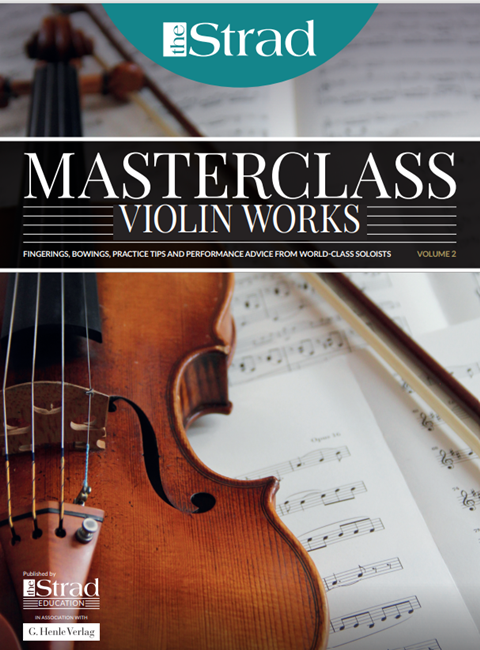
In the second volume of The Strad’s Masterclass series, soloists including James Ehnes, Jennifer Koh, Philippe Graffin, Daniel Hope and Arabella Steinbacher give their thoughts on some of the greatest works in the string repertoire. Each has annotated the sheet music with their own bowings, fingerings and comments.
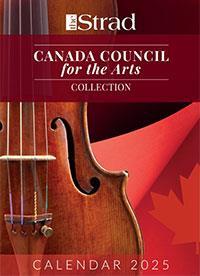
The Canada Council of the Arts’ Musical Instrument Bank is 40 years old in 2025. This year’s calendar celebrates some its treasures, including four instruments by Antonio Stradivari and priceless works by Montagnana, Gagliano, Pressenda and David Tecchler.








No comments yet