
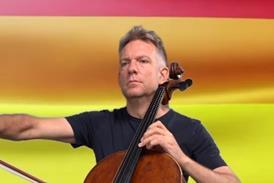




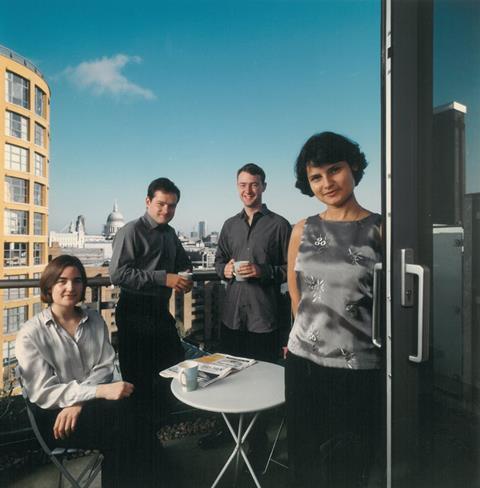
The Scottish cellist and chief executive of Young Classical Artists Trust on communication and creativity

Discover more Featured Stories like this in The Strad Playing Hub.
Read more premium content for subscribers here
Two threads have run throughout my life. First, listening to others and being aware of what is happening between people; and second, what is happening within myself at that moment. It was clear from a young age that I felt most comfortable in chamber ensembles. I feel that I always get to know myself better when communicating with others. And what you learn about yourself is what we, as musicians, are constantly tasked with communicating. Of course, the technique of playing is vital, but this must always be in the service of the more fundamental question of why you’re doing it. The craft without the ‘why’ is meaningless.
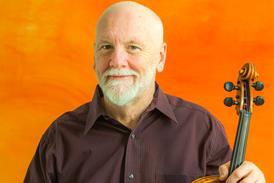
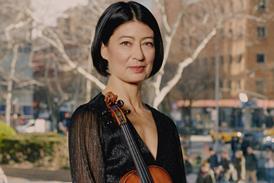
I was incredibly lucky with the range of teachers I had, all unified somehow by curiosity and rigour. My junior conservatoire teachers, Hafliði Hallgrimsson and Pat Hair, were both positive and encouraging yet with a disciplined work ethic. At the Royal Northern College of Music, Emma Ferrand and Ralph Kirshbaum instilled in me a strong sense of detailed understanding, always stemming from and directed by musical curiosity. This innate searching is incredibly important. Always question whether a previous decision still feels right. You need to make friends with uncertainty, as this is from where the most interesting answers often emerge!
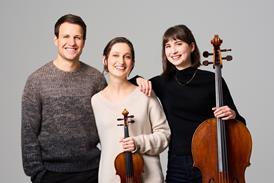
My time in the Belcea Quartet was the most transformative, rewarding and revealing part of my life. Almost everything I do now, and how I approach life, has roots in this experience. I learnt how to negotiate, hold on to a sense of self and how to be vulnerable with others, yet still focused on an end goal that is more than the individuals. All these human skills are crystallised in a quartet and applicable to all walks of life. When I began leading the Young Classical Artists Trust, although faced with so many new and daunting challenges, I found that you learn quickly if you know how to listen to others. It always comes back to listening to others.
Musicians are givers, not receivers. We receive only once we’ve given something of ourselves. Often I see young musicians losing touch with this. But you can’t wait for the world to give you something you feel entitled to. When you arrive on stage, your sole task is to communicate your individual voice and story. I often suggest building as wide a vocabulary of musical options as possible within the inherent structure of the piece you’re playing. As long as you are connected to this structure, to your own breath and impulse, then you are free to call on these various options in the moment. This aliveness to the moment is what connects with an audience. They don’t pay to hear a photocopy of your previous performance!
The commercially driven music industry can seem more precarious nowadays for young musicians: there’s no longer a clearly prescribed career path or one definition of ‘success’. You must be guided by what fulfils you as a musician and a creative individual, even if any eventual success you achieve may be very different to what you initially imagined.
INTERVIEW BY RITA FERNANDES
Read: Flying the flag for young talent: young artists’ schemes
Read: ‘See each concert as the most important one in your life’ - Daniel Hope’s life lessons
Discover more Featured Stories like this in The Strad Playing Hub.
Read more premium content for subscribers here
![[hasnt been used much] G Hoffman - photo William Beaucardet - a](https://dnan0fzjxntrj.cloudfront.net/Pictures/100x67/0/2/9/44029_hasntbeenusedmuchghoffmanphotowilliambeaucardeta_116713_crop.jpg)









No comments yet