





Violists have long embraced transcription – but why has Elgar’s Cello Concerto remained on the margins? Rosalind Ventris examines Lionel Tertis’s arrangement and its relevance today
Read more Featured Stories like this in The Strad Playing Hub
It is often said that violists are like magpies, pinching pieces from other instruments here and there to build our own repertoire. The Brahms op.120 sonatas, for example, originally written for clarinet, are now so firmly embedded in viola culture that many students encounter them before much of the instrument’s ‘native’ repertoire. Violists are certainly no strangers to adaptation! But why has the Elgar Cello Concerto never truly entered the viola mainstream, given Lionel Tertis’s remarkable arrangement of this piece?
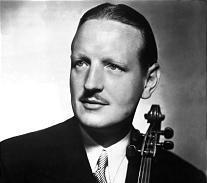
Tertis, described by his biographer John White as ‘the first great virtuoso of the viola’, devoted much of his career to expanding the instrument’s possibilities. Alongside commissioning new works, he also created a number of transcriptions, among them the Elgar concerto. He also happens to have been one of the first teachers at the Yehudi Menuhin School, where I am director of music. Tertis’s adaption of the Elgar was no unauthorised arrangement made in defiance of the composer’s wishes: Elgar explicitly endorsed it, writing to his publisher Novello in June 1929, ‘I fully approve of the arrangement.’ Tertis himself called it ‘the next best thing’ to an original viola concerto by Elgar.
Today, transcription is still sometimes regarded with some suspicion, as though fidelity to instrumentation were inseparable from fidelity to the music itself. But in Tertis’s era, such boundaries were far more fluid. He dismissed objections to his arrangements as unnecessarily pedantic, quoting Elgar’s own response: ‘What nonsense! What of the multitudinous arrangements that the great masters themselves have made?’
In fact, Tertis altered remarkably little when arranging the concerto for viola. The orchestral score remains entirely intact, while the solo line is adjusted only where necessary to accommodate notes that go below the viola’s lowest note. One small but telling change comes in the second movement, where pizzicato chords usually become arco, often lightly arpeggiated, allowing the viola greater resonance and warmth.
The most memorable story surrounding the transcription concerns the end of the third movement. To reach Elgar’s final low B-flat, Tertis secretly retuned his lowest string down from C. During an early run-through he concealed this manoeuvre from the composer, adjusting the string discreetly between movements. Elgar was delighted by the resulting sonority.
When Tertis suggested the note could simply be played an octave higher, Elgar refused: ‘Oh no, my dear boy – you must tune the C down; it is grand!’ It is an anecdote that says much about both men: Tertis’s ingenuity, certainly, but also Elgar’s openness to colour and experiment. More than that, it underlines the legitimacy of the transcription itself – not as a compromise, but as a genuine reimagining of the concerto through another instrumental voice.
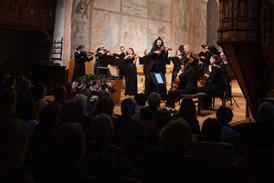
Although I had owned the score for years, my serious engagement with the concerto began only recently, prompted by an invitation to perform it at the 2026 Elgar Festival with the English Symphony Orchestra under Kenneth Woods. Woods’s affinity for Elgar’s music, combined with the orchestra’s deep familiarity with the style, seemed an ideal setting in which to explore the work.
The transcription is a genuine reimagining of the concerto through another instrumental voice
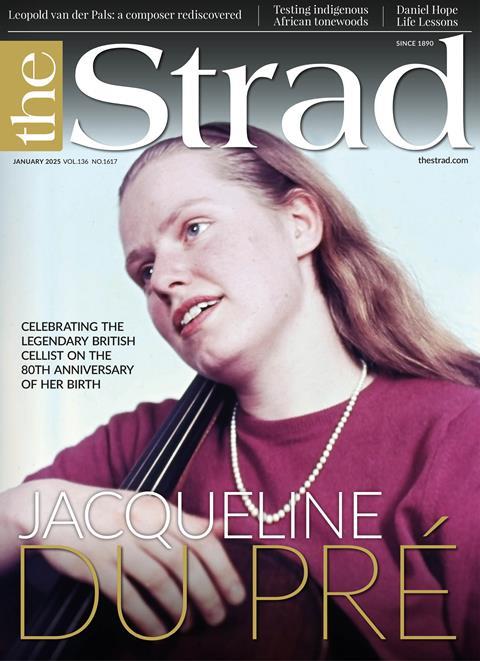
One of the central challenges in approaching the concerto is negotiating the immense weight of its performance history. Jaqueline Du Pré’s famous recording remains an unavoidable point of reference, but there is always the danger that canonical recordings become interpretative templates rather than inspirations. Violists may, in fact, have an advantage here. Because the piece sits slightly outside the standard viola tradition, it can perhaps be approached with fresher ears.
I was reminded of this while reading an issue of The Strad devoted to recording history, in which Steven Isserlis warned against excessive dependence on recordings. Performers who imitate established interpretations, he argued, risk producing ‘carbon copies’ instead of developing an individual response rooted in the score itself. With that in mind, I have tried to avoid immersing myself in too many modern recordings, turning instead towards performances closer to Elgar’s own time.
Those historical recordings can be revelatory. Elgar’s conducting, whether in the Serenade for Strings or the Violin Concerto recordings with Albert Sammons and Yehudi Menuhin, reveals a flexibility and spontaneity often missing from more polished modern interpretations. W. H. Reed, one of Elgar’s close collaborators, recalled the composer’s impatience with rigid playing; he repeatedly urged musicians towards greater freedom and elasticity.
That rhetorical freedom feels central to the concerto. The music seems to demand a flexible relationship with pulse and phrasing, one that allows expression to breathe naturally without sacrificing the larger structure. Listening to performers associated with Elgar’s circle – Kreisler, Sammons, Menuhin – one hears strikingly individual approaches to rubato, vibrato, and portamento. There is no single ‘correct’ style, only a shared commitment to expressive immediacy.
Among the recordings of this specific work that have shaped my thinking most strongly are those Elgar made with the cellist Beatrice Harrison, particularly the 1920 abridged version and the complete 1928 recording. The Adagio third movement – surely the emotional centre of the concerto – is especially revealing.
Historical recordings often preserve expressive habits largely absent from modern playing: generous portamento, elastic tempo, and a willingness to linger over important moments. Harrison’s use of portamento is frequent but nuanced, giving the line an unmistakably vocal quality. Between her two recordings, differences in fingering create different shades of expression, suggesting a fluid and evolving approach rather than a fixed interpretation.
Her treatment of tenuto markings is equally striking. Notes are given space and weight in ways that can feel surprisingly expansive today. In the middle of the movement, her handling of the stringendo and appassionato passages, followed by a broad largamente, which all feel exaggerated by modern standards, exemplifies the freedom with which performers of her time were allowed in pursuit of expressive clarity. Such choices, though perhaps unconventional by modern standards, are in this instance nonetheless grounded in a close relationship with the composer himself.
Scholars such as George Kennaway have explored the subtleties of Harrison’s style, including techniques that create the illusion of portamento without overt sliding. A comparative study by Robert Philip places her within a wider performance culture shared by players such as W. H. Squire and Pablo Casals. What these recordings reveal above all is how much expressive freedom musicians of Elgar’s generation expected to exercise.
Tertis’s transcription makes a persuasive case that Elgar’s concerto can live convincingly beyond the cello. The work’s character, its emotional intimacy, and Elgar’s own endorsement all support its place within the viola repertoire. Its relative rarity may owe less to any musical limitation than to the sheer force of tradition surrounding the original.
Yet perhaps that is beginning to change. As audiences and performers become increasingly open to transcription and reimagined repertoire, the viola version of the concerto feels newly relevant. For violists, it offers not merely an adaptation of a famous work, but the chance to inhabit one of the 20th century’s most profound musical statements through the particular colour and distinctive voice of our own instrument.
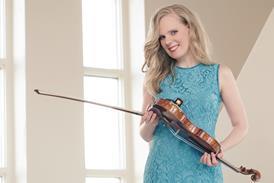
Rosalind Ventris performs Elgar’s Cello Concerto at the Elgar Festival on 30 May, with the English Symphony Orchestra and Kenneth Woods. Find out more here.












No comments yet