





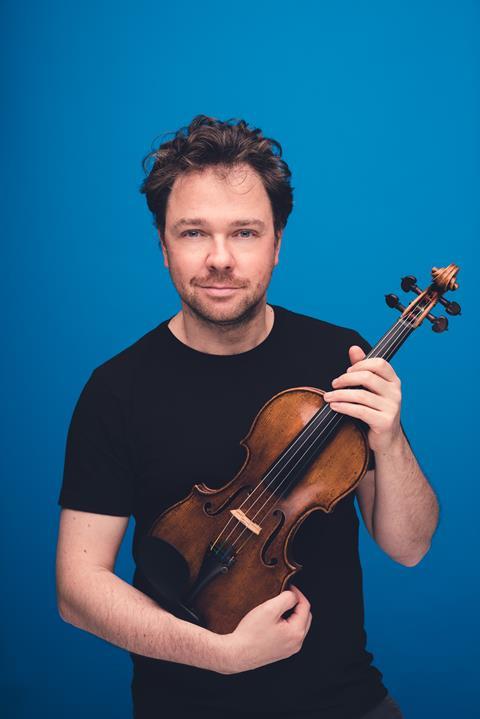
As traditional career paths in classical music evolve, violinist Alexander Sitkovetsky urges young musicians to embrace creativity and chart their own course as they embark on their own unique paths
Read more Featured Stories like this in The Strad Playing Hub
This feels like a very unique time in the music world; one that I think is a perfect example of the ’glass half full, half empty’ metaphor.
First the half empty scenario. We often hear these days of music institutions, concert series and orchestras all over the world, either closing or having their budgets slashed, concerts being reduced in quantity, lack of music education in schools, audiences dwindling and musicians struggling to make ends meet while the cost of living is increasing all the time. Winning a secure position in an orchestra has become even more competitive with often over 100 applications for only one position. It can certainly feel that there is a lot of doom and gloom in our profession.
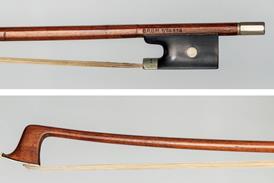
If you speak with, and also look at the lifestyles of colleagues from one or two generations before mine, you would certainly find it hard to argue with the premise that a high number of these musicians and artists certainly live more prosperously and comfortably. Many of them were able to buy their own fine Italian instruments, great French bows, they live in a spacious, comfortable home or apartment that they were able to buy quite early on in their careers and where they can practise to their heart’s content without disturbing the neighbours!
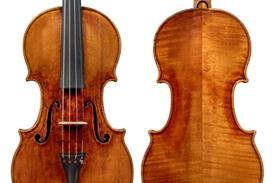
The new generation will most likely have to choose between a home and an instrument, and unless you win the lottery, you are not going to be able to afford an 18th-century Italian instrument any time soon.
However, I prefer to look at the glass half full! I see a classical music world so full of vibrant, adaptable, open minded, creative and incredibly talented people. We now have luthiers who create amazing instruments which often beat the great Italians in a sound test, and which today’s young musicians can afford. There are also many more foundations and individual people who are lending fine instruments to the new generation.
The entrepreneurship of artists, orchestra managers and concert hall promoters today astounds me. So many of my close friends and colleagues run their own festivals and concert series all over the world and fresh projects are springing up constantly. There are wonderful artists who are starting huge education initiatives that will ensure that young people from all backgrounds have an opportunity to become our future generations of musicians.
The interest in new, forgotten and marginalised repertoire has never been higher and, as a result, concert programming has become more adventurous, and, with all of the access we now have to listen to so many live concerts online, this has given us a chance to continue to build our audiences and perhaps introduce new demographic of concertgoers to live classical music.
I believe that the question of what it is to be a musician or an instrumentalist is constantly evolving and changing as we all navigate this beautiful journey together. I was asked to write this article and talk about the choices that we make to sustain a long, multifaceted career in music, some of the decisions that lead us towards who we want to be and what we want to say with our music making.
The question of what it is to be a musician is constantly evolving and changing
So often in the past, instrumentalists tended to be separated much more along the lines of ’Soloist, Chamber Player, Orchestra Musician’. This was how one was placed quite definitively into the order of things and, while these categories of course overlapped, it was usually temporary, perhaps for a specific recording, or a passion project that was outside the usual concert life of the musician.
While this separation can still exist, it is incredibly exciting how multifaceted and versatile musicians are today. More and more new ensembles and collectives are appearing, sometimes with a conductor and also often without. The big soloists today are not only performing one concerto after another; they curate festivals, play in regular trios and quartets, direct orchestras from the concertmaster stand, compose, arrange, teach and mentor.
Some devote a lot of time to historical performance and there are even those that perform on multiple instruments, (and I am not only talking about the violin and viola!). I am not denying that there are examples of this versatility in players from the ’Golden Age’ as well, but it seems that today it is much more the norm rather than the outlier.
I always talk to my students about the need to be curious, to be open minded and, most importantly, to be prepared! Build a network of likeminded musician friends, find your passion and what inspires you. I have students that are playing in various orchestras, and other students who are in string quartets.
Some have gone on to play in Baroque ensembles while others are interested in entering major competitions and testing themselves in that arena. There are more creative options today to build your career but you have to be ready to embrace these possibilities. I also have students that are already running their own concert series or thinking about going to work in arts management.
Sometimes you can be lucky and exciting opportunities can fall into your lap. In 2007, Neither I nor my future colleagues were looking to start a piano trio, but one thing led to another and the trio will soon be celebrating its 20th anniversary. Next week we are returning to the Menuhin School to perform the closing concert at the Surrey Hills Music Festival where Wu Qian, the trio’s pianist, is the artistic director.
We are especially looking forward to the concert as we will be performing a fantastic chamber programme together with young musicians from the school. Both Qian and I were students at Menuhin and although we performed many concerts there, we don’t remember ever being asked to play on the same stage with a guest artist.
Perhaps this is another example of a direction that the music world is embracing, the crossover of generations, the opportunity to sit side-by-side with someone as equals and learn from each other. I can’t imagine a much better way to celebrate our art form.
The Sitkovetsky Trio performs with students from the Menuhin School at the Surrey Hills International Music Festival on 16 May.
Read: Casting a wider net: building a life in music
Read more Featured Stories like this in The Strad Playing Hub











No comments yet