





Peter Quantrill discovers a rich banquet of string concertos at the Royal Albert Hall this season
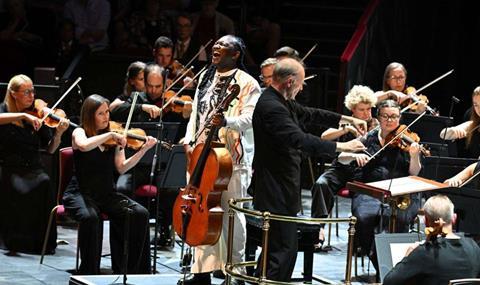
Any new cello concerto opening with a bold solo flourish will evoke memories of Elgar, but on 20 July, the following stream of cantilena melody in Jessie Montgomery’s These Righteous Paths soon assumes a shape of its own, at once confrontational and reflective. In the usual place of the second subject, the cellist sings a new, more lyrically assuaging song – literally so in this case, for Montgomery wrote the concerto for Abel Selaocoe while coming to terms with the recent death of her mother, a leading figure in the civil rights movement, and has woven in several of her poems. The idea and image of the sankofa, a Ghanaian bird that stands with its feet backwards while facing forwards, encapsulates Montgomery’s own, imaginative synthesis of Western classical and African styles in her writing.
Selaocoe had plenty to do, what with virtuosic instrumental declamation and duetting with orchestral soloists (from the BBC Philharmonic under Gianandrea Noseda), while using his uncannily floated baritone as, if you like, a fifth sympathetic string to his cello. The voice gradually takes over in a hypnotically sustained, prayer-like finale, and I wonder who, beyond Selaocoe, will be equipped to do the piece justice.
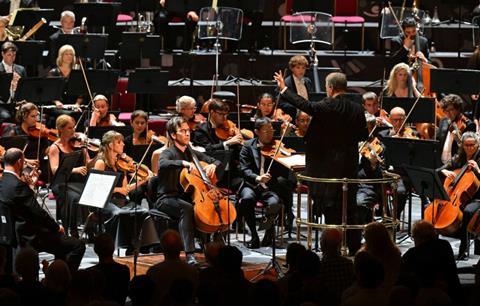
In his Cello Symphony, Britten rebels against an Elgarian heritage while reinventing the concerto’s subtext of a lament for a world disfigured by war. It’s a hard work to love, dour and laconic by turns, but Guy Johnston (28 July) wrangled the gruff rhetoric of his part into the shape of a protagonist buffeted by vicissitudes, in the mould of Britten’s operatic anti-heroes such as Peter Grimes, or the other major concerto parts composed for Rostropovich by Shostakovich and Lutosławski. Johnston’s Mendelssohnian agility in the Scherzo was deftly accompanied by the BBC Symphony Orchestra and Sakari Oramo. Leaning into the rough shanty humour of the passacaglia’s syncopations, Johnston found and held a line of lyrical protest which felt true to the spirit of the age (1963) while resisting what must be a considerable temptation to brutalise the part simply in an effort to be heard.
Read: Abel Selaocoe: I am because we are
Read: Violinist Vilde Frang granted use of 1734 ‘Rode’ Guarneri ‘del Gesù’
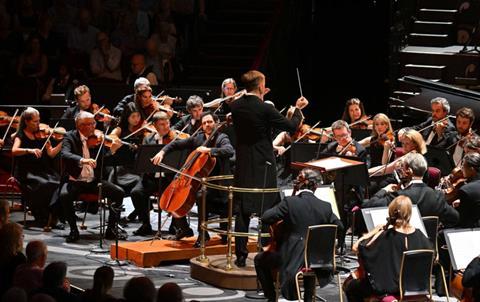
On 16 August Pablo Ferrández took us back to the mother ship with a perceptive account of the Elgar, never idiosyncratic but always personal, and much enhanced by Vasily Petrenko’s Debussyan ear for texture in his conducting of the Royal Philharmonic Orchestra. What initially felt laboured and disconcertingly du Pré-like about the first movement retrospectively made sense as the necessary counterweight to the finale’s journey of reconciliation, especially following a restrained and flowing Adagio. In the nervous chatter of the Scherzo, too, Ferrández presented Elgar as the poet for an age of anxiety, Modernist and Edwardian at once, while inflecting its leggerissimo gestures in the carefree spirit of the composer’s incidental music.
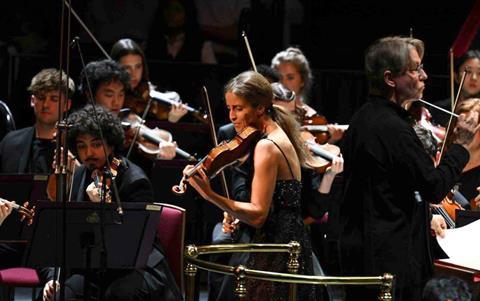
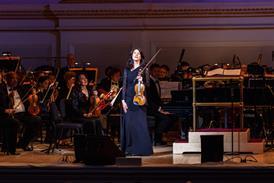
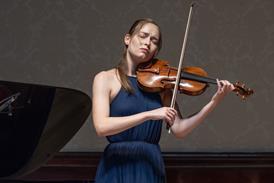
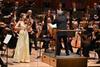
A few days earlier (10 August), Vilde Frang had similarly positioned the Violin Concerto of Berg in a liminal, sankofa-like space between Romanticism and Modernism. Her angel really danced, with Brahmsian vibrato at times but also with the sharply drawn lines of a Schiele portrait. Leading a super-student orchestra, which combined musicians from the Juilliard and the Royal Academy of Music, Esa-Pekka Salonen brought out the parade-ground trumpets and other echoes of Wozzeck in the score – more remarkably, so did Frang. On the first appearance of the Bach chorale, she delicately punctuated and interrogated it, before immersing herself within the entire violin section as they played unison at the concerto’s climax, through which she contrived a 360-degree turn in a memorable gesture of solidarity and communal grief.
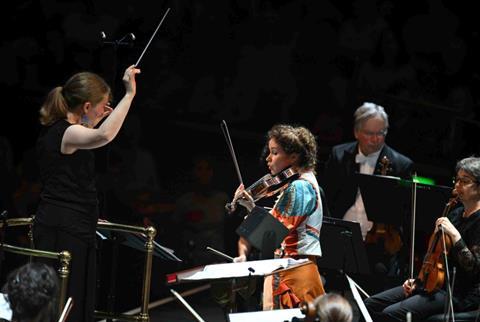
We could anticipate such quirky flights of fancy from Patricia Kopatchinskaja (29 August), and she duly delivered them in the Violin Concerto of Stravinsky. Sing-song phrasing and folksy accenting drew the concerto’s supposedly Neoclassical writing into the earthy world of Mavra and Les noces, enhanced by clownish clarinet and bluesy trumpet solos from the Oslo Philharmonic under Mirga Gražinytė-Tyla. How freely and imaginatively she contrasted the two central arias – the second with the inward gravity of a Handel aria – and then capered in good-humoured dispute with the Oslo PO’s leader, Elise Båtnes, in the finale. They joined forces again in the encore: Kopatchinskaja’s vision of what a cadenza for the concerto would sound like, had Stravinsky supplied the opportunity for one, replete with D major/minor brush strokes from Bach and points in between.
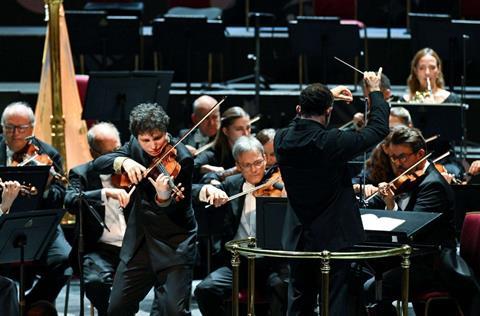
I could gladly have occupied this entire round-up by enumerating the details, the joys and revelations of Beethoven’s Violin Concerto as performed by Augustin Hadelich, the Berlin Philharmonic and Kirill Petrenko (3 September). Not a note was left unweighted, not a gesture made without collective awareness of its place in the whole tapestry. Petrenko worked the orchestra ferociously hard, and witnessing the large string section lay into the sublime folk dance of the finale in perfect unison was a delight in itself. Supported so dynamically, Hadelich soared for much of the time with a purity and simplicity which belied the intelligence in operation, yet chimed with the idea of Beethoven reserving D major for his most searchingly spiritual music: think of the Missa solemnis, and the Benedictus solo. He found an unlikely and understated humility in Kreisler’s cadenzas, and somehow (with a notch more vibrato) took the central Largo to an even higher plane of prayerful devotion.
Read: Patricia Kopatchinskaja: Life Lessons
Read: Sentimental Work: Pablo Ferrández on Dvořák’s Cello Concerto
Read: Augustin Hadelich: ‘as a violinist you never run out of great music to discover’
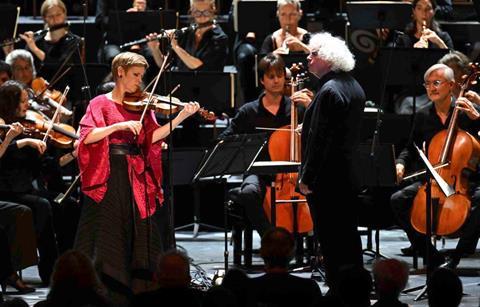
Alina Ibragimova in Mendelssohn, Leonidas Kavakos in Tchaikovsky, Daniel Lozakovich in Bruch… in another Proms season, these would count as highlights, but Isabelle Faust’s account of Schumann’s Violin Concerto (7 September) also merits special mention. As did Hadelich, she e/njoyed the support of a conductor who never merely accompanies: Simon Rattle, with the period forces of the Freiburg Baroque Orchestra. The knots in the piece – its prolixity, its awkward writing, especially for the soloist – were undone by patience, and by storytelling: the same virtues as Hadelich had demonstrated, in fact, and Faust made something Beethovenian out of the suspension of time in the meditative episode after the recapitulation. With myriad variations of vibrato and arm weight, she coloured and lifted the gentle polonaise finale (hardly more repetitive than Tchaikovsky’s, perhaps), and Rattle pulled out the cathartic theme in the woodwinds which proclaims that Schumann has once more faced down his demons.
PETER QUANTRILL






No comments yet