








Robin Stowell reads Christina Bashford’s investigation into the explosion in the popularity of playing violin-family instruments in late Victorian and early 20th-century Britain

Violin Culture in Britain 1870–1930: Music-making, Society, and the Popularity of Stringed Instruments
Christina Bashford
354PP ISBN 9781108842877
CAMBRIDGE UNIVERSITY PRESS £85
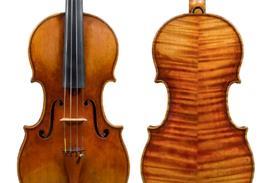
Christina Bashford investigates the explosion in the popularity of playing instruments of the violin family in late Victorian and early 20th-century Britain. She focuses on the violin, the instrument most cultivated and documented, but also includes much to engage cellists, violists and bassists. Framed by an introduction and a lengthy conclusion summarising British violin culture’s foreign influences and post-1930 outgrowths, her narrative is divided into two parts.
Part One, comprising seven chapters and subtitled ‘people and practicalities’, sets the scene for ‘the reign of the fiddle’, involving violin engagement right across the late Victorian social classes. It demonstrates how a string-playing culture developed from society’s grass roots, courtesy of the expanding violin trade and the varied instrument instruction available nationwide. Other major considerations include the impact of violin-dedicated publications such as tutors and magazines, graded and diploma examinations, competitive festivals and advanced conservatoire training on both amateur recreational and professional music making. These influences helped to generate capable teachers, competent performers and enlightened audiences and feed a blossoming chamber and orchestral concert life.
Part Two, ‘The conceptual presence of strings’, addresses the evolving idea of the violin family in the social consciousness, contemplating its instruments’ appeal, the associations attached to them and their handlers and the ‘underlying social currents those associations suggest’. The establishment of public art galleries, museums and instrument collections, the expansion of instrument markets and the increased interest in lutherie are also discussed as contributory factors to the instrument’s ‘allure’ in society, with veneration for Cremonese craftsmanship being acknowledged alongside respect for contemporary artisanal methods.
Book review: Romantic Violin Performing Practices: A Handbook
Book review: Music’s Odyssey: An Invitation to Western Classical Music
Book review: Re-Reading the Beethoven Violin Sonatas
Bashford’s final chapter explores ways in which violin culture meshed with ideologies of nation. It examines the role of journalism in sustaining a string-playing community across Britain and the impact of patriotic gestures such as the retail trade’s promotion of British-made instruments. Overlaps and fusions between classical violin culture, light music styles and traditional fiddling are also surveyed, along with expressions of British national identity exposed in newly composed chamber music and works for string orchestra.
Bashford draws on a wealth of documentary material, including empirical data, cautiously interpreted, information from diverse sources such as contemporary journals, magazines, institutional records and reports. She also uses evidence from commercially run examination board and amateur orchestra archives, as well as private papers, published memoirs, letters and interviews and accounts by celebrated musicians such as Charles Hallé. She acknowledges that her work is only a provisional history, as many themes are ripe for future amplification; disseminated throughout her text, though, are numerous references to the trending issues of diversity and gender, whether in aligning the violin outline and body parts with the female form or tracing the rise of women in the workplace as both teachers and performers.
The volume’s presentation is exemplary: it incorporates copious footnote annotations, 22 black-and-white illustrations, 13 tables, a helpful index and a wide-ranging select bibliography. Bashford’s broad, thorough research, skilful assemblage of available scraps of evidence, particularly regarding the activities of amateurs, and fluent, cohesive prose offer a wealth of fresh insights into how an evolving violin culture shaped and transformed the music profession and amateur musical life during and beyond the period under scrutiny.
ROBIN STOWELL








No comments yet