

















Philippa Bunting reads an empathetic, supportive volume on music education, edited by the head of York University’s music education MA course
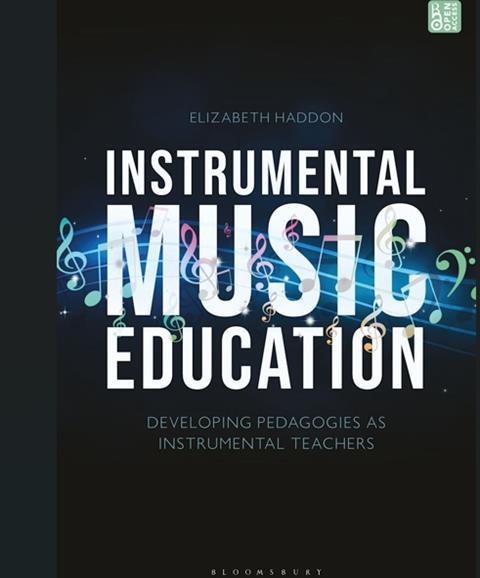
Instrumental Music Education: Developing pedagogies as instrumental teachers
Ed. Elizabeth Haddon
296PP ISBN 9781350408890
BLOOMSBURY £26.99
In many music education cultures throughout the world, there has long been a perceived divide between classroom-based music teachers and their instrumental/vocal teacher colleagues. One significant response to this in the UK was the inception in 2015 of the MA in Music Education: Instrumental and Vocal Teaching at the University of York, under the leadership of Elizabeth Haddon. This course cemented a home for instrumental/vocal teachers who saw themselves as, or aspired to be, teachers of music first and foremost.
At the heart of this publication lies the community that has grown around this unique course, a rich network of practice comprising academics, master’s and PhD students, and practising teachers from many different backgrounds. The book is the product of discussion, debate, academic enquiry and collaboration between teaching musicians across cultures, bringing a richness and diversity of approach that only such a group could achieve.
Specifically, it stems from ‘particular challenges or critical incidents’ in the experience of the authors: situations and moments in their teaching, some painful, that caused them to stop and reflect. These it puts into a research-informed context, enabling contributors, and through them their readers, to engage in deep ‘reappraisal of practice, philosophy and purpose’.
Read: Breaking the sounds of sameness: why music education must resist global uniformity
Read: Beyond the practice room: how musicians and music schools must evolve to thrive in a changing world
Read: Music teacher vs instrumental tutor: is there a difference?
The volume falls into four main parts, comprising nineteen short chapters, each written by a team of between two and five co-authors. Part one focuses on five incidents that precipitated change and reappraisal; part two on contexts, roles and relationships, with a focus on the UK and China, including a sensitive examination of the experience of Chinese teachers undertaking teacher education in the UK. Part three moves on to look at skill-building, specifically improvisation, the teaching of theory, embodiment and practice strategies, while part four concentrates on inclusivity, support and resources.
The book’s tone is empathetic and supportive rather than didactic. Its core aim, to spark ‘further reflection and conversations with other teachers, classroom teachers, students, parents, carers and any other stakeholders’ informs the writing throughout. Reading it is like being invited to join a community of thoughtful, compassionate educators grappling with all the same issues that you are. They may not have immediate answers for you, but their writing can certainly serve to inform your thinking.
Philippa Bunting










No comments yet