




Control is often at the centre of perfecting one’s playing, though it can lead to counterproductive micro-management, explains violinist Hector Scott. Instead, an approach based on language, metaphors and inner narratives can lead to better technical and expressive outcomes
Read more Featured Stories like this in The Strad Playing Hub
In the pedagogy of violin performance, we tend to privilege the tangible through fingerings, bowings, contact points and so on. These are measurable, audible, and crucially, correctable. Yet, some of the most decisive variables in performance challenge quantification. They belong instead to language, imagery and the inner narratives musicians construct as they play. What if the most refined technical outcomes are not achieved through granular physical instruction, but through metaphor? What if the route to control is, paradoxically, through relinquishing it?
This article explores three interwoven propositions. First, that language and mental imagery are not decorative pedagogical tools but primary mechanisms for shaping physical behaviour. Second, that the highest levels of performance are grounded in an ever-deepening return to fundamentals. Third, that the imaginative capacities of the young musician, so often disciplined out of existence, are essential to artistic freedom and must be re-cultivated.
Consider a seemingly simple instruction to play with a ‘heavy’ sound. In conventional teaching, this might be translated into directives concerning bow speed, weight and contact point. Yet such instructions, while accurate, can lead to the over-specification of motor actions that fragments the performer’s attention. By contrast, an image such as ‘crushing an orange’ activates an entirely different system of understanding.
The word ‘crush’ carries with it associations such as sustained pressure, gradual deformation, inevitability and density. When a violinist internalises this image, the body naturally reorganises itself around these qualities. The arm acquires weight without rigidity; the hand transmits pressure without impulsiveness; the bow sinks into the string with continuity rather than attack. The resulting sound emerges organically from a unified physical intention.
Equally important is what this imagery excludes. To ‘smash’ or ‘hit’ the string suggests velocity, impact and discontinuity. These words generate a fundamentally different kinaesthetic response that is abrupt, often tense and ultimately counterproductive for sustained tone production. The distinction here is not merely poetic; it is biomechanical. Language shapes motion, and motion shapes sound.
This phenomenon aligns with broader research in motor learning which demonstrates that external focus (imagery directed toward the effect of a movement) consistently outperforms internal focus (attention to the movement itself). The violinist who imagines the crushing of an orange is not thinking about hand pronation or finger pressures, yet these technical elements fall into place with greater coherence than if they were targeted directly.
Language shapes motion, and motion shapes sound
In this sense, the performer becomes not the controller of discrete actions, but the embodiment of a process. The identity shifts, and with it the quality of movement. The violin and bow respond not to instructions, but to states of being. If imagery provides the internal conditions for expressive playing, the cultivation of fundamentals provides the structural foundation. Yet, here we encounter a paradox. The most valuable work is often the least visible, and therefore the least socially rewarded.
Walk down a corridor of practice rooms and one is likely to hear displays of virtuosity with the performance of capricious runs defining the outward signs of ‘progress’. Meanwhile, behind less conspicuous sounds, the serious practitioner is engaged in something altogether different: scales at glacial tempi; open strings; the meticulous exploration of bow changes, string crossings and intonation in double stops.
The analogy of the watchmaker is instructive. To the casual observer, the watchmaker appears almost inert, peering through a magnifying glass at components too small to register as meaningful action. Yet this ’stillness’ conceals an extraordinary level of precision. Each microscopic, deliberate adjustment restores alignment, reduces friction and ensures the integrity of the whole mechanism.
Similarly, the violinist engaged in fundamental practice is not ‘doing less’, but perceiving more. The slow tempo is not a concession to difficulty but a means of increasing resolution. One begins to notice the exact moment a note settles into pitch, the infinitesimal delay between intention and response, the subtle imbalance in the distribution of weight across the bow. These observations are not ends in themselves but rather the raw material of efficiency.
Crucially, there is no terminal point to this process. In reality, the distinction between foundational work and high-level performance dissolves upon closer inspection. The artist on stage is, in effect, executing fundamentals at a level of integration and immediacy that renders them invisible. The difference is not qualitative but contextual: what is slow and analytical in the practice room becomes fast and intuitive in performance.
The resistance to this mode of practice is understandable. It lacks immediate gratification and offers little external validation. Yet, its long-term rewards are profound, not only in technical reliability but in the sustainability of a performing career. Efficiency can reduce the risk of strain and clarity of intention minimises the cognitive load under pressure.
If the return to basics risks becoming overly mechanistic, the antidote lies in the imaginative capacities that musicians possess during their formative years. Children approach the violin not as a system to be mastered, but as a world to be inhabited. Sound is narrative, gesture is character and performance is play.
However, as training intensifies, this imaginative orientation often gives way to a more defensive mindset. Technical development becomes increasingly codified, and with it comes a proliferation of corrective language. It is at this point that anxiety enters the student’s internal dialogue as a product of excessive self-monitoring rather than as a response to an actual failure.
The irony is stark. In seeking to eliminate error, the musician constrains the very faculties that enable expressive freedom. The ‘micro-management’ of technique can lead to a fragmentation of attention that undermines both confidence and creativity. The performer becomes a supervisor of their own playing rather than its author.
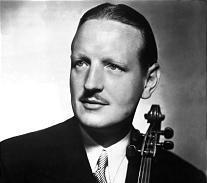
Reclaiming imagination in this context is not a regression to naïveté, but a sophisticated rebalancing of cognitive modes. One practical avenue is improvisation as a practice of unstructured play. To improvise is to suspend judgment and re-establish a direct connection between intention and sound. My chamber music coach Louis Krasner actually performed this skill at Alban Berg’s request and found that some of his ‘improvisations’ appeared in the violin concerto Berg was writing for him.
In improvisation, the violinist constructs a personal mythology. One might imagine being a ‘superhero’ endowed with the capacity to shape sound at will. These images restore a sense of agency that is often eroded by the pressures of formal performance. The technical apparatus, painstakingly developed through fundamental practice, becomes a resource rather than a constraint.
The challenge, then, is not to choose between imagery and technique, fundamentals and imagination, control and freedom, but to integrate them into a coherent practice. Language provides the bridge.
At one end, precise metaphors guide physical behaviour without overloading the conscious mind. At the other, expansive imagery sustains artistic identity and emotional engagement. Between these poles lies the disciplined exploration of basics, where attention is sharpened and inefficiencies are removed.
A practical model might unfold as follows. In the early stages of learning a passage, the violinist works slowly, attending to alignment, intonation and coordination. Once a degree of stability is achieved, imagery is introduced to unify the movement: the crushing of an orange for sustained tone, the drawing of silk for legato, the rebound of a ball for spiccato. These images are tested, refined, and, if necessary, replaced.
Finally, the passage is reintegrated into a broader imaginative context. What is its character? What narrative does it serve? At this stage, improvisatory play can loosen the grip of perfectionism and reactivate spontaneity.
Importantly, this process is iterative rather than linear. One returns repeatedly to fundamentals as a source of continual discovery. Imagery evolves alongside technique and at one point you may require more nuanced or more potent metaphors. The imagination becomes more refined and targeted, becoming deeply integrated with physical execution.
The violin, perhaps more than any other instrument, exposes the inseparability of mind and body. Every nuance of thought is transmitted through the smallest of gestures, and every gesture leaves an audible trace. The cultivation of internal states is not ancillary to technique because it is technique.
To crush an orange rather than strike a string, to peer through a magnifying glass, or to imagine oneself as a creator rather than a corrector, are not merely pedagogical flourishes. They are strategies for aligning intention, action and sound.
The ultimate aim is not control but coherence. When language, imagery and physical practice are brought into alignment, the distinction between effort and expression dissolves. The violin responds not as an object to be managed, but as a partner in a shared act of creation.
In this light, the paradox of performance becomes clear. The highest level of mastery is achieved not by accumulating instructions, but by refining the quality of attention and richness of imagination. The basics are never left behind, they are simply transformed. And within this transformation lies the possibility of playing not as a display of technique, but as an extension of thought itself.








No comments yet