
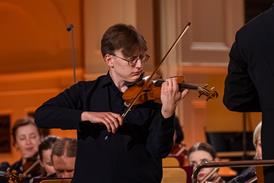







The violinist speaks to The Strad about Rachel Portman’s work, ahead of a performance featuring arrangements of her well known film scores at the London Soundtrack Festival
Read more Featured Stories like this in The Strad Playing Hub
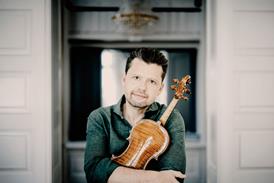
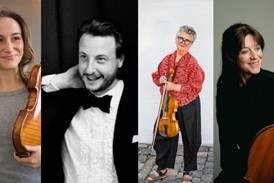
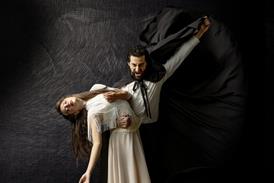
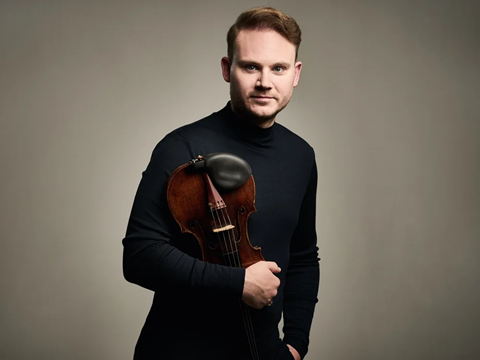
On 12 April 2026, violinist Niklas Liepe and his brother Nils on piano will take centre stage in London’s Cadogan Hall to perform a recital of works by film composer Rachel Portman.
Portman was the first woman to win an Academy Award for Original Score in the 1996 film Emma. The Liepe brothers will perform specially arranged suites and themes from film scores including Emma, Chocolat, Never Let Me Go and The Cider House Rules.
Liepe speaks to The Strad about Portman’s work, as well as the process of arranging her scores for violin and piano.
Tell us about Rachel Portman’s work, and what pieces you’ll be performing on 12 April. How would you describe her work stylistically?
I first had the opportunity to work with Rachel in 2023, when we developed the idea for a project addressing climate change, which led to the creation of her violin concerto Tipping Points.
Rachel’s music feels very close to my own musical sensibility. Her language is deeply rooted in the human experience, yet always marked by a remarkable clarity of expression. She has a rare ability to suggest complex emotional states with great economy, creating atmospheres that feel both immediate and timeless.
At the concert on 12 April, we will perform a selection of her best-known pieces arranged for violin and piano. These include ‘Vianne Sets Up Shop’ from Chocolat, music from Emma, and ‘The Pier’ from Never Let Me Go, The Duchess and Bel Ami, as well as several of her most recognisable themes.
The programme will also feature pieces that Rachel wrote specifically for the concert hall, such as ‘Moment in Time’ and ‘Flight’.
What draws me particularly to her music is the directness of its emotional communication. As a performer, it allows for an almost instinctive connection to the musical material. In some respects, her writing reminds me of Gabriel Fauré, especially in its sense of line, harmonic subtlety and understated lyricism.
While her style is naturally shaped by her work in film, I experience it as possessing a strong inner coherence and intimacy that goes beyond its cinematic context. I often think of the movement Fire from Tipping Points, where the orchestral writing creates an almost physical sense of energy, as if something elemental were unfolding across the stage.
What was the process in creating new arrangements of Rachel’s work for the instrumentation, particularly the music from well known films such as Emma, The Cider House Rules, and others?
My brother and I developed the arrangements very collaboratively. We began by studying and listening closely to the original scores, paying particular attention to how the orchestration shapes phrasing, colour and musical character.
From there, it became a process of decision-making: what is essential, and what can be left aside. Rather than trying to transfer everything, we focused on identifying the structural and expressive core of each piece and translating that into a language that works idiomatically for violin and piano.
How do you recreate a film soundtrack within the confines of violin and piano?
Recreating a film soundtrack with just violin and piano is not about reproducing the orchestral sound, but about redefining its perspective.
The piano assumes a multi-layered role, suggesting harmonic space, rhythm and texture, while the violin brings a direct, almost vocal presence to the melodic line. This creates a different kind of listening experience – one that is more transparent and immediate.
With Rachel Portman’s music in particular, this approach feels very natural. Her writing has a clarity and emotional focus that allows it to resonate strongly even when reduced to its most essential elements.
Niklas Liepe performs with Nils Liepe in Rachel Portman & Friends – Beyond the Screen (12 April) as part of the 2026 London Soundtrack Festival, London’s first-ever festival dedicated to celebrating the music of film, TV and games



















No comments yet