

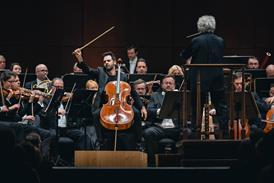











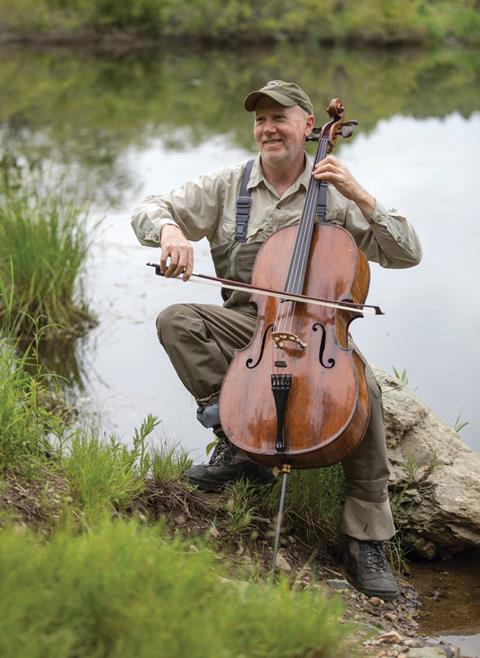
Reflecting on his own career, cellist (and fishing enthusiast) Michael Reynolds outlines the importance of entrepreneurial skills for musicians embarking on work beyond the practice room
Read more Featured Stories like this in The Strad Playing Hub
It all seemed so simple to me when I was 17 and entering my first year at the Curtis Institute of Music: practise hard, then get a job in an orchestra, maybe an artist residency at a university, or if I was really insane, try to start a string quartet. What could go wrong?
Looking back at it all, I am still a bit dumbfounded that I actually did have a career in a string quartet. Of course it wasn’t easy: contentious rehearsals, endless travelling, and a somewhat dubious income stream (reminds me of a joke my dear departed colleague and longtime Vermeer Quartet cellist Marc Johnson shared: how do you become a millionaire in a string quartet? Start out as a multimillionaire!). That said, playing the string quartet literature is like wandering in the garden of the gods.
I know that you have been wondering where the wider net comes in, so I’ll get to it. As any young musician knows, just getting past the preliminary round of an orchestra audition takes an immense effort and a lot of luck. University jobs are about as rare as hens’ teeth, and it’s pretty much a requirement that you have a doctorate for them to even look at your application.
One of the first things I say to my students when they enter my studio is: start thinking now about casting that wider net. What does that mean? Learn to teach younger students; work your way into the gigging scene when you’re ready; think about how artistic administration might fit into your life; and probably most important of all, work on your people management skills. Some of the most successful musicians I know may not be the best players, but they are really good at making friends, both in the musical world and in the wider world that supports it.
For some reason, I’ve always liked doing things the hard way. If somebody had told me when I was 17 that I would eventually start a record company, run four music festivals at the same time, play about 1,000 concerts with the Boston Symphony while I was still in a string quartet and start a national foundation, I would have thought they were crazy.
Granted, I had some personal inspiration: my parents were both superb violinists who retreated to a small college town in Montana to build a new life after many years in orchestras. While department head, my dad started a local symphony and opera company which thrive to this day, and my mum started an orchestra programme which continues to flourish.
Work on your people management skills. Some of the most successful musicians I know may not be the best players, but they are really good at making friends
The entrepreneurial itch I scratched first was starting a chamber music festival in my hometown. I ‘borrowed’ a mailing list, found a few anchor donors, and off we went. Starting a nonprofit is about as much fun as a root canal, but my inspiration was the fact that there weren’t any other chamber music festivals in Montana so we had fertile ground. After over 30 years of running it, I handed the Montana Chamber Music Society to Angella Ahn (of Ahn Trio fame) and it continues to thrive.
Next: Why don’t I start a record company? The inspiration for this was my experience with some of the European recording labels we worked with. We didn’t have much artistic control, so the logical next step seemed to be to create my own label: EcoClassics. The basic idea was to make recordings and give the net proceeds to nature organisations. I hired one of the best recording engineers and producers (Judith Sherman), and our first two releases got a Grammy nomination and a Grammy.
Since I’d already started one festival, starting a few more seemed natural, so I started a programme for young quartets and composers in Utah with the Muir Quartet and great composer Joan Tower, and a programme for amateur musicians in Rockport, Maine. (Important Note: amateur musicians tend to be some of the most enthusiastic and generous supporters of artistic endeavours). At some point I also inherited artistic direction of a festival in Virginia.
For my next act, I decided to start a Foundation dedicated to supporting string programmes for kids at risk. I was fortunate to have guidance from both Dr. Thomas Wolf, one of the top consultants for arts organisations in America (and my inspiration for the festival in Maine), and Dr. Paul Brest, an avid amateur violist and then president of the Hewlett Foundation (he had also been Dean of Stanford Law). Classics for Kids Foundation continues to thrive today, giving matching grants for excellent quality student instruments to string programmes for at risk kids all around America.
I’ve often tried to think if there is a common thread to each of these creations, and the best I’ve come up with is looking for a gap. Where is there fertile ground for something that isn’t there yet? It might be your hometown that doesn’t have much of a cultural life, or an artistic predilection you have that could be developed in the cultural space. It’s also critical to have guidance; most of the artistic wheels out there have already been invented, and there are people out there who already know how they turn.
Another important skill is getting over your terror of asking other people for money. One of my favourite ways to approach this is to tell the potential donor that you have a great opportunity for them (and you’re right!). It’s a little like what I tell my students about getting used to auditions or performing in general; do it a lot and you’ll get used to it.
Other suggestions: take a class that teaches you how to build a budget, build a Board, run spreadsheets, write grant requests, develop promotional materials. Many universities have these courses as an elective, and a number of universities and conservatoires also have internships where students can have hands-on experience in the above areas and more.
Oh, and I almost forgot: keep practising!
Michael Reynolds is professor of cello at Boston University. He enjoyed a 40-year performing career of over 2,000 concerts worldwide as founding cellist of the Muir Quartet and as a soloist; accolades include a Grammy nomination, a Grammy, two Grand Prix du Disques, the Gramophone Award and a performance at the White House.
Read: Don’t play, teach!
Read: What in-tarnation? Exploring expressive intonation with cellist Michael Reynolds
Read more Featured Stories like this in The Strad Playing Hub












No comments yet