








The Berliner Philharmoniker violist discusses reimagining early music for sheng, viola and double bass.
Read more Featured Stories like this in The Strad Playing Hub
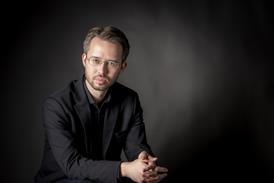
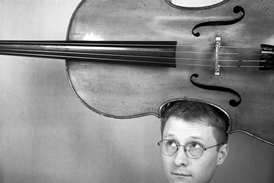
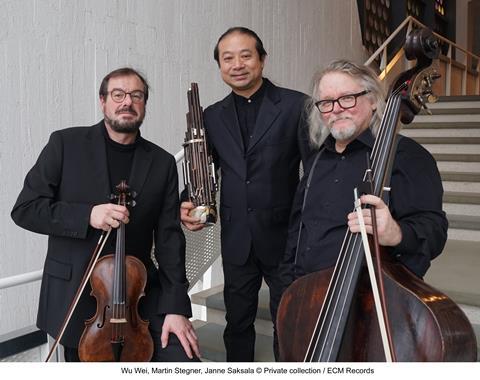
When violist Martin Stegner first encountered Monteverdi through the sound of the sheng, the experience was transformative. ‘An entirely new world of sound opened up for me’, he recalls. That sense of discovery lies at the heart of Pur ti miro, a striking ECM New Series release bringing together Wu Wei (sheng), Stegner and Janne Saksala (double bass) in an unconventional but remarkably cohesive trio.
The programme ranges freely across periods and traditions: Monteverdi’s Si dolce è ’l tormento and Pur ti miro from L’incoronazione di Poppea, Bach’s Organ Trio Sonatas Nos 1 and 4 and Vivaldi’s Trio Sonata in D minor sit alongside Buremarsj frå Beiarn, a Norwegian bridal march. Rather than aim for historical reconstruction, the trio approaches this repertoire as a living, malleable language, shaped by their diverse musical backgrounds and a shared curiosity for improvisation and colour.
Central to the project is the Chinese sheng, a free-reed instrument with a history stretching back three millennia. Wu Wei performs on a custom-built instrument capable of fully engaging with Western tonality, allowing its shimmering polyphony to blend seamlessly with strings. Recorded at Teldex Studios in Berlin in October 2022, Pur ti miro documents a meeting of cultures that feels exploratory yet deeply attentive to the expressive core of the music.
Stegner spoke with US correspondent Thomas May about adapting early music for this unusual ensemble, the role of the viola within the trio, and questions of interpretation and authenticity.
As a violist, what was the biggest technical or conceptual adjustment when translating early music – often conceived for voices or keyboards – into this trio of sheng, viola and double bass?
Martin Stegner: Well, there wasn’t really a technical adjustment, but if anything, it was a general one: you simply have to feel, hear and know where – and how much – you need to contribute, so that you don’t overwhelm such an ensemble from within. You always have to, and should, sing, even as an ‘accompanist’.
Were there moments when your classical viola instincts had to be re-examined or set aside?
Martin Stegner: Good viola joke! What is the viola’s role in music? For me, first and foremost, it connects the treble and the bass, and at the same time gives the music a kind of third dimension – a sense of space in the background. Of course, in the Berliner Philharmoniker it’s often something of a tradition to give the middle voice a good amount of power – sometimes you have to, just to be heard. That’s simply not possible in such a reduced ensemble with just a sheng and double bass.
The sheng can sustain polyphony and long harmonic fields in a way that’s unusual for a wind instrument. How did Wu Wei’s sound and phrasing influence your approach to bow speed, articulation and harmonic grounding on the viola?
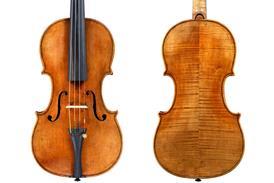
Martin Stegner: The most important thing is to open your ears and listen to the overtone spectrum of the sheng, and then find a tonal and colouristic way on the viola to immerse yourself in the sound of the sheng and support it. During the recording, I played an Italian instrument that is about 50 years old, and I often wished for even more tonal colours – apparently, such instruments do exist…
And that brings us to bowing. You have to know your instrument well, so that you know how to produce which sound: bow length, where you play between fingerboard and bridge – and then there’s also the left hand, which, although not the main part of sound production, also offers many possibilities for shaping the sound.
Because the sheng is tuned with its free reeds, the intonation is naturally very precisely defined. That’s our viola sport: constantly adapting and being present at the crucial moment.
Monteverdi, Bach and Vivaldi all write music that is deeply rhetorical in character. Without text, continuo group or period instrumentation, how did the trio locate musical ‘speech’ and gesture – particularly in works like Pur ti miro and Si dolce è ’l tormento?
Martin Stegner: That was certainly the biggest challenge: playing Baroque music without a real continuo group. The music is reduced to its essence; every note is weighed on a scale, the whole thing is like a fragile house of cards. And on top of that, you have to keep the text and character in mind and sing constantly. But the crucial thing is that, with every note, you try to reach the listener’s heart.
The trio has spoken about not aiming for a strictly historically ‘correct’ performance. From your perspective, where does respect for the score end and creative freedom begin?
Martin Stegner: I believe that good music is essentially indestructible. You notice this especially with Bach: you never truly ‘finish’ your interpretation – almost anything is possible, as long as it’s convincing. For me, respect ends when you no longer respect the composer’s work and skill, when you trample the music underfoot. The only question is: is there right and wrong in music?
The viola often functions as an inner voice, but on this recording it frequently feels vocal, even leading. Did this project change the way you think about the viola’s identity – as a melodic, colouristic or narrative instrument?
Martin Stegner: No. Music is a form of language – everyone should speak. But here you (finally) hear the viola quite consciously. There was quite a discussion with the sound engineer, who would have liked to have more viola, but I think it works very well as it is.
This programme brings together Chinese musical tradition, European Baroque and Nordic folk music. Did working on Pur ti miro reshape your understanding of musical ‘authenticity’ – particularly as a string player navigating multiple traditions?
Martin Stegner: Every culture has its nuances and dialects. The most important thing is to be – and remain – open. I was very fortunate to have been exposed to improvisation, including jazz, from an early age. I played for a long time with European Gypsy musicians, and later also with Pakistani and Persian musicians – there’s an album called Phoenix on ECM with the band Cyminology – as well as completely free, including electronic, musical projects. With Wu Wei, an Asian influence is now added. I think that has shaped me.
You have to listen a lot, and sometimes also ‘keep quiet’. Silence is the most beautiful and precious thing in music.
Watch: A masterclass on Strauss’s ‘Don Juan’ viola part
Read: Cellist Johannes Moser and guitarist Xuefei Yang: a rewarding collaboration
Discover more Featured Stories like this in The Strad Playing Hub










No comments yet