





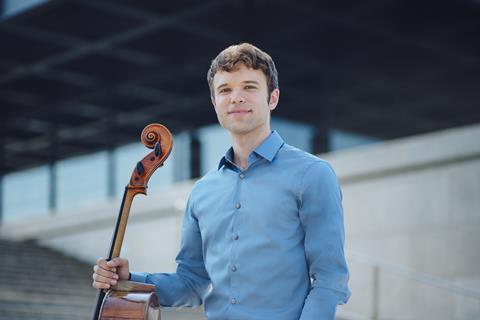
Cello sonata favourites plus a coffee-inspired solo work by Reinaldo Moya make up Rainer Crosett’s debut recital programme at Carnegie Hall, taking place on 6 April
Read more Featured Stories like this in The Strad Playing Hub
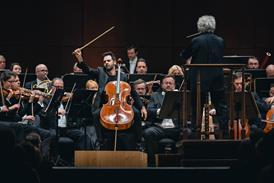
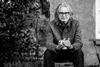
In June 2025, US cellist Rainer Crosett was announced as a recipient of the American Recital Debut Award, along with fellow cellist Gabriel Martins. As part of the award, the recipients get the opportunity to perform at Carnegie Hall – where Crosett will take to the stage in his venue debut on 6 April 2026 with a programme comprising works by Beethoven, Shostakovich, Franck, as well as Reinaldo Moya’s 2021 work for solo cello, Guayoyo Sketches.
Crosett speaks with The Strad about this prestigious award and performance opportunity, as well as what audience members can expect from his debut programme.
What does it mean to you to receive the American Recital Debut Award, given in memory of Lynn Harrell?
It is a deeply meaningful honour to receive, not least because of the care and vision with which the award has been shaped by founder and pianist Victor Santiago Asunción. The opportunity to collaborate with Victor, who played with Lynn Harrell for decades, is so inspiring. His depth of knowledge and experience with the repertoire is remarkable.
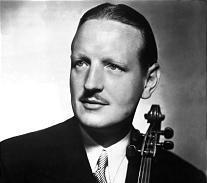
And while I didn’t know Harrell personally, his playing has inspired me more and more over the years. He was always searching for a better way to imitate the human voice, an ideal shaped in part by his father, a distinguished baritone. I share the same passion for that search.
This is your Carnegie Hall debut - as a venue that’s greatly revered by musicians the world over, what does it mean to you to be performing there?
To say it’s a dream come true would hardly do it justice! I’m in awe of the hall’s acoustics and storied history, and thrilled to bring my own programming vision to such a revered venue. I believe the best halls are not just magnificent extensions of one’s instrument, but also spaces that continually reinvent themselves with each new generation of artists who take the stage.
The Weill Recital Hall’s intimacy, in particular, makes it the perfect setting for this recital - just imagining stepping onto that stage has pushed me to dig deeper into what I want to convey through this music.
Tell us about the process of working on Guayoyo Sketches by Reinaldo Moya. How did the piece come about, what was the compositional and collaboration process like? Could you describe its stylistic and technical features?
Collaborating with living composers is one of the most rewarding aspects of my career. It matters to me on many levels: it supports the continued evolution of our art form, challenges both my artistic imagination and technical abilities, and helps build a meaningful legacy for future generations of performers.
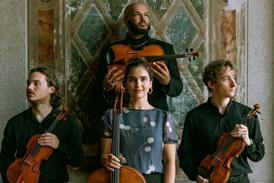
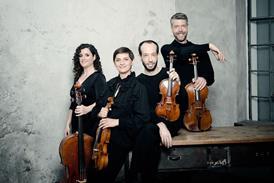
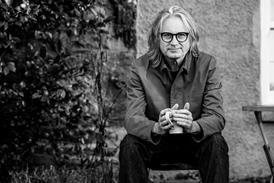
I first met Reinaldo Moya when he wrote a wonderful work titled Farbkreis for my quartet, the Goethe Quartet. We were immediately captivated by the piece – its inspiration drawn from Goethe’s theory of the colour wheel, which Reinaldo conveyed through rotational musical form. He later introduced me to his solo cello work Guayoyo Sketches.
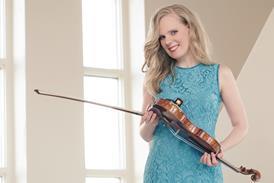
While I am not giving the premiere - Guayoyo Sketches was written for Alisa Weilerstein in 2021 - I am among the first to program it after her. Offering these early subsequent performances is a crucial step in helping a work enter the standard repertoire. I want to continue to champion this work and celebrate it on many stages, not just at Carnegie.
The work is in three movements, each inspired by a type of coffee enjoyed in Venezuela at different times of day: El guayoyo de la mañana, Guarapo de la hora del burro, and Cerrero de medianoche.
The first movement evokes the intimacy of early morning: the sensation of being the first one awake to savour a sip of coffee. It begins with a delicate pizzicato tremolo that gradually gathers momentum, leading into a fleeting, bowed chordal passage. It was tricky to find the right technique for the pizzicato tremolo; with Reinaldo’s help, I found that a light, rapid touch with the first and second fingers best evoked the sound he was searching for, like ’light rain on the roof’.
The second movement depicts the kind of coffee enjoyed at the hora del burro, a Venezuelan expression for mid-afternoon drowsiness. Reinaldo captures this through a hazy, rhythmically off-kilter waltz, interrupted by a wild burst of energy in the trio, inspired by the Prelude of Bach’s fourth Suite for Solo Cello.
The final movement portrays the cerrero, the strongest coffee, consumed late at night to stay up working. A sense of frenetic energy builds through musical fragments juxtaposed in abruptly different tempi, culminating in a virtuosic and explosive finale.
There are so many aspects of Reinaldo’s writing that I love, but to highlight one, his use of rhythm is extraordinary. In this piece, the notated rhythms are challenging at first – a time signature of 3/6 or 4/12 might be initially disorienting, for example – but once you get a feeling for them, they give the music a wonderfully specific flavour and character.
Tell us a little more about what else is on your programme, and why you’ve made those repertoire choices.
The programme opens with one of my favorite Classical works, Beethoven’s Seven Variations on Bei männern, welche Liebe fühlen from Mozart’s The Magic Flute. Beethoven’s mastery of variation form is extraordinary, and the witty dialogue between piano and cello in this piece makes it a joy to perform.
What is especially striking is how Classical and Mozartian the variations begin, but as they progress, Beethoven’s unique touch becomes unmistakable, culminating in the high drama of a brief C minor outburst in the final variation!
Although Shostakovich died just over 50 years ago, his music resonates with striking urgency in today’s world. I’ve long been fascinated by his life, and the Cello Sonata emerged during a particularly fraught period, shortly after he composed Lady Macbeth of Mtsensk, for which he was denounced by Stalin, and during a brief separation from his first wife Nina amid a love affair. Interestingly, on the very day the infamous article admonishing his opera appeared, he was performing this sonata.
The sonata’s structure reflects a profoundly Classical influence: a first movement with exposition repeat, a scherzo with trio, a lyrical slow movement, and a rondo finale. However, his characteristic irony, unease, and satire are never far beneath the surface: the ghostly, slow-motion recapitulation of the first theme in first movement; the quasi-industrial brutality of the Scherzo; the brooding, lontano cries of the Largo; the explosive fortissimo scales in the piano in the Rondo.
Franck’s Violin Sonata (transcribed for cello by Delsart) concludes our programme and I couldn’t be more excited to perform it. Rumours about its origin story have always fascinated me – perhaps the first movement was indeed written initially for the cello, and then he changed his mind – whatever the case, the whole piece works magnificently on cello, especially when one takes the risk to play certain passages closer to the original octave than Delsart indicates in his transcription!
Read: The final 21 days: structuring psychological preparation before high-stakes performance
Read: The lost Elegy: Juliana Soltis on rediscovering Helen Crane’s forgotten cello work
Read more Featured Stories like this in The Strad Playing Hub








No comments yet