








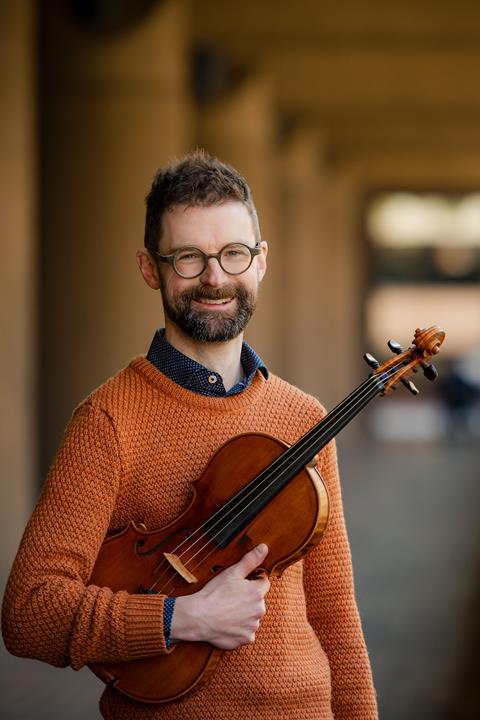
Violist of the Berkeley Ensemble Dan Shilladay outlines the monumental task of reconstructing a gem of string quartet repertoire from a composer dubbed ‘the English Richard Strauss’ in her lifetime
Discover more Featured Stories like this in The Strad Playing Hub
In the summer of 2018, I found myself entrusted with a task at once exhilarating and terrifying: to reconstruct the ’lost’ String Quartet in D minor by Dorothy Howell. At that time, I didn’t even know Howell had written (and lost) a quartet. This – along with much else – would only emerge gradually.
What arrived in my hands was no evocative score in flowing ink script but a battered carrier bag of yellowing manuscripts, many in fading pencil, others in decidedly un-romantic biro. The writer and broadcaster Kate Kennedy had recently unearthed them from the composer’s private papers; together they represented a sizeable chunk of Howell’s chamber music catalogue.
That any of these manuscripts had survived was near-miraculous. Much of Howell’s legacy was saved for posterity by her niece, Merryn Howell, who, on discovering the elderly composer destroying her work in despair, managed to put them aside for safe keeping. Several scores still bear the marks of their near obliteration.
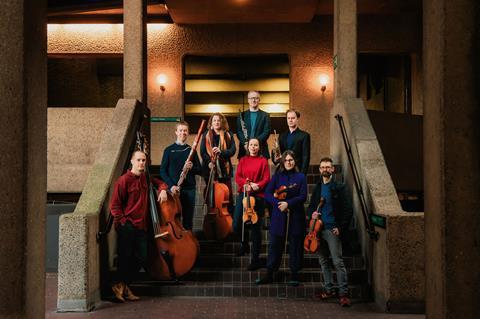
Kate’s discovery had come at a timely moment. The Berkeley Ensemble, with whom I play viola, had been invited to perform at London’s Senate House in a concert marking a century of women’s suffrage. Ethel Smyth’s rousing March of the Women would feature, but the rest of the programme was as yet undecided.
Smyth had conducted a work by Howell in her presence at the unveiling of a statue of Emmeline Pankhurst in 1930, although Howell was too young to have been involved in the suffrage movement firsthand.
’Perhaps one of these will fit the bill,’ Kate had smiled, as she handed over the bag of manuscripts. I murmured something noncommittal, too nervous to confess that the faint scrawls looked perilously close to indecipherable.
Among the leaves was a score for string quartet. Its title page was intriguing: simply String Quartet, but with a scribbled aside in Howell’s hand: ’Good copy (ink) lost by fiddler when on loan’ and, a little lower: ’Rough – not published.’ My heart sank. The fair copy was gone, this was merely a sketch. Some pages had only a single line of music amid crossings-out, their sequence at several points mere conjecture.
Nevertheless, I began typing up a few bars. The opening music puzzled me: a handful of looping fragments that slumped into silence, ending with a lone violin line. My hopes of unearthing a viable piece dwindled with the music. Curiosity got the better of me, however, and the following day I tried a little more. Picking up where the gaunt introduction ended, a looping pizzicato pattern led to something restless, turbulent, thrilling: my enthusiasm was restored, despite the fading tangle ahead.
Some pages had only a single line of music amid crossings-out, their sequence at several points mere conjecture.
By late August I had stumbled across a significant discovery. Whenever Howell wrote only a single violin line quoting previous material she was, I now realised, signalling a literal repetition in all four parts. With this in mind, the quartet began to take shape. All the material seemed to be present, with the possible exception of the gaunt introduction and one bar in the main body of the piece.
I felt unqualified to add to the former and left Howell’s spare writing intact. In the latter case, a filigree figure that had been passed through the other parts in turn was answered by a blank bar for the first violin. I completed the pattern, cautiously hoping that Howell herself would have approved.
Other passages proved more testing. In the central section, faint pencil allied to the dense chromatic harmonies made multiple readings possible. Some chords could be interpreted in several ways, each musically plausible.
I tried every different combination of notes at the piano, choosing the most convincing: painstaking work. More than once, I caught myself questioning Howell aloud, as though she might confirm or refute my guesses.
Another challenge soon emerged: the near absence of expressive markings. No doubt the lost fair copy would have supplied this valuable information, as do her extant ink copies and published works. However, what appeared at first to be a significant shortcoming at my editor’s desk eventually proved refreshing, almost liberating in the rehearsal room.
As performers, we were used to the exacting litany of performance directions common by Howell’s day. They can be illuminating but are often ambiguous, sometimes even hampering performers’ creativity. Faced with the blank canvas of Howell’s score, we all felt a responsibility towards her work but sensed a creative opportunity more akin to interpreting early music than that of the late Romantic era.
Gradually, we found the courage to experiment much more widely than we normally would. We explored extreme timbres, opening and closing the piece with a stark ponticello sonority, and delighted in inventing patterns of articulation that complemented Howell’s numerous hemiola-driven ostinati.
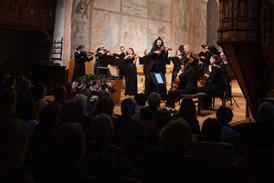
On 1 November 2018, Howell’s quartet was heard for the first time since its 1933 premiere. The Berkeley Ensemble would eventually go on to make a recording of the piece in 2024, but the concert marked a milestone in the quartet’s history.
Lost after its first performance, then lost again in fragments amongst the composer’s papers, a striking piece emerged freshly minted: taut, expressive, and imbued with a dramatic intensity that belied the faint tangle of its sketch.
Looking back from the present day and last week’s release of the Berkeley Ensemble’s recording, it’s hard to recall some of the darker and less promising days I spent on the reconstruction. Perhaps that’s for the best – I’d warmly encourage others to follow in our footsteps and trawl the archives for work that has been inadvertently forgotten.
I was lucky to have grown up between two great works of musical completion: Deryck Cooke’s performing edition of Mahler’s Tenth Symphony and Anthony Payne’s elaboration of the sketches for Elgar’s Third. Their example of scrupulous honesty and humility towards their task inspired my own, much more modest, project.
I saw myself, as I’m sure they did, not as a co-composer, but as a restorer: brushing away dust, filling tiny gaps, and allowing the work as much as is possible to speak in its composer’s authentic voice. The overlap with modern music editing, where editors seek to present works with a minimum of editorial intervention, is a broad one.
When the quartet was finally heard again, it was not only Dorothy Howell’s voice that returned. It was a reminder that countless other works, written off or forgotten, may yet await rediscovery. All they require is patience, imagination, and above all, the conviction that voices long silenced deserve once again to be heard.
The Berkeley Ensemble’s latest album, Beauty Veil’d, is out now on EM Records. It features the first recording of Dorothy Howell’s ‘lost’ String Quartet, available to stream and download or on CD available direct from EM Records.
Read: Asja Valčić: improvising is like composing in the moment
Read: Nick Revel on weaving video games and music together via ‘The Hero Levels’
Discover more Featured Stories like this in The Strad Playing Hub












No comments yet