
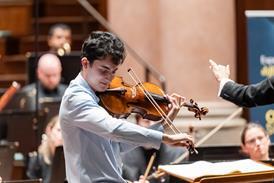
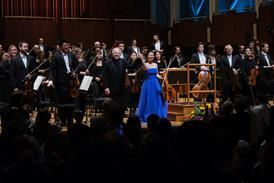
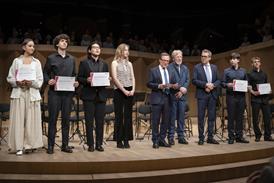
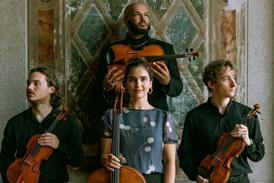






The student–teacher relationship in classical music is unlike almost any other. While conservatoires must continue building healthier educational cultures, professor of cello at the Royal Northern College of Music Jacob Shaw reflects on why human connection remains essential to meaningful musical education
Read more Featured Stories like this in The Strad Playing Hub
In recent years, music education has undergone a necessary and important reckoning. Across the classical music world, long-standing assumptions about power, authority and teaching culture have rightly been challenged. Students today are far more aware of safeguarding, boundaries and institutional accountability than previous generations, and this shift represents important and necessary progress.
For too long, parts of the profession protected reputation over people. The mythology of the ‘great teacher’ sometimes allowed unhealthy behaviour to go unquestioned, particularly in environments where young musicians depended heavily on individual mentors for opportunity, validation and career progression.
At the same time, I believe music education faces another important challenge: how do we combine safeguarding and accountability while still preserving genuine human connection within teacher-student relationships? After all, music education is, by its nature, deeply personal.
How do we combine safeguarding and accountability while still preserving genuine human connection within teacher-student relationships?
A principal-study lesson is not simply the transfer of information. Young musicians are often working at the edge of their emotional and psychological capacities, developing identity, confidence, resilience and self-worth alongside technical skill. Many leave home to study, often far away from their usual support networks, entering highly competitive environments where achievement quickly becomes tied to personal value. In that situation, healthy relationships with trusted adults can matter enormously.
In my own teaching, I often find myself navigating this balance. Conservatoires can offer extraordinary artistic opportunities, collaborations, and concentrations of talent while smaller community-based settings often allow more space for informal mentorship and human connection outside the teaching room. I believe both worlds have something important to learn from one another.
Understandably, many institutions today operate with greater caution around teacher-student relationships than in previous generations. These changes represent necessary and long overdue progress. At the same time, informal mentorship and human connection can sometimes require more careful navigation within modern institutional settings, particularly in the uniquely personal environment of one-to-one teaching.
Yet music has never historically been transmitted transactionally. Great artistic traditions were built through trust, observation, collaboration and long-term mentorship. Young musicians learnt not only how to play, but how to behave and live inside the profession.
Healthy safeguarding should not result in emotional coldness. In fact, I would argue the opposite: good safeguarding is what allows healthy trust and mentorship to exist safely and transparently in the first place.
One of the biggest challenges facing conservatoires today is that many young musicians are profoundly isolated. In principal study disciplines especially, it is not unusual for students to spend five or six hours a day practising alone in small rooms, often while navigating intense self-criticism and comparison alongside the ordinary uncertainties of early adulthood.
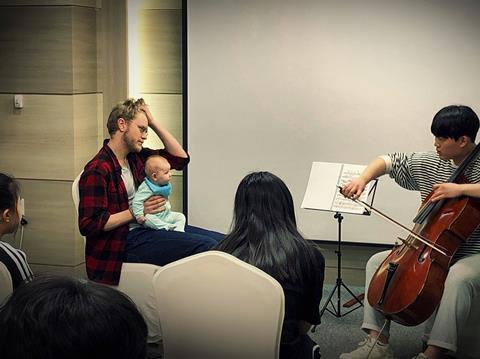
At the Scandinavian Cello School, where many young musicians live together for extended periods of time and where musical teaching naturally overlaps with a strong pastoral responsibility, I have increasingly seen how much artistic growth happens outside formal lessons altogether. Some of the most important conversations I have ever had with students did not happen in teaching rooms, but after difficult competitions, during long car journeys, while cooking meals together, or simply while navigating the ordinary realities of working together on our farm.
Simultaneously, over my last two years at Royal Northern College of Music, I have often found myself thinking about how elements of that same sense of community, trust and openness might exist within a modern conservatoire environment while fully respecting the safeguarding structures and professional boundaries rightly expected today.
I am also aware that approaches centred around warmth, informality and community can sometimes require time and trust to develop within institutional settings. Yet over time, within my own class of thirteen wonderful young cellists, I feel we have gradually built an atmosphere of trust, humour, support and honesty that makes me genuinely excited to travel over and spend three days each week teaching in Manchester.
Just as importantly, I increasingly believe that healthy musical environments extend beyond the individual teacher-student relationship. Through studio classes, shared projects and activities outside individual lessons, students begin to support one another artistically and personally as peers – something that feels increasingly important in a profession that can otherwise become extremely isolating.
In my experience, environments like this create trust, openness, and confidence – all essential for artistic growth.
I fundamentally believe that conservatoires benefit from thinking more holistically about what elite training actually means in modern music education. Technical excellence will always remain central. But perhaps institutions should also place equal value on mentorship culture, community-building, collaboration, mental wellbeing and preparing students for sustainable artistic lives beyond graduation.
The future of conservatoire education lies not in returning to older, unchecked models of authority, nor in retreating into professional distance and risk-aversion, but in building something more mature: environments where safeguarding, accountability, mentorship, warmth and artistic excellence are not seen as contradictions, but as parts of the same responsibility.
After all, young musicians will rarely remember only what we taught them technically. They will also remember the environments we created around them – and whether those environments allowed them to grow not only as artists, but as people.
If we want the future of classical music to be more open, respectful, collaborative and humane, then those values must be lived and modelled within education itself. The environments young musicians experience during their training inevitably shape the kind of profession they later help create.
Read: Scandinavian Cello School: The road to Vienna
Read more Featured Stories like this in The Strad Playing Hub











No comments yet