





The Cabrillo Festival Orchestra concertmaster discusses the challenges and joys of performing Harrison’s joyfully unorthodox Violin Concerto with Percussion Orchestra – an iconoclastic work rooted in personal expression and cross-cultural sound worlds.
Discover more Featured Stories like this in The Strad Playing Hub
As the 63rd edition of the Cabrillo Festival of Contemporary Music enters its final weekend, the spotlight turns to a figure whose legacy continues to ripple through the festival’s DNA: Lou Harrison, the visionary American composer and cultural trailblazer who co-founded Cabrillo in 1963.
Held each summer in Santa Cruz, California, Cabrillo is the United States’ longest-running festival devoted exclusively to contemporary orchestral music. Since its founding, it has become a crucible for innovation – bringing together a purpose-built festival orchestra, composers in residence, and adventurous programming to present bold, often newly commissioned works.
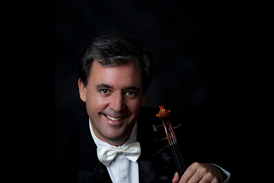
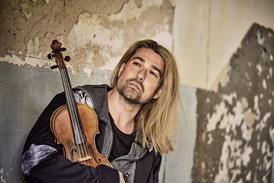
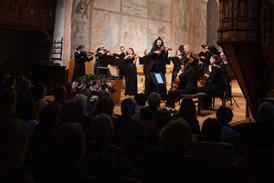
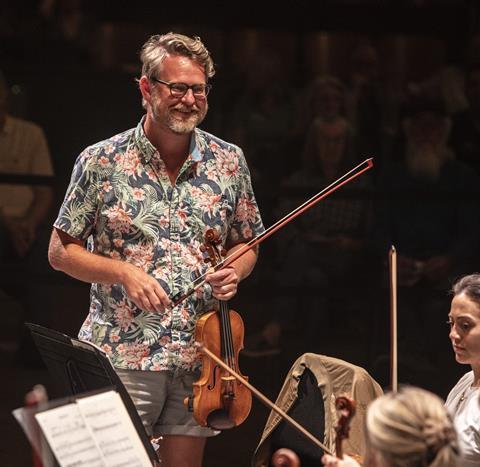
Harrison’s Concerto for Violin with Percussion Orchestra, to be performed on the closing weekend by Cabrillo Festival Orchestra concertmaster Justin Bruns, encapsulates the festival’s founding values: radical curiosity, cross-cultural experimentation and a deep belief in music as personal expression.
Scored for solo violin and five percussionists, the piece draws on gamelan, Baroque dance and minimalist repetition to create a ritualistic sound world unlike anything in the standard violin repertoire. Sharing the programme are Anna Thorvaldsdottir’s CATAMORPHOSIS and a new Cabrillo commission from Darian Donovan Thomas, Flowercloud.
The performance, led by music director Cristian Măcelaru, comes at a particularly resonant moment. This year’s Cabrillo season marks the 50th anniversary of LGBTQIA Pride in Santa Cruz, and Harrison – openly gay and fearlessly individual – remains a guiding spirit. Alongside new works by Jake Heggie, Taylor Mac and Darian Donovan Thomas, his music anchors a broader celebration of queer voices past and present.
In a conversation with US correspondent Thomas May, Bruns reflects on the challenges and surprises of preparing this singular work, and on what it means to perform it as both a soloist and a steward of the festival’s evolving legacy.
Lou Harrison’s Concerto for Violin with Percussion Orchestra is unlike any other in the repertoire. What was your first reaction to encountering this piece – and how has your relationship to it evolved?
Justin Bruns: Although this is the first time I’ll be performing this piece, I’ve known of it for quite a while. When I first began coming to Cabrillo, the originality and novelty of the festival fascinated me. I was determined to understand more about the organisation – how it came into being and in what ways it has evolved over the years.
In learning more about Lou Harrison, I encountered a recording of this concerto about 20 years ago. It certainly felt quirky to my young adult mind, as I had spent most of my education rigidly studying standard repertoire. However, while listening to it here and there over the years, I grew to realise how fun and convincing it was. It’s been on my concerto bucket list ever since.
The instrumentation – violin and five percussionists – is wildly unconventional. What’s it like to be the violinist in that sound world? How does your role differ from that in a conventional concerto?
Justin Bruns: There really isn’t anything quite like this piece. Because the ‘orchestra’ consists solely of percussionists, the usual concerns – like blending with the string sections or projecting above the full orchestra – simply fall away. Percussion instruments can be very loud, of course, but Harrison voices them with great care. As a result, you can focus more on the contrast between the violin line and the other players. The possibilities for intimate moments also become more palpable.
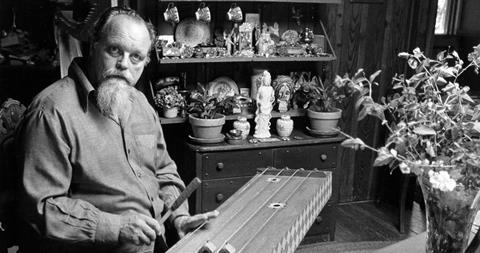
Harrison drew on diverse musical traditions – from gamelan to Baroque – and infused this work with rhythmic vitality and ritual energy. How do you prepare for a concerto that lives between so many worlds?
Justin Bruns: Interestingly, much of the preparation has been quite similar – and at least equally enjoyable – to anything else I’ve played. Beyond the note-learning, speed-drilling, and comfort-building, I began by listening to as many recordings as I could find while studying the score, to get a sense of how different violinists approached the piece. Unsurprisingly, those interpretations vary greatly. I also made a point of listening to a fair amount of Harrison’s other works, to absorb how he merges influences in a recurring and identifiable way – something that might help inform my own part.
How do you respond to the tuning and timbral landscape of the piece – how does it affect your sense of pitch and colour?
Justin Bruns: Although Harrison doesn’t ask the violinist to retune their instrument, there are certainly moments that lend themselves to playing around with pitch-bending. One such example comes in the second theme area of the first movement. The musical line in the violin part is highly repetitive, revolving around two sets of major thirds. As the phrase progresses, tweaking the distance of the intervals – subtly bringing them nearer to each other – creates a sense of tension and need for resolution, like magnets pulling more strongly as they draw closer.
Also, in poring over the score while practising, I’ve learnt how different percussion instruments in the work have harsher or rounder attacks, varied sustain times, and other distinct characteristics. That certainly informs how I play the violin part in response. The concepts of conversation versus contrast, and the emergence of ideas, really guided me in this regard.
You’re not just the soloist – you’re also concertmaster of the Cabrillo Festival Orchestra. How does your dual role shape your experience of this piece and this performance?
Justin Bruns: For a musician whose livelihood and artistic output lie primarily in the orchestral sphere, a solo performance is always a welcome and healthy challenge. But sharing that experience with a group that has spent so much time building trust and rapport only deepens the meaningfulness of the journey. My own takeaway from a chance like this is simply overwhelming gratitude for the other musicians on stage – that they’ve got my back and help create a space where we can be incredibly vulnerable artists together.
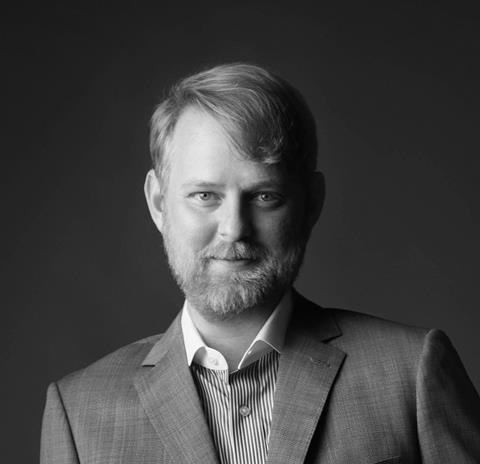
Lou Harrison’s legacy is closely tied to Cabrillo and to queer artistic identity. What does it mean to perform this concerto as part of a Pride celebration – and within a festival he helped to found?
Justin Bruns: The significance of this performance, with its deep ties to the past, is not lost on me. Being part of this tribute to Harrison and what he represents is a personal honour. What made him so unique in his time was that he did things that weren’t socially or musically conventional – living as an openly gay man and writing music unaligned with the dominant trends of his generation. He believed in the rightness of the choices he made and delighted in being inquisitive about the world around him. That gave him a highly personal form of expression in everything he did. And it certainly serves as a beacon of light for those who follow.
Lou Harrison believed in the rightness of the choices he made and delighted in being inquisitive about the world around him
The concerto walks a tightrope between rhythmic rigour and expressive freedom. Are there passages that continue to surprise you, even after living with the piece?
Justin Bruns: Nearing the conclusion of this process, I’ve become increasingly impressed by the pacing and potency of the climaxes in the movements. There is a real logic and genius in how Harrison gets us to these moments and transitions between them. They feel completely inevitable.
For audiences new to this work, what would you encourage them to listen for? What makes this concerto so unforgettable?
Justin Bruns: In addition to the ideas we’ve already discussed, something I find particularly helpful when listening to a work for the first time is to notice returns and repetitions – larger chunks of music that reappear and how they feel different upon hearing them again, as well as smaller motifs that repeat frequently, driving the movement forward. One final thing to keep an ear – or an eye – out for is how, because of the percussive instruments, rhythmic patterns are used not just to maintain pulse and tempo, but also how they morph into more melodic motifs.
Justin Bruns performs Lou Harrison’s concerto on Saturday 9 August at the Cabrillo Festival.
Read: Harrison: Concerto for violin and percussion, Grand Duo; Harrison/Cage: Double Music
Read: ‘It speaks to the heart’: Cellist Inbal Segev on Anna Clyne’s DANCE
Read: Postcard from Bucharest: George Enescu International Competition
Discover more Featured Stories like this in The Strad Playing Hub
The number one source for playing and teaching books, guides, CDs, calendars and back issues of the magazine.
In The Best of Technique you’ll discover the top playing tips of the world’s leading string players and teachers. It’s packed full of exercises for students, plus examples from the standard repertoire to show you how to integrate the technique into your playing.
In the second volume of The Strad’s Masterclass series, soloists including James Ehnes, Jennifer Koh, Philippe Graffin, Daniel Hope and Arabella Steinbacher give their thoughts on some of the greatest works in the string repertoire. Each has annotated the sheet music with their own bowings, fingerings and comments.
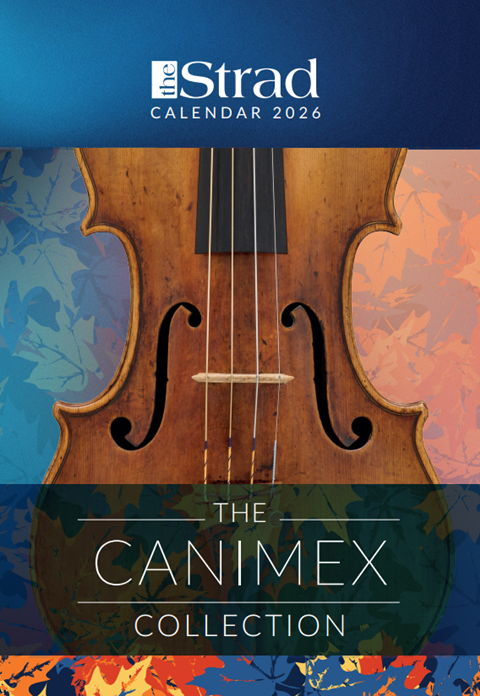
The Canada Council of the Arts’ Musical Instrument Bank is 40 years old in 2025. This year’s calendar celebrates some its treasures, including four instruments by Antonio Stradivari and priceless works by Montagnana, Gagliano, Pressenda and David Tecchler.









No comments yet