



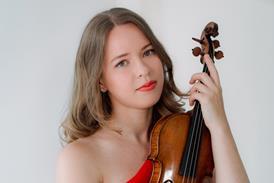




For the Russian–British violinist, Schumann’s Violin Sonata no.2 may be exhausting but rewards listeners with a profound insight into the composer’s deepest soul
Discover more Featured Stories like this in The Strad Playing Hub.
Read more premium content for subscribers here
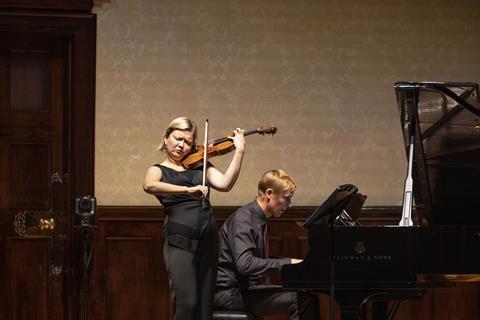
I’ve been playing Schumann’s three violin sonatas with Cédric Tiberghien for more than a decade now, and the Second Sonata is the one we’ve performed the most together. All three are very different from each other; the First has a dark feeling but is somehow simpler, while the Third reminds me of the Violin Concerto. But I have a more emotional connection with the Second Sonata, in that it feels more personal and carries most of the sense of Schumann’s own struggles. Every note seems to convey so much meaning, and it’s one of the sonatas that tires me out the most when I’m playing!
We first performed it in 2010 at the Cheltenham Festival. I remember the first few times we played through it; it was clearly a great work but it took some time for me to get to love it. In the Brahms sonatas, for example, there’s usually a beautiful melody and it’s more obvious how it’s meant to be played. The Schumann sonatas are much more fragmented, and I couldn’t immediately find how to approach them.
My first instinct with the Second was to try to smooth out the rhythms, to make it round, exciting and beautiful. Very quickly I realised that that was completely the wrong approach! The key is never to simplify it, or try to add more beauty into it – it’s as if every note, every bar and every fragment is a struggle. It’s even a contrast with the First Sonata, which is quite smooth and easy-going. Throughout the Second, there’s a sense of trying to grasp something and never managing to do so; and I found it quite hard to achieve that, and to get used to not feeling comfortable with it.
Another challenge was that Schumann’s tempo markings tend to be slower than you might expect. Cédric and I have been working together since 2005 and we find that we don’t need to talk very much in rehearsal – but we discussed the tempo at length. Initially we played the sonata quite fast, but then we realised how and why the tempos have to fluctuate, and what Schumann wanted to achieve with every metronome marking. It leads to huge differences in both feeling and phrasing: do we go for longer phrases or do we keep a sense of breathlessness?
In Schumann’s sonata, you have to listen to everything that happens, each small fragment that has its own shape, and even sometimes its own words. His sense of phrasing and importance of gesture are crucial, and the key is to embrace the discomfort of these various fragments – which can be as short as half a bar. The first movement, for instance, consists of each little fragment on top of another, as though every long phrase is constantly being interrupted. Each of these little interruptions conveys its own little message, so nothing can be overlooked or treated as accompaniment.
So it took a long time for us both to feel we understood it. Another example is the incredibly beautiful slow movement, which suddenly flies and flows with relief, but in the middle you have the awkwardness of the scherzo coming back again. So somehow, even in the midst of this beautiful section, the ghost of fear and angst still exists.
It also helps to understand Schumann’s tortured mental state during the years from 1851, when he wrote the sonata. Within these heavenly moments of beauty there’s always the sense of struggle: the music is so personal, it’s incredible that Schumann was so unafraid to explore the deepest fears and fragility of the human soul.
INTERVIEW BY CHRISTIAN LLOYD
Read: ‘I want to live every note of the music’ - Alina Ibragimova
Listen: The Strad Podcast #63: Alina Ibragimova on historically informed performance
Discover more Featured Stories like this in The Strad Playing Hub.
Read more premium content for subscribers here
The number one source for playing and teaching books, guides, CDs, calendars and back issues of the magazine.
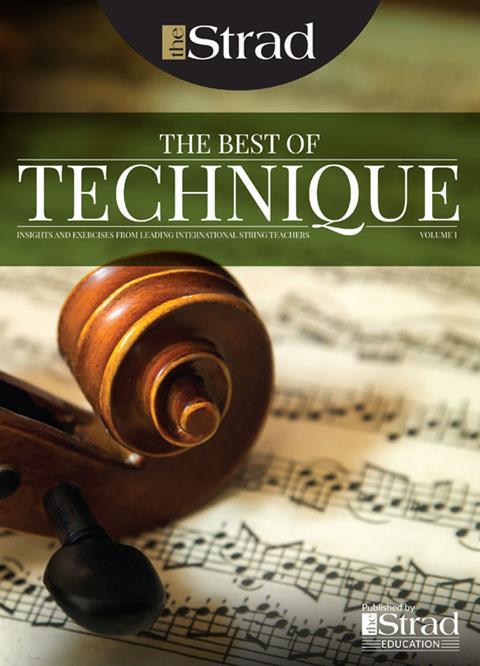
In The Best of Technique you’ll discover the top playing tips of the world’s leading string players and teachers. It’s packed full of exercises for students, plus examples from the standard repertoire to show you how to integrate the technique into your playing.
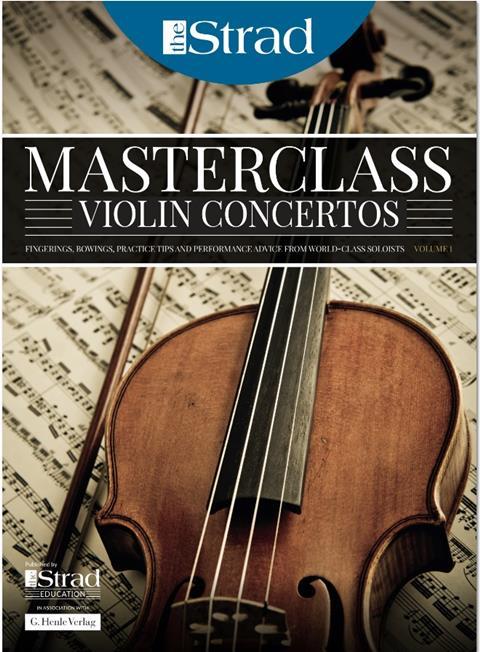
The Strad’s Masterclass series brings together the finest string players with some of the greatest string works ever written. Always one of our most popular sections, Masterclass has been an invaluable aid to aspiring soloists, chamber musicians and string teachers since the 1990s.
The Canada Council of the Arts’ Musical Instrument Bank is 40 years old in 2025. This year’s calendar celebrates some its treasures, including four instruments by Antonio Stradivari and priceless works by Montagnana, Gagliano, Pressenda and David Tecchler.












No comments yet