
















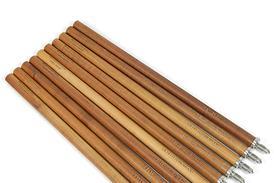

With a worldwide ban on the pernambuco trade again becoming a real possibility, Christian Lloyd looks at the potential consequences for musicians, makers, dealers and anyone who loves instrument bows

Discover more lutherie articles here
Read more premium content for subscribers here
The bad news came on 27 June: Brazil has again launched a proposal for a worldwide ban on the pernambuco trade. The next meeting of CITES (Convention on International Trade in Endangered Species) begins in November, when it will be decided whether the buying, selling and even repair of instrument bows could be potentially outlawed. Such a move would be devastating to the music industry in many different ways, while also eroding the trade’s own efforts to conserve and regrow pernambuco trees.
In 2007 pernambuco was listed as one of the endangered species on CITES’ Appendix II, along with an annotation excluding bows from trade controls. In 2022 the annotation was modified to require CITES permits for the international trade of: ‘all parts, derivatives and finished products, except re-export of finished musical instruments, finished musical instrument accessories and finished musical instrument parts’ originating from Brazil. This was good for musicians, as it meant they could travel with a bow without needing CITES-approved documentation detailing what the stick was made from. (Of course, if the bow contained any other CITES-listed species such as ivory, tortoiseshell or whalebone, it would still need documentation.)
The proposal to move pernambuco up to Appendix I, reserved for species at serious risk of extinction, would mean that string players will be obliged to travel with a CITES permit or a Musical Instrument Certificate (MIC). Either of these will need to be stamped by a government official each and every time a musician crosses a border, whether or not the bow was made 200 years ago or last week.
That’s for the countries that accept MICs at all, which many don’t; and others restrict their passage to certain entry and exit points. Most countries haven’t bothered to set up an MIC system themselves, so players from those countries wouldn’t be able to travel at all with pernambuco. For those in countries that do, getting the MIC in the first place could be tricky, as someone would need to prove that the bow, or the wood used to make it, was obtained before 13 September 2007 – which would be impossible for the vast majority of bows. Since no documentation was required for the past 250 years of bow making, few records were kept and the history of each tree felling was lost to the mists of time.
The worldwide trade in bows, from dealers to auction houses, would be at an end
Under Appendix I, the buying and selling of pernambuco bows, with just a very few exceptions, could be banned outright. So not only would there be no chance of a player gaining an original Tourte or Peccatte, but also anyone who has one – possibly bought for tens of thousands of pounds – would see the value of their investment wiped out. The worldwide trade in bows, from dealers to auction houses, would be at an end; and as for makers of new bows, they would have to find alternative materials to use instead of pernambuco, or use any bow blanks they’ve bought previously (and whose origins they can definitively prove).
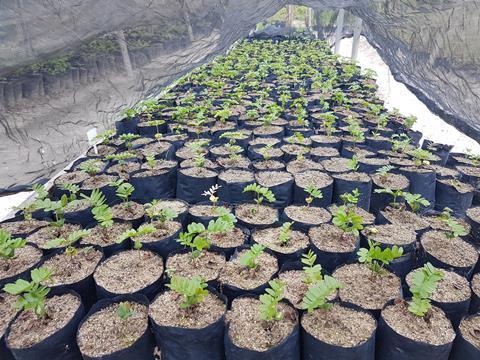
I n fact, bow makers have been extremely aware of pernambuco’s situation for decades. The International Pernambuco Conservation Initiative (IPCI) was formed by a group of bow makers in 2001 and ever since, it has been working with scientists, environmental organisations, small-scale cacao farmers, and local Brazilian communities to conserve and regrow pernambuco. More than 340,000 seedlings have been replanted in Brazil’s Atlantic forest, which eventually will grow into strong and healthy trees, with an expectation that eventually they could be used. That’s in addition to Brazil’s own efforts, which have been ongoing since the 1970s and have seen an estimated three million pernambuco trees planted for conservation, civic or economic purposes.
Almost none of these trees would meet the CITES criteria for an exemption from Appendix I for trade. Only ‘artificially propagated’ plant specimens would be potentially exempt, but the CITES definition of what ‘artificially propagated’ actually means is very narrow, requiring several criteria to be met before commercial trade can be considered. So the work of IPCI and others – which has also encompassed educational efforts, funding two local youth orchestras and environmental outreach in local communities – would effectively be for nothing. As it is, under the provisos of Appendix II, this sustainable source of pernambuco would be enough to keep up the making of new bow blanks, year after year – the industry actually requires very little wood annually.
One other consequence of moving pernambuco up to Appendix I is that the sudden need to regulate the movement of bows will create an enormous, and impractical, increase in CITES’ own work – from authorising MICs to answering queries on suspicious-looking bows from customs officials around the world. So agreeing to the Brazilian proposal would be counter-productive for all concerned.
The proposal is born out of the Brazilian government’s own efforts to control the pervasive – and lucrative – illegal trade in pernambuco. By 2022 ‘Operation Dó-Ré-Mi’, launched by its environmental investigation agency, had seen 33 bow makers in Brazil fined more than US$10 million, with almost 150,000 bows and bow blanks confiscated. This shows that action needs to be taken, but in a different form from an outright ban on the pernambuco trade. IPCI and the International Alliance of Violin and Bow Makers for Endangered Species (‘the Alliance’) argue that adapting and strengthening the current Appendix II listing should be sufficient, along with an international strategy for more effectively tracing the legal origins of newly made bows worldwide. Music stakeholders are encouraging CITES parties to pursue those strategies fully, rather than resort to an Appendix I listing. This past February, CITES parties took further steps to advance the Appendix II process to support conservation, future sustainable use and controlled trade, while preserving music and culture worldwide.
As for musicians, makers and collectors, the Alliance advises that the best course of action for now would be: to ensure that your current bows are in a good state of repair and well maintained; to fill out its ‘Documentation of Bow Materials’ (bit.ly/458pKC0) for each bow you own, for the sake of future resale or CITES registration; and to support the use of lesser-quality, non-pernambuco bows – but never disposable throwaway bows (see ‘Throwaway Culture’, Opinion, July 2024) for beginners and rental programmes. The next CITES meeting takes place in Samarkand, Uzbekistan, from 24 November to 5 December, when the world will be watching with bated breath to discover the future of the stringed-instrument bow – and potentially of music making as we know it.
Read: Pernambuco: the worst-case scenario
Read: Analysis February 2023: Problems with pernambuco
Discover more lutherie articles here
Read more premium content for subscribers here
An exclusive range of instrument making posters, books, calendars and information products published by and directly for sale from The Strad.
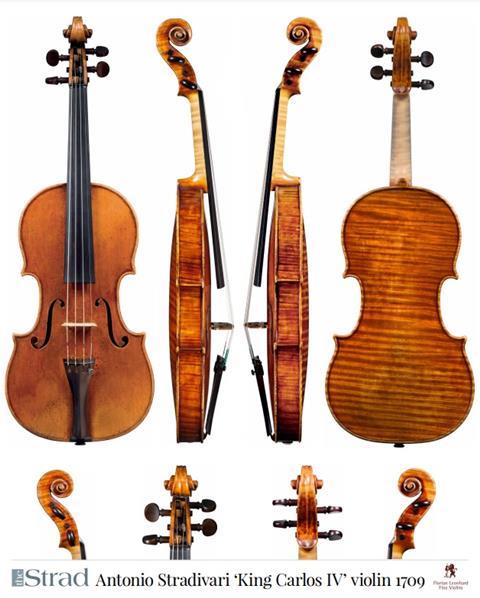
The Strad’s exclusive instrument posters, most with actual-size photos depicting every nuance of the instrument. Our posters are used by luthiers across the world as models for their own instruments, thanks to the detailed outlines and measurements on the back.
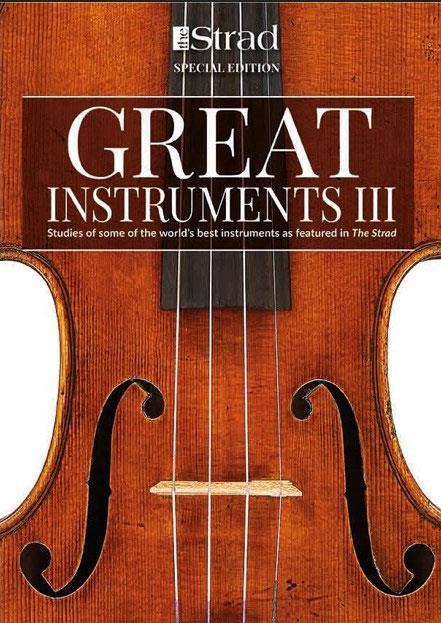
This third volume in The Strad's Great Instruments series brings together the finest scholarship, research and analysis by some of the world’s leading experts on stringed instruments.
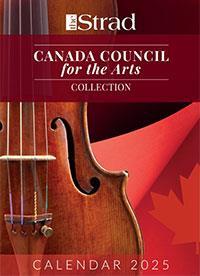
The Canada Council of the Arts’ Musical Instrument Bank is 40 years old in 2025. This year’s calendar celebrates some its treasures, including four instruments by Antonio Stradivari and priceless works by Montagnana, Gagliano, Pressenda and David Tecchler.











No comments yet