





All Features articles – Page 22
-
 Premium ❘ Feature
Session Report: Playing the hero
Violinist Boris Begelman’s new recording represents a small fraction of the hundreds of violin concertos Vivaldi wrote during his lifetime – but people miss the point when they assume the composer’s prolific output equates to works of lesser quality, he tells Tom Stewart
-
 Premium ❘ Feature
Tracing the truth: Stradivari’s early cellos
What cello moulds were used in the Stradivari workshop? The question has long gone unanswered, despite the number of artefacts – and even intact moulds – that survive. Philip Ihle examines 17 of the cellos made before 1700 to find out how many moulds may have been used before the ...
-
 Premium ❘ Feature
Ysaÿe: On the trail of a trio
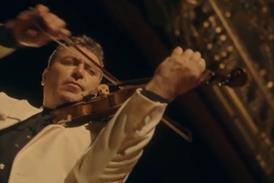
The discovery of part of an autograph manuscript for Ysaÿe’s little-known Second String Trio op.34 hidden in a folder on his computer led violinist Nandor Szederkényi eventually to produce a performing edition. Here he shares details of the painstaking process
-
 Premium ❘ Feature
Song of the gut string makers
In 1877, Markneukirchen in Germany was at the heart of the world’s string making industry. The townsfolk were so proud, they even composed a drinking song all about it. Kai Köpp explains what the lyrics (translated into English for the first time) reveal about this convoluted process
-
 Premium ❘ Feature
Strings and Piano: a sound balance
Producing a nuanced, well-balanced and blended combination of piano and strings can be a difficult performance feat to achieve. Pauline Harding talks to chamber musicians, soloists and teachers to discover some of their secrets
-
 Premium ❘ Feature
David Garrett: His own path
At the age of 40, German–American violinist David Garrett is a bona fide crossover star, in non-Covid times playing regularly to thousands at sold-out arena shows. But, as he tells Charlotte Smith, he has no intention of deserting his classical roots
-
 Premium ❘ Feature
Ludwig Bausch: Gone… but not forgotten
Respected during his lifetime, Ludwig Bausch was almost unknown just a few years after his death – and his bows were considered unremarkable junk. Josef P. Gabriel reveals why the maker and his family were almost lost to history, and why his work deserves to be listed among the greats
-
 Premium ❘ Feature
Session Report: Shining a light
Polish virtuoso Janusz Wawrowski’s new arrangement of Ludomir Różycki’s Violin Concerto reveals a far more optimistic work than its wartime origins suggest, writes Harry White
-
 Premium ❘ Feature
Astor Piazzolla: a tango phenomenon
In celebration of the 100th anniversary of renowned tango composer Astor Piazzolla’s birth in 2021, Argentine violinists Rafael Gintoli and Gabriela Olcese pay tribute to him and offer basic guidance to violinists on how to interpret tango music
-
 Premium ❘ Feature
Ivry Gitlis: an individual voice
When Ivry Gitlis died on Christmas Eve last year at the age of 98 there was an outpouring of love and affection from the musical community. Tully Potter pays tribute to the great violinist’s life and career
-
 Premium ❘ Feature
Lutherie Dynasties: a family affair
In this globalised era, there are still many families that keep up their strong lutherie traditions, with parents passing on their secrets and skills to the next generation. Peter Somerford asks how such formative influences can affect their craft, for better or for worse
-
 Premium ❘ Feature
Orchestral Tricks: in plain sight
Gerald Elias has spent many years as a professional orchestral violinist – in the Boston SO and Utah Symphony – and has been music director of Salt Lake City’s Vivaldi by Candlelight chamber orchestra since 2004. Here he explores some of the universal challenges faced by orchestral string players which ...
-
 Premium ❘ Feature
Session Report: in good time
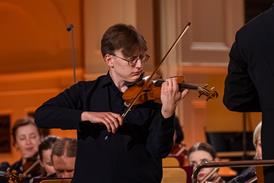
The Engegård Quartet’s third album of Mozart string quartets was all about timing – from allowing enough space between learning and recording the works, to faithfully honouring the composer’s tempo markings – as Andrew Mellor discovers
-
 Premium ❘ Feature
Lutherie in China: the enterprise system
China has become a world leader in stringed instrument making, based on a system of bulk production combined with respect for craftsmanship. Sisi Ye speaks to the heads of manufacturing firms in Pinggu, Queshan and Huangqiao to learn more
-
 Premium ❘ Feature
Francesca Dego: chance of a lifetime
For Italian violinist Francesca Dego, the opportunity to perform and record on Paganini’s ‘Il Cannone’ Guarneri ‘del Gesù’ of 1743 was a dream come true. She shares with Tom Stewart her experiences with the rarely accessed instrument – which came complete with security guards and its own dressing room
-
 Premium ❘ Feature
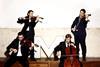
Modigliani Quartet: the more the merrier
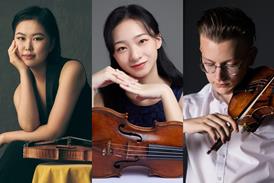
For the Modigliani Quartet, working with other artists has always been a priority – one that continues this year as the group turns its attention to Schubert. Charlotte Gardner speaks to the French foursome about their early development, working through Covid times and acting as artistic directors
-
 Premium ❘ Feature
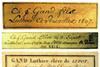
Dawn of Parisian splendour: Charles François Gand
A talented luthier and a shrewd businessman, Charles François Gand had a seismic effect on the Paris violin world despite his relatively small output. Florent Boyer presents an in-depth examination of several Gand instruments to show the development of his style
-
 Premium ❘ Feature
Nikolaj Szeps-Znaider: parallel careers
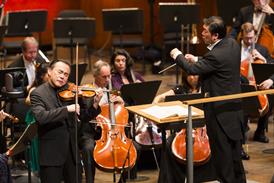
Autumn 2020 was scheduled to be a big one for violinist and conductor Nikolaj Szeps-Znaider, with the start of his first music directorship in France and his conducting debut at the Royal Danish Opera. Did it go to plan? Very nearly, he tells Andrew Mellor
-
 Premium ❘ Feature
Session Report: clowning around
For violinist Patricia Kopatchinskaja a bout of tendonitis was the perfect opportunity to widen her musical perspective by taking on the title role in Schoenberg’s Pierrot lunaire, as she tells Toby Deller
-
 Premium ❘ Feature
Behind the Curve: the evolution of the bow
The evolution of the bow is inextricably tied up with the needs of the player, and the changing face of society. Paolo Sarri examines the development of the ‘ancient’ and ‘modern’ curves of the bow stick, dispelling a number of myths along the way