







As the Beethoven anniversary looms, there’s already plenty of competition
The Strad Issue: October 2026
Description: As the Beethoven anniversary looms, there’s already plenty of competition
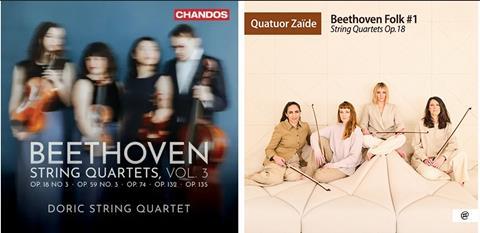
Musicians: Doric Quartet
Works: Beethoven: String Quartets vol.3: op.18 no.3, op.59 no.3 ‘Rasumovsky’, op.74 ‘Harp’, op.132, op.135
Catalogue number: CHANDOS CHAN20320 (2 CDs)
Beethoven Folk #1
Musicians: Zaïde Quartet
Works: Beethoven: String Quartets op.18, interspersed with folk arrangements
Catalogue number: NoMadMusic NMM133 (2 CDs)
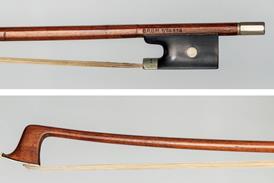
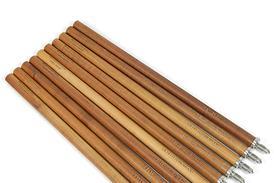
The Doric continues its survey of Beethoven’s string quartets but between the second volume and this one, half the band has changed: Maia Cabeza takes the leader’s chair from Alex Redington, while violist Hélène Clément cedes to Emma Wernig. In terms of sound, you may not notice the join but Cabeza doubles down on the Doric’s desire to provoke, deploying audacious amounts of rubato and inspiring her partners to greater degrees of dynamic disruption. The quartet makes a point of using Classical bows by Luis Emilio Rodriguez Carrington for op.18, and the sound here is cosmetically lighter than in the later works; the quicksilver reactivity, though, and a scintillating moment-to-moment sensitivity to the music’s shifts are common throughout the recording.
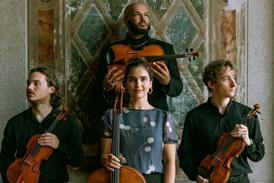
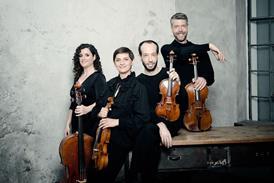
The Doric’s double set opens with op.18 no.3, as does an inaugural volume from the Zaïde Quartet, taking in all six of Beethoven’s first set of quartets. At once the difference in styles is palpable: where the British ensemble is analytical (though rarely forbidding), the French group’s sound is warmed through by a welcoming vibrato, deployed as a default rather than as a specific coloration. The contrast of the Zaïde’s approach is heightened by the juxtaposition of op.18 with arrangements of folk music – not a wholly original idea but one that vividly presents an individual approach and aesthetic. Pieces are chosen for reminiscences of tone or tune that have struck the players; thus a Serbian Kolo vivo picks up on a thematic fragment of op.18 no.4, while a Swiss yodel mimics the fugal finale of no.5.
Those already acquainted with the Doric’s switchback traversal of this repertoire will know what to expect as its survey continues. The inclusion of the folk arrangements may mean that the Zaïde’s op.18 is a little too personal for selection as a library choice, but as a calling card and statement of intent it’s never less than intriguing. Folk pairings for the ‘Rasumovsky’ Quartets should be easy pickings but what the group might choose for the later works is a tantalising prospect.
DAVID THREASHER
Watch: Magic Flute for string quartet
Review: Quatuor Zaïde: Franck – String Quartet in D major; Chausson – Chanson perpétuelle op.37










No comments yet