
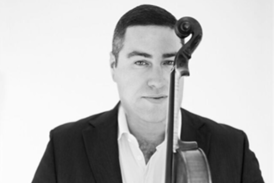



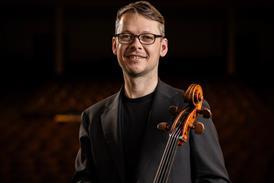




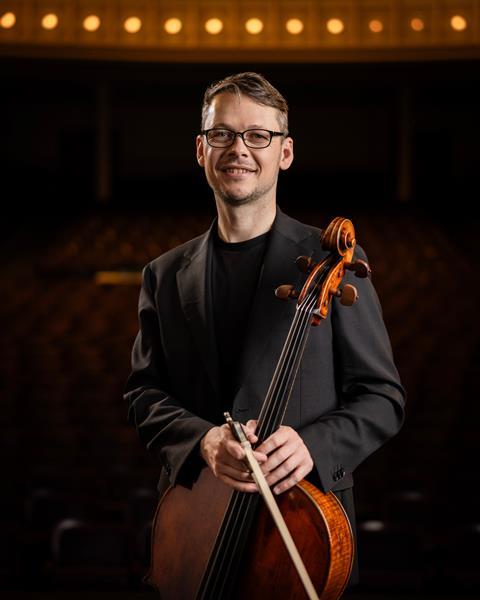
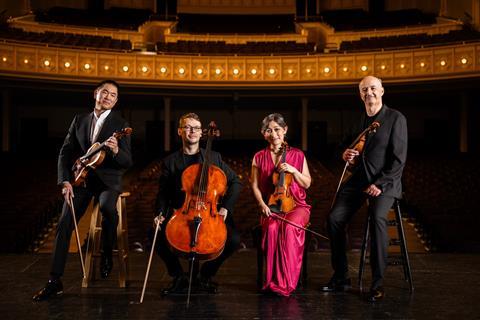
As he begins his first season as the Takács Quartet’s new cellist, Mihai Marica reflects on stepping into András Fejér’s chair, shaping a new ensemble dynamic and discovering the quartet from the inside
Discover more Featured Stories like this in The Strad Playing Hub
Romanian-born cellist Mihai Marica grew up in Cluj, Transylvania, where he began playing chamber music while still at school. He moved to the US in 2001 to study with Aldo Parisot at Yale and became a regular presence on the New York chamber music scene, including through the Chamber Music Society of Lincoln Center. He had known Takács violist Richard O’Neill for decades before an unexpected invitation arrived to audition for the quartet.
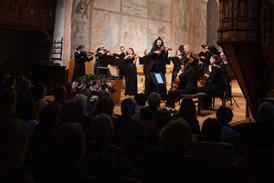
Marica succeeded founding cellist András Fejér this season after Fejér’s 51 years with the ensemble. His first public performance with the Takács, at Music on the Strait in Port Angeles in Washington State, plunged him straight into Mendelssohn’s op.80 and Schubert’s ’Death and the Maiden’ – ‘a great way to hit the ground running’, he recalls.
Marica spoke to US correspondent Thomas May during his first tour with the quartet, ahead of the ensemble’s Carnegie Hall appearance on 16 October, about finding his place within one of the world’s most established string quartets.
You had admired the Takács for years. How did that suddenly turn into an invitation to join them?
Completely unexpectedly. I would never have imagined receiving such an invitation. I had been an avid fan for so long, and I’ve been thinking recently that the Takács – and András specifically – shaped the trajectory of my life without me even being aware of it.
I came to the US in 2001, and not long afterwards their Beethoven cycle started coming out. Several of my friends had the recordings playing repeatedly in their cars, and I was listening to them at home. Later, when I began exploring string quartets, their recordings became an important point of reference.
Then, early in 2025, I saw an email from [Takács violinist] Harumi Rhodes. We had played together once before, soon after Elliott Carter died, in his Piano Quintet. When I saw her name in my inbox, my heart stopped a little. She asked whether, without telling anybody, I would consider coming to Boulder to read with them. I thought: does this really happen?
I was nervous, of course, but they were incredibly welcoming. Most of the repertoire was music I had explored before, and we had a great time.
You knew the Takács for years through recordings and performances. What has it been like discovering the quartet from the inside?
Recordings are an interesting phenomenon for a performing musician. When you listen to something over and over, you can develop a sense that there is a set way of playing it. The real revelation for me after joining the Takács is that no two concerts are alike.
As an audience member, you might hear a performance and think: they rehearsed it, and that is how it goes. But from the inside, it is such a fluid and exploratory way of presenting the repertoire. It is based on our last performance, on the acoustics we are playing in – everything gets built from the ground up pretty much every time.
I’m still in the middle of my first tour, but it is inspiring to see how much exploration happens. It keeps the music feeling very much alive.
There is another thing I find hard to articulate. I’ve been very lucky throughout my career to walk on stage with mentors and wonderful musicians. But with the Takács, maybe for the first time, when I’m on stage and going through some sort of emotion, I think: this is how we feel. I haven’t felt like my feelings were my own once since we started playing together.
You are succeeding András Fejér after more than 50 years. How do you approach that legacy while establishing your own voice?
When I have a second to think about it, I am extremely aware that András’s shoes are very difficult to fill. But when we are rehearsing or on stage, trying to keep up takes my entire bandwidth.
The audiences have been very warm and welcoming, but naturally they miss András. It takes a lot of energy to continue what I see as the Takács tradition of bringing fresh interpretations every time they walk on stage, while being aware of the expectations without letting them overwhelm me.
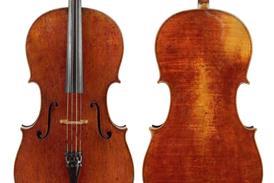
Part of joining the quartet was inheriting the cello that András chose for the group and played for more than three decades. During the audition process I met them in Princeton to try different instruments. My own cello is a beautiful modern instrument by Ryan Soltis, which I love, but because the other instruments in the quartet are much older, we explored some older cellos as well.
András’s cello was among them. We began with Beethoven’s op.59 no.1, and when I started playing it, I felt as though the instrument sounded more like him than me.
I admire András not only as a musician but as a cellist coming from the Hungarian tradition. I can take inspiration from that, but it is impossible simply to emulate him. I try to translate that inspiration into my own way of playing.
And now we happen to live not far from each other in Boulder. If I need bowings, a score or a part, I can stop by – and I have. There are still practical things I can learn from him.
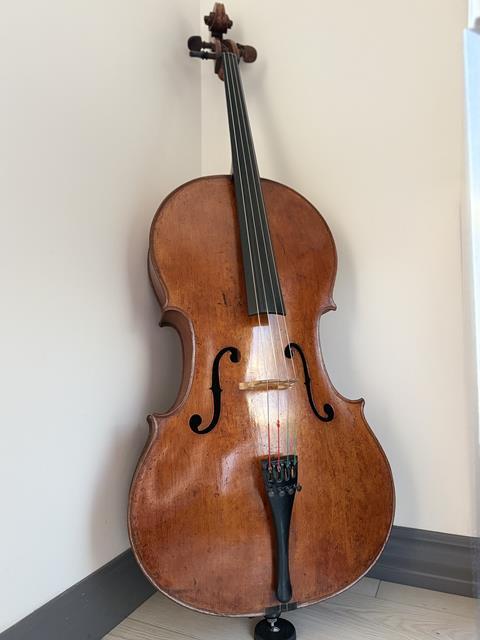
What is the Takács cello like?
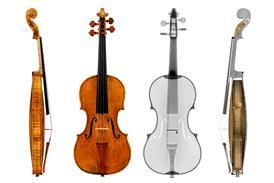
It’s a beautiful Giorgio Serafin cello. It is very comfortable being a cello: it has a beautiful tenor voice up top, a very supportive bottom, and it moves a lot of air, which is something I admire in cellos. But it moves that air rather slowly – it’s not a sports car.
Playing it also involves a greater physicality than some other instruments. That was something I always admired about András: how physically involved he is in the process of music making. That didn’t come naturally to me, but now I understand that playing it takes quite a bit of putting your body into it.
Are you consciously adapting to an established Takács sound, or does the quartet inevitably start to change because you are there?
I try to find inspiration and translate that into my own way of playing the cello that has been with the quartet for so long.
As for whether the others are adapting to me, that would be easier for them to answer. But if they are adapting, the way they are doing it feels seamless to me. Otherwise I don’t think I would feel this group dynamic in the way we feel it on stage.
Has any particular repertoire helped you understand how the four of you communicate?
Beethoven’s op.18 no.6 perhaps stands out a little more, partly because of my nerdiness about having listened to the Takács recordings so many times. But I’ve felt a sense of connection with all the pieces we’ve played. With op.18 no.6, we rehearsed it and thought: ‘Wow, okay, great.’
I also love that in almost every programme this season we have music by Carlos Simon or Gabriela Lena Frank. Harumi’s enthusiasm for living composers really shows, and I feel very grateful to be part of that.
Gabriela came to Port Angeles this summer when we played her 2007 string quartet Quijotadas, inspired by Cervantes’s Don Quixote. It is very demanding and takes work to make it happen, but it is a wonderful piece of string quartet writing. To play it for her before putting it out in public for the first time was deeply rewarding, and her comments were very valuable.
Now that you’re actually part of Takács, does it feel real yet?
I still can hardly believe it. I’m about to head to the rehearsal space and prepare for tonight’s concert. It’s wonderfully busy, so there isn’t much time to worry about it. When I get home and unpack my suitcase – that’s when I have a moment to think: wow, that really happened. I couldn’t have dreamt this up. I feel extremely lucky, and I feel the responsibility.
The last time the Takács played at Carnegie Hall, I was sitting with my wife in the audience. At intermission, I felt a tap on my shoulder. I turned around and a woman looked at me and said, ‘Are you the new cellist?’ I said yes, with a nervous smile. She just said: ‘I’ll be watching you.’
I’ll do my best to convince her. It’s a great responsibility, but it’s a thrilling experience.
Read: 50 years of the Takács Quartet
Read: Takács Quartet announces retirement of founding cellist
Discover more Featured Stories like this in The Strad Playing Hub











No comments yet