













Anne Inglis reviews Ruth Phillips’s book on the usefulness and application of mindfulness to musicians
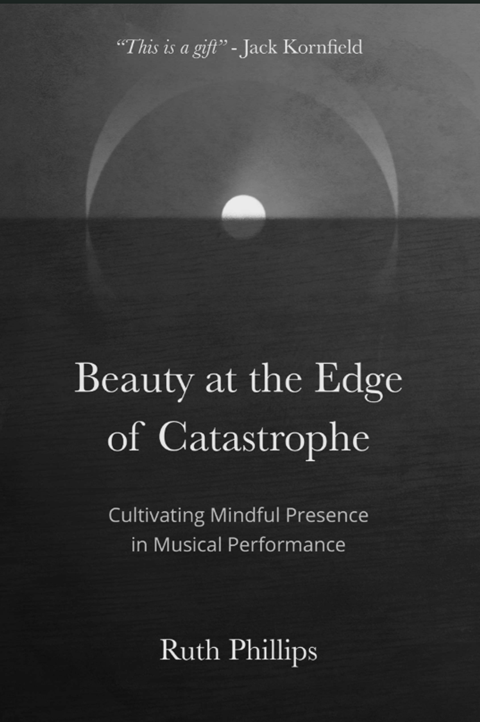
Beauty at the Edge of Catastrophe: Cultivating mindful presence in musical performance
Ruth Phillips
276PP ISBN 9782953450026
RedOchrePress €18.99
There’s a long history of texts that help performers with managing stress and stage fright, and maximising their performing selves where anxiety gets in the way. Cellist Ruth Phillips calls on her own experience of coping with mental and physical difficulties to write an illuminating volume on the usefulness and application of mindfulness to musicians. She is a highly experienced teacher and coach of mindfulness meditation, supporting this with her knowledge of yoga, Alexander technique, Qigong and many other practices, all resulting from her own interest in the natural functioning of the body.
Phillips’s writing is clear and easy to follow, and I found it encouraging. I was easily able to assimilate her thoughts and order of movements and actions, starting with her definition of mindfulness, which is explained as ‘the practice of attention’. The language of her thinking is pleasantly lucid.
There is a list of practices that punctuate the book, and she suggests making audio recordings of these guiding instructions. These can then become more readily assimilated without having to read and manage your breathing at the same time. These include noticing the breath; breathing with the audience; bringing mindfulness into addictive behaviour; and coherent musical breathing.
There are 35 of these practices in boxed sections throughout the book. They are inserted into appropriate chapters that explore topics such as the body, emotions and spirit, which are then broken down into variations that explore the umbrella subject.
This system of ordering the contents helps make the book good to dip into once you have established the author’s processes and references. There are many nuggets to hold on to as you seek some resolution for the symptoms of performance anxiety.
Phillips combines science with teachings from Buddhist thinkers, musicians who have especially influenced her (such as conductor Nikolaus Harnoncourt and pianist András Schiff) and her teachers. She analyses her own issues, and those of others, and gives personal anecdotes to illustrate her solutions. Simple but resonant questions open up the conversation. For instance, a chapter might open with a question: ‘Why am I so scared?’, which is then discussed via interaction with a musician, or through Phillips’s own experience.
Beauty at the Edge of Catastrophe might well receive a wider audience far beyond the world of performing. There is a neat anecdote about not getting work with an orchestra other than as an extra, and everyone can relate to this feeling of rejection. Phillips explores the emotions of this situation, which happened to her 40 years previously and still makes her cry; and explains how she gradually freed herself of what she determines as grief, replacing this with gratitude for having played for many years in that exceptional group in the first place. There is wisdom here, life experience and support.
ANNE INGLIS
Read: Michael Torke: Mindfulness in reverse
Read: 6 mindfulness techniques for music teachers
Read: Becoming a better and happier musician through mindfulness and yoga












No comments yet