


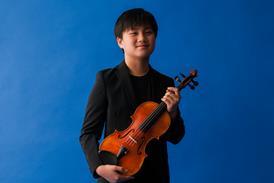











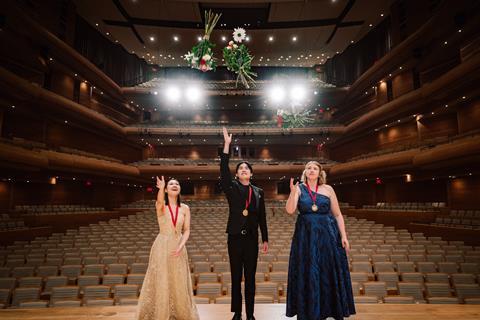
Violinist Peijun ’June’ Xu explores how competitions can balance ranking excellence with supporting musicians’ long-term development
Discover more Featured Stories like this in The Strad Playing Hub
Read more premium content for subscribers here
Competitions are designed to identify excellence. Rankings, prizes and recognition can be enormously meaningful to a developing musician, and at the highest level a win can lead to performances and career opportunities. But most participants will not win. So what should a competition offer the musicians who leave without a prize?
As my own perspective has shifted from contestant to teacher and competition organiser, I have found myself returning to this question. Musicians invest far more than an entry fee when they enter a competition: there are lessons, repertoire choices, hours of practice and the vulnerability of submitting a performance for professional judgement. Identifying excellence is an important part of what competitions do, but should it be where their responsibility ends?
I do not see recognition and feedback as separate aims. A prize tells a musician where they placed; thoughtful feedback can help them understand what to focus on next. Ideally, a well-designed competition can do both.
One relatively simple step would be to make feedback an intentional part of competition design rather than an optional by-product of adjudication. Judging criteria can be available beforehand, with participants receiving scores in individual areas of their performance alongside written comments afterwards. The purpose is not merely to justify a result, but to make the assessment useful after that result has been announced.
Feedback is most productive when musicians can reflect on it afterwards, whether independently or with a teacher. They can ask whether technical proficiency was stronger than interpretation, if several jurors noticed the same issue with articulation, rhythm or phrasing, and what might need greater attention when preparing the next piece. A ranking tells students how they compared with others; an evaluation can tell them something about themselves. The competition may be over, but the learning need not be.
In addition, the relationship does not necessarily need to end with the results. A competition might offer a post-event masterclass in which participants explore issues that emerged repeatedly in adjudication, or provide educational resources addressing common areas for development. Partnerships can extend this further: festivals, orchestras, teachers and other arts organisations may offer participants opportunities to learn, perform or make professional connections. These need not all be prizes reserved for the highest-ranked musician. Some can simply be ways of helping participants continue the development that the competition has helped to assess.
There is, of course, a practical challenge. Detailed comments take jurors’ time, and smaller competitions may not have the resources to offer individual mentoring or masterclasses to everyone. But educational value need not require an elaborate programme. Clear assessment criteria, concise written feedback, a group session with an adjudicator, or a shared educational resource can all give participants something useful without transforming a competition into a school.
Perhaps that is the broader opportunity. Competitions do not need to stop ranking musicians, nor should prizes lose their significance. But results can be a starting point for reflection rather than simply the end of an event. If competitions are designed with careful consideration of what participants can learn, and where that learning might lead them afterwards, identifying excellence and supporting development can become complementary parts of the same experience.
Not everyone will leave with a prize. But everyone can leave with a clearer sense of where to go next.
Read: Opinion: How to navigate competitions
Read: Beyond the repertoire: preparing young musicians for a major competition
Discover more Featured Stories like this in The Strad Playing Hub
Read more premium content for subscribers here












No comments yet