





Across three albums, familiar repertoire sits alongside neglected voices and new commissions in a wide-ranging exploration of American music and an expanding string quartet canon.
Discover more Featured Stories like this in The Strad Playing Hub
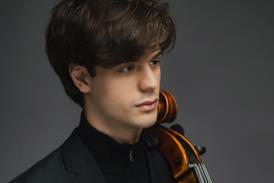
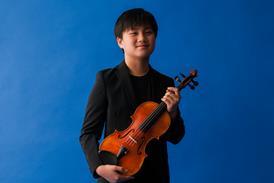
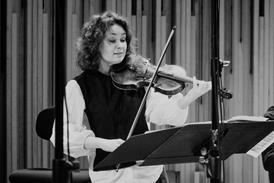
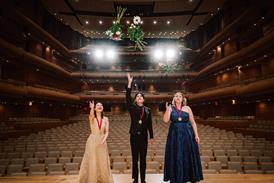
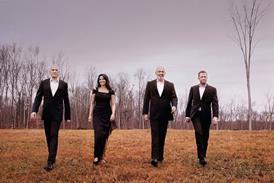
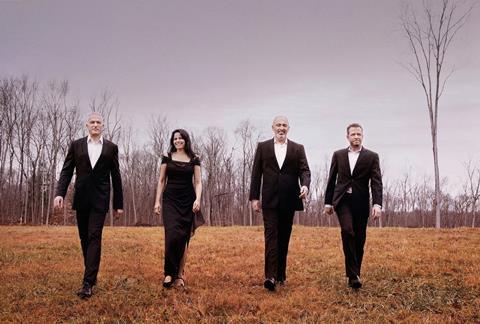
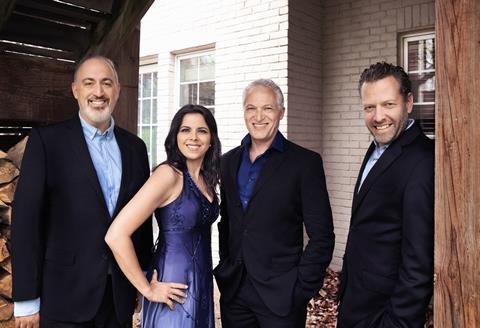
When it comes to string quartet music, what defines ‘the American voice’? To begin with, the Pacifica Quartet understands that there has never been just one. Over the course of an ambitious four-year journey, the ensemble – violinists Simin Ganatra and Austin Hartman, violist Mark Holloway and cellist Brandon Vamos – has explored a striking diversity of voices in American Stories (2022), American Voices (2024) and the new American Portraits.
The project grew in part out of the quartet’s pandemic collaboration with clarinettist Anthony McGill, who introduced them to James Lee III; learning and premiering Lee’s clarinet quintet became one of the cornerstones of the first album. The three albums now come together as The American Collection, a forthcoming box set from Cedille Records.
This broad view of American music suits a quartet that Hartman describes as ‘a melting pot of different ideas’, shaped by its West Coast beginnings, time in New York, long ties to Chicago and the Midwest, and now Indiana University. On American Portraits, Samuel Barber, George Walker and George Crumb appear alongside new commissions by Gabriela Lena Frank and Jennifer Higdon – both with narration by NPR legal affairs correspondent Nina Totenberg.
Ahead of the trilogy’s release as a box set, Hartman and Holloway spoke to US correspondent Thomas May about how the quartet moves between such different musical worlds, the unexpected links they found among the works and the changing shape of an American string quartet tradition.
When you began The American Collection, did you already know what story you wanted the three albums to tell?
Mark Holloway: We had the kernel of an idea: to assemble pieces that would offer a snapshot of American music, or music written in America for string quartet. But as we commissioned pieces and decided what else to include, the project took on a shape of its own.
A three-disc set can only begin to scratch the surface. We never wanted to suggest that this was the most important or most comprehensive American music. They’re snapshots – little corners of the repertoire that perhaps don’t get examined as much as they should.
Louis Gruenberg’s Four Diversions [from the American Voices album], for example, are these charming, cinematic little pieces. I don’t think anybody would necessarily put them in the pantheon of American music, but they’re so creative, colourful and interesting. We wanted a varied picture that might whet people’s appetites to explore further.
Austin Hartman: The idea really began for us back in 2020, during Covid. We were already looking ahead to the United States’ 250th anniversary in 2026 and asking what a project like this might look like. From there we began thinking about how to represent music from the past while also looking ahead through new commissions.
On American Portraits you move between Barber, Walker and Crumb – very different musical worlds. How consciously do you change the quartet’s sound from one composer to another?
Mark Holloway: Whatever we play – Mozart, Haydn, Beethoven, Carter or Shostakovich – we’re looking for character, narrative and storytelling. Every composer has a particular sound world, but within that there can be a huge palette of colours and characters. We try to steep ourselves in the composer’s language while bringing out the particular character of the music.
George Walker’s Lyric for Strings has a lot in common with Samuel Barber. The language is unabashedly soulful, romantic and lyrical. Crumb is a completely different animal because of all the special effects – sul tasto, ponticello, wine glasses and so on. So yes, we’re constantly adjusting, but that’s simply part of playing music. We always try to put the character and the story we want to tell in the foreground.
Austin Hartman: In a sense, the sound world is partly our own responsibility, because we’re the ones who put together the programmes and create the colours and sounds from what the composers have given us. It was fun to look across this long history of American music and create a collage of sounds that also had meaning – whether around something historical such as FDR’s funeral or a work such as George Crumb’s anti-war protest piece Black Angels.
What led you to commission new pieces by Gabriela Lena Frank and Jennifer Higdon for American Portraits?
Austin Hartman: They were very natural choices for us. We had enjoyed collaborating with them in different contexts and already admired their music. We were interested in having something that wasn’t Lincoln Portrait, which is the go-to piece for narrator and orchestra at major moments of American celebration. We began wondering what that kind of idea might look like for string quartet. Combining music with the spoken word became a natural direction to explore.
When we thought about composers with the ability to tell a story and communicate those ideas clearly, Jennifer and Gabriela felt like the right choices. It was only recently that we realised every composer on American Portraits has won a Pulitzer Prize! That was completely accidental. We also gave them the freedom to choose the individuals they wanted to portray.
It was only recently that we realised every composer on American Portraits has won a Pulitzer Prize!
Both commissions portray major American women – environmental pioneer Rachel Carson and US Supreme Court justice Ruth Bader Ginsburg – and use narration by Nina Totenberg. What is it like for a quartet to play with a spoken voice?
Mark Holloway: It’s not very often that you hear a string quartet with a narrator, and that was part of what made it interesting. I grew up listening to Nina Totenberg’s voice on the radio, and there was also a personal connection: her father, the violinist Roman Totenberg, had been one of my chamber coaches when I was a student in Boston. We got to play with him, so there was a nice sense of things coming full circle.
Nina has a very musical background, and I found that her way of speaking had an authority but also a musicality. Working with a narrator is rather like working with a soloist. In concert you respond to their cadences and colours and to how they end a phrase. That can influence how you take up the next phrase, interrupt something or bring it to a close. It’s an interesting partnership, but with a twist.
Austin Hartman: When Jennifer told us that she wanted to write about Justice Ginsburg, Nina was also an interesting choice because they had been very close friends, and she had covered so many of Ginsburg’s decisions at the Supreme Court.
There were other collaborators involved in shaping the texts as well. Gabriela wanted a poetic approach and commissioned J. Drew Lanham to write the text for her piece, while Patrice Michaels, Ginsburg’s daughter-in-law, contributed text to Jennifer’s. So these pieces grew out of a collaborative process involving quite a number of people.
As the project developed, did you start noticing unexpected connections between the pieces?
Mark Holloway: Absolutely. Some of them only occurred to us later. In the third movement of Dvořák’s ‘American’ Quartet, for example, there’s the song of the scarlet tanager, and Gabriela’s piece about Rachel Carson also refers to the tanager. I remember noticing that connection in concert and thinking, ‘Wow – did she even know?’
Then there are historical links. Gruenberg was a student at the conservatory when Dvořák was there. You start finding all these threads between composers, places and generations.
There’s also a real Midwestern connection between Florence Price and Dvořák. I find something very touching in the sincerity and honesty of Price’s music – it’s very soulful and heart-on-sleeve – and that leads towards something like Barber and Walker. There are a lot of threads connecting these pieces.
Has the project changed the way you think about an American string quartet tradition?
Austin Hartman: I don’t know whether it has necessarily changed our thinking, but we’re hoping to be agents of change in how people think about this repertoire. We took a similar approach with the Carter quartets, which were relatively little played when we made those recordings. With this project, our hope is that by playing works more established in the canon, such as the Barber Quartet, alongside something less frequently heard such as Gruenberg, less familiar composers can become better known and appreciated.
Mark Holloway: I also feel that both I personally and the quartet as a whole are part of a musical tradition in America. My teachers studied with people who studied with people who had come from Europe in the 1920s and ’30s, made their homes here and began teaching.
We were very fortunate to work with musicians from the Guarneri, Cleveland, Vermeer and Juilliard Quartets, and now that we’re professors ourselves, I try to connect that lineage with my students. Having gone to Curtis and Marlboro, I felt that connection to the past very strongly: my teachers would talk about their colleagues, older players and recordings, and the composers they knew.
We also got to work directly with Carter, Crumb and Jennifer Higdon. So there’s a real sense of duty to make our own little contribution, and I feel very honoured to be part of that tradition.
Do younger players seem to be approaching this repertoire differently?
Austin Hartman: One of the big conversations with students – and sometimes within the quartet itself – is about what place tonality has in the repertoire. You see pendulum shifts. Some groups of students gravitate towards music that is very tonal, while others are much more interested in the avant-garde. For us, the interesting question is how to deal with the language of tonality while bringing different sonorities and colours to it. I hope both sides of that are expressed in this trilogy. Our goal is also simply to say: here are the options – you decide.
What do you hope listeners ultimately take from The American Collection?
Mark Holloway: I hope it whets people’s appetites to go further. These works should be celebrated for the great works they are, but I’d also like the recordings to become a springboard for discovering the real wealth of American music – a century of really interesting writing, including composers who perhaps aren’t as well known but who have contributed meaningfully to our repertoire.
The American Collection is released by Cedille Records on 20 November. Find out more here.
Read: Pacifica Quartet: how our new album captures America’s sonic heritage
Read: ‘American Stories’ Chronicled: A Contemporary Recording for a Contemporary Time
Discover more Featured Stories like this in The Strad Playing Hub











No comments yet