















To mark 30 years since Mieczysław Weinberg’s death, Elena Chernova-Davis looks at the Polish composer’s fascinating and at times turbulent music – in particular his Piano Quintet – and life, from growing up in a highly artistic Jewish family to his friendship with Shostakovich and living under Soviet totalitarianism
Discover more Featured Stories like this in The Strad Playing Hub
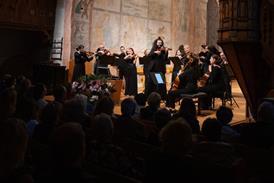
Sometime in the early 1980s, the Borodin Quartet took the stage in the renowned Moscow Conservatory’s Hall to perform a concert celebrating the music of Mieczysław Weinberg. Former first violinist Mikhail Kopelman doesn’t recall the exact date – the quartet played a lot of concerts during his 20-year membership. At the time, the Borodin Quartet was the among most important and celebrated musicians of the soon to be former Soviet Union. Kopelman joined the ensemble in 1976, succeeding founding member Rostislav Dubinsky after a remarkable 30-year tenure.
The concert programme included Weinberg’s String Quartet no.13, which was dedicated to the Borodin Quartet, and his monumental Piano Quintet with the composer himself performing.
‘From the first note,’ Kopelman recalls, ‘the concept was already there. It was the style of rehearsal where Weinberg did not explain anything in words, only through his music. Weinberg played extremely well and very fast, especially considering the piano part is difficult.’
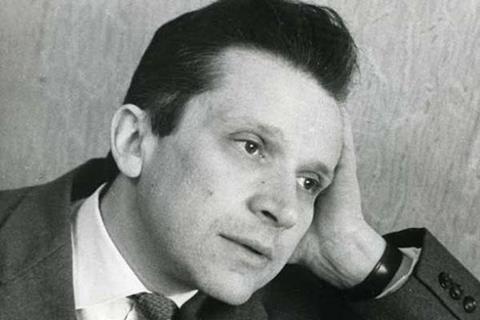
Born Mojsze Wajnberg on 8 December, 1919, in Warsaw, Poland, he was raised in a highly artistic Jewish family. His father was a conductor, composer, and violinist in the Jewish Theatre in Warsaw, and his mother worked as an actress in several Yiddish theatre companies. Weinberg showed prodigious talent as a pianist from an early age, entering the Warsaw Conservatory at the age of twelve, but his blossoming career as a concert pianist was abruptly shattered in September 1939 when Nazi Germany invaded Poland.
As the German army advanced, 20-year-old Weinberg fled eastward on foot and never saw his parents or sister again – they were later murdered in the Trawniki concentration camp. Crossing the Russian border as a refugee, his name was Russified to Mieczysław Weinberg by Soviet authorities. Weinberg found temporary refuge in Minsk where he studied composition under Vasily Zolotarev.
When Germany invaded the Soviet Union two years later in 1941, he was forced to move to Tashkent, Uzbekistan. It was from here that he sent the manuscript of his First Symphony to Dmitri Shostakovich. Deeply impressed by the symphony, Shostakovich arranged for Weinberg to receive an official invitation to settle in Moscow in 1943. The two composers formed a lifelong friendship.
‘Weinberg would sightread newly composed symphonies of Shostakovich in piano four hands with Boris Tchaikovsky’ recalls Kopelman. ‘At that time, it was a required activity in the Composers Union where new compositions were to be presented for discussion.’
It was at this time, the summer of 1944 in Moscow, that Weinberg’s Piano Quintet was composed. Balancing symphonic scale with profound emotional expressiveness and vulnerability, it is a massive work lasting roughly 45 minutes. In many aspects it resembles Shostakovich’s Piano Quintet op.57. Both works are in a five-movement form and showing the bitter sarcasm that would come to characterise both composers’ works.
Yet, Weinberg’s quintet is much more explicit – emotionally extroverted, desperate in its expression with bolder rhythms, intense with textures and almost virtuosic piano writing. ‘Weinberg was only 24 or 25 at the time,’ Kopelman says, ‘but he wrote the quintet with all the heaviness of the war, his personal relationship with the war, his perished family, the national situation during wartime, a lot of darkness.’
Weinberg’s quintet also has a wider tonal landscape, with a more overt embrace of Jewish, Polish and Moldavian folk melodies. ‘Shostakovich took from Weinberg inspiration for Jewish melodies, Weinberg borrowed textures of huge unisons from Shostakovich,’ explains Kopelman.
The work was premiered on March 18, 1945, by the legendary Bolshoi Theatre Quartet with Emil Gilels performing the piano part. The piece was an immediate success and cemented Weinberg’s reputation among the elite circle of Moscow musicians.
Despite surviving the war, Weinberg could not escape Soviet oppression. In 1948, his father-in-law, the famous Jewish actor Solomon Mikhoels, was assassinated on Stalin’s orders, and on 6 February, 1953, during the anti-Semitic ‘Doctors’ Plot’ purge, Weinberg himself was arrested and imprisoned. Shostakovich courageously wrote a petition to Lavrentiy Beria, the head of NVD, the Ministry of Internal Affairs of the USSR, on Weinberg’s behalf, calling for his release. However, it was only with Stalin’s death in March of 1953 that Weinberg would be liberated.
Weinberg was an extraordinarily productive composer, writing in almost every classical genre and leaving behind a staggering number of compositions which include among others 26 symphonies, 7 concertos, 28 sonatas, and 7 operas. His contribution to the chamber music repertoire is astonishing. His 17 string quartets form a deeply personal body of work, rivalling Shostakovich’s cycle of string quartets in emotional depth, technical demand, and complexity.
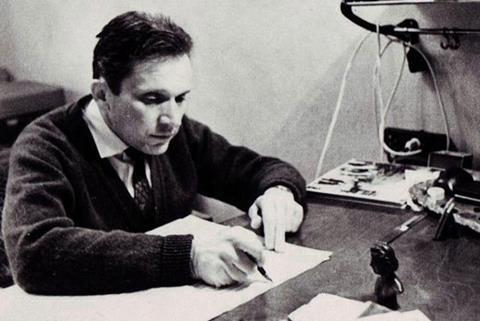
Kopelman remembers: ‘Weinberg wrote all the time; he hummed music all the time.’ To survive financially during periods of Soviet censorship, like Shostakovich Weinberg scored over 60 films and cartoons, including the Palm-d’Or winning Soviet film The Cranes Are Flying and the beloved Soviet adaptation of the cartoon Winnie-the-Pooh.
Kopelman recalls visiting Weinberg at home in Moscow. ‘His personality was of a very gentle and kind soul. He gifted me signed handwritten copies of his two solo violin sonatas. I treasure them as a very meaningful memory.’ Weinberg composed steadily until his death on 26 February, 1996.
2026 marks the 30th anniversary of Weinberg’s passing. While his life was shaped by the horrors of war and totalitarianism, his artistic contribution to the musical world was monumental. Now rightfully recognised as one of the great figures of 20th century music, this deeply personal composer’s life and contributions to music are celebrated with performances across the world. In Weinberg’s own words: ‘My diary is in my work, my music.’
Mikhail Kopelman will perform the Weinberg Piano Quintet as a distinguished guest artist at the University of Arizona School of Music on 30 October 2026, with UA faculty members Elena Chernova-Davis and Daniel Linder, and guest artists Michael Davis and Ian Jones. UA faculty members Philip Alejo and Rie Tanaka are also featured on the all-Weinberg programme.
















No comments yet