


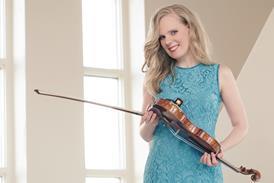







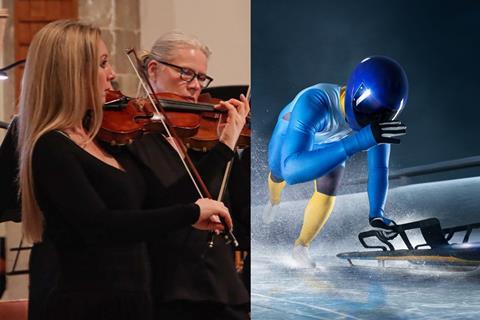
Violinist and educator Maggie Watson shares what musicians can learn from the athletes of the Winter Olympics, and how to implement these approaches into practice and performance
Read more Featured Stories like this in The Strad Playing Hub
Like many, I was captivated by the drama of the 2026 Winter Olympics. These athletes have dedicated years of their lives to rigorously training their bodies and minds for a single, fleeting moment of performance. The results were exhilarating to watch.
Similarly, as musicians, we can invest countless hours of disciplined preparation in pursuit of a fluent performance that seems effortless to our audience. But do the hours we spend practising really make the difference? Or is it the quality of practice that creates the winning formula?
The same principles that drive Olympic champions to gold can offer valuable insights for musicians. Here are five lessons that could enhance the way you practise and perform.
Lesson 1: Precision before speed
In elite sport, as in music, what we see in performance is the polished veneer of something far more meticulous. For athletes, training at full capacity all the time would be neither sustainable nor effective. Instead, intensity is carefully managed to avoid injury. Technical elements are practised in isolation until they can be performed with consistency and control. Only then is speed introduced.
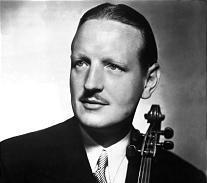
Musicians have long understood this. The Hungarian violinist, Leopold Auer, warned that wrong notes, once repeated, become learned behaviour, while Yehudi Menuhin emphasised the importance of mental clarity rather than unfocused repetition. Whatever we repeat becomes ingrained, whether accurate or not.
Slow, deliberate practice remains one of our most effective tools for learning and refining repertoire. In masterclasses with Ruggiero Ricci in Cremona, I was frequently reminded that the way to learn a piece accurately is to practise it slowly. Carl Flesch similarly advocated slow, conscious practice as the basis of reliable technique.
From this perspective, as in elite sport, practising is not about ‘getting through’ a piece. It is about carefully and accurately crafting it, so that each technical element, each note, each shift, is secure within the larger structure. If we repeatedly play through errors, we risk reinforcing the very habits that we are striving to eradicate.
Lesson 2: Visualise first, execute flawlessly
It is well established that elite athletes regularly use visualisation as a core part of their training. Watching the Olympic coverage, it was fascinating to see skiers at the start gate, frequently with their eyes closed, utterly still, mentally rehearsing every movement before they set off. Research suggests that this kind of mental rehearsal activates many of the same neural pathways used in a real performance. It is clear that visualising success in the mind has the power to train the body to follow that pattern under pressure.
When confronted with a tricky passage, have you ever found yourself rehearsing it relentlessly, hoping the repetition will bring mastery? Is that approach effective? As an alternative, try stepping away from your instrument. Breathe slowly, release unnecessary tension and give your mind some space. In this relaxed and focused state, the music can be heard internally with remarkable clarity. It is possible to feel visualise, in surprising detail, the feel of the violin under the fingers, the bow gliding over the strings. This calm mental rehearsal can train both the mind and body to reproduce it in performance.
Lesson 3: Victory starts in the mind
Have you encountered a player who, at first glance, seems technically unremarkable, yet always seems to do incredibly well? You sense that their recitals will be well received and opportunities seem to come their way almost effortlessly. Why? Often, the answer lies in psychology, in what is known as self-fulfilling prophecy. In essence, this is the principle that we tend to achieve what we believe we deserve. Even the most accomplished player may fall short without genuine self-belief, and a more average violinist may surpass them.
To this end, if we approach a passage of music while anticipating failure, the body often complies. Tension may rise, intrusive thoughts may multiply and any mistake appears to confirm our self-doubt. In this way, our negative expectations become self-fulfilling.
In contrast, elite athletes are coached to imagine successfully completing their performance in vivid detail. While we may feel that we should not feel confident about a piece of music until we have truly mastered it, they mentally rehearse both the movements and the feeling of confidence, until both become ingrained. This deliberate cultivation of confidence plays a huge part in their eventual success.
Lesson 4: Play beyond perceived limits
For me, one of the most inspirational stories from the 2026 Winter Olympics was the journey of Matt Weston. As a teenager, he suffered a stress fracture in his back that could easily have put an end to his sporting ambitions. However, Weston refused to let the injury determine his future. Instead, he transitioned into skeleton racing and never lost belief in himself. In the men’s skeleton event at the 2026 Olympics, he delivered a remarkably composed performance, not only setting a track record in all four runs, but also becoming the first British man to win gold in that event.
Another powerful example of the refusal to allow circumstances to limit ambition can be found in the career of the renowned violinist Itzhak Perlman. Having contracted polio as a child, he was left with lifelong mobility challenges and has performed seated throughout his career. Yet today, he is universally recognised as one of the world’s greatest violinists.
These stories serve as an important reminder that limitations do not determine achievement. Inevitably, we will encounter challenges and setbacks when performing, but we can choose to meet them with composure and flexibility. In the words of Perlman: ’Sometimes it is the artist’s task to find out how much music you can still make with what you have left.’
Lesson 5: Perform with presence
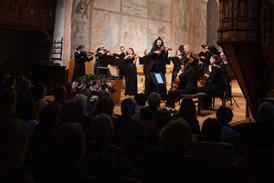
The transition from meticulous preparation to musical success may be subtle, but it often relies on the quality of a performer’s presence on stage. In sport, elite athletes can often be seen competing with an unwavering sense of focus and authority, seemingly unaware of external distractions. Musicians need a similar sense of authority in their posture, composure and the way they command the attention of the audience.
The Olympic arena reminds us that peak performance is never accidental. In the pursuit of technical mastery of each note and phrase, it is easy to forget that a truly winning mindset requires more than repetition and practice. These approaches offer a fresh perspective on preparation, allowing technique and mindset to work together effectively to support a more assured and confident performance.
Maggie Watson is a violinist and music educator, and an alumna of the Royal Academy of Music. She has a particular interest in performance anxiety and the psychological skills musicians need to perform under pressure, drawing on conservatoire experience, research and practical performance psychology.
Read: Why practice doesn’t prepare musicians for performance
Read: The final 21 days: structuring psychological preparation before high-stakes performance
Read more Featured Stories like this in The Strad Playing Hub













No comments yet