
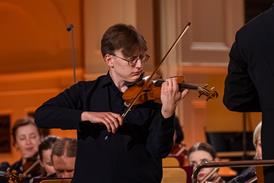



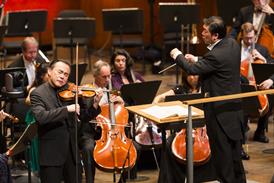













Violinist Gil Shaham has been deepening his understanding of the Romantic world of the Schumanns, Brahms and their circle through new repertoire discoveries inspired by collaboration with his pianist sister, Orli Shaham.

Read more Featured Stories like this in The Strad Playing Hub
When violinist Gil Shaham and pianist Orli Shaham take the stage together, it’s a family reunion shaped by music. On 5 October, the siblings will open the 60th anniversary season of Baltimore’s Shriver Hall Concert Series with a programme inspired by Clara Schumann, a composer and pianist whose artistry fostered one of the most vibrant creative circles of the Romantic era.
The evening comprises Clara’s lyrical Romances, the Violin Sonata in B minor from 1874 by Swedish composer Amanda-Röntgen Maier (1853–94) and Brahms’s Third Sonata in D minor – a work the Shahams have cherished since childhood and a fitting centrepiece for this milestone celebration.
In anticipation of this unusual programme, Gil Shaham spoke with US correspondent Thomas May about performing alongside his sister, the process of building this programme and the connections among these Romantic composers whose friendships and artistic collaborations continue to resonate today.
It’s not every season that audiences have the chance to hear you and Orli perform together. What makes these collaborations unique for you both?
Gil Shaham: We love to play together – maybe it’s our favourite thing. It’s true, we don’t get to do it as often as we’d like. Somehow, as you grow up, it gets harder to see your siblings. When we do get to play together, we spend much more time together, on stage and off. So we love it, and I’m very excited about this concert.
How is working with Orli different from your many other collaborations – whether in preparation or in the heat of performance?
Gil Shaham: We’ve known each other for so long. For example, I can remember us sight-reading Robert Schumann’s A minor Sonata at home as kids. I have no idea what it sounded like, but we grew up with music together. That shared history comes through when we play. There’s this confluence of many years of making music side by side.
Your programme for Shriver Hall is unusual, expanding our sense of Romanticism. How did you and Orli build it around Clara Schumann, both as a composer and as a central figure in this circle of friends?
Gil Shaham: Of the composers on the programme, Brahms is the one I’ve studied the most. Orli and I have both played Clara Schumann’s Romances, and of course the great Brahms D minor Sonata – sometimes together, sometimes separately. It was really Orli who introduced me to the Romances and to Amanda Maier’s Sonata. From the very first hearing, I fell in love with both pieces. I think many listeners will feel the same.
Clara’s Romances are short pieces, just one page for the violin part – but every note is packed with meaning. Everything feels perfectly worked out. Amanda Maier’s Sonata, by contrast, is a large-scale, classical narrative form – exactly what a great sonata should be.
There’s a fascinating web of relationships here. You also hear influences beyond this immediate circle: there’s a lot of Mendelssohn in both Clara’s and Amanda’s works, and of course Beethoven, too. Brahms even consulted with Amanda about his D minor Sonata, and she performed it with Clara.
How does Maier’s writing compare with the Brahms technically?
Gil Shaham: She must have been a fantastic violinist. The writing for violin is very fluent – it really makes the instrument sing. There are technically demanding passages, but always in service of the melody and the narrative.
Clara Schumann must also have been an incredible pianist. Her writing for the piano is very virtuosic. It reminds me of Mendelssohn, especially in the third Romance with its very fast passages.
There really are so many lines of connection and influence going back and forth among this circle. Maier studied with Carl Reinecke, a Robert Schumann champion, and her B minor Sonata shows impulses from his music. Meanwhile, Brahms expressed admiration for Maier’s work. What do you imagine Brahms found so compelling about this piece in particular?
Gil Shaham: I think he would say something like what he said of Dvořák, that it does what great music should do. Maier’s Sonata takes the listener on a journey. It’s like reading a great novel: you’re carried along from beginning to end.
The Brahms D minor Sonata is a pillar of the repertoire and of your partnership with Orli. How do you keep each reconsideration exciting?
Gil Shaham: I don’t worry about it not feeling fresh. I’m always finding new things and learning more from it. It’s late Brahms and very compact. Every note has many different meanings. His harmonic language is so special with its enharmonic modulations: for example, a note you thought was D-flat might turn out to have been a C-sharp all along, depending on the context. There’s always more to uncover.
What instrument are you using for this performance?
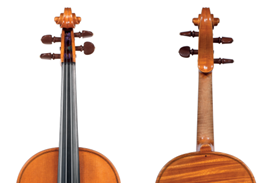
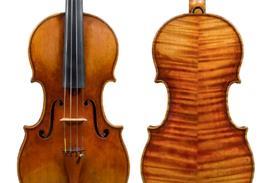
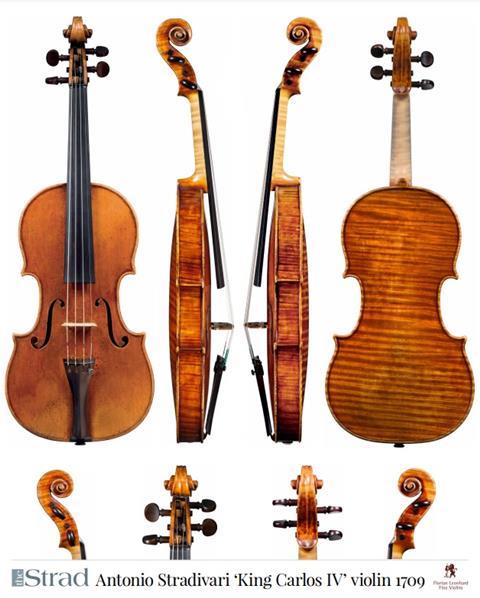
Gil Shaham: I’m very fortunate to be playing the 1719 ‘Haupt’ Stradivari, to which I have access thanks to the New York-based organisation Rare Violins In Consortium. I’ve been playing the ‘Haupt’ Strad for about five years now. In comparison with my 1699 ‘Countess Polignac’ Stradivari, it has a different sound that I think it suits the pieces on this programme very well.
I really love these pieces. I hope people will have the chance to hear them – and to enjoy them as much as I do.













No comments yet