





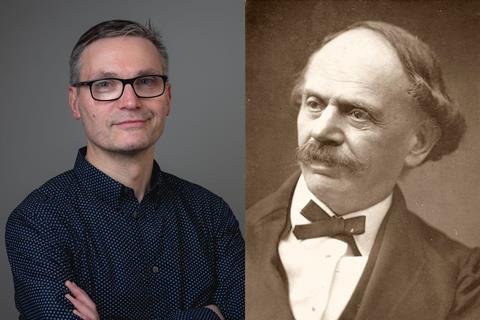
Adrian Bradbury, artistic director of Music in the Burnhams, explores the history of ’the busiest musician in London’ famed for five-hour long concerts in Victorian society
Read more Featured Stories like this in The Strad Playing Hub
Trawl the vast number of concert listings in any Victorian newspaper and the musician’s name that will jump out most often and in the boldest type is that of Julius Benedict (1804-85).
’The busiest musician in London’ had arrived from Stuttgart aged 30 with impeccable credentials as composer, pianist and conductor – Weber’s favourite pupil, protégé of Hummel and conductor at opera houses in Vienna, Naples and Paris.
He was soon playing on all the main stages with all the best artists, as well as conducting at the Lyceum, Drury Lane, Her Majesty’s and Covent Garden and composing for every occasion and combination – chamber music, cantatas, operas, symphonies… and of course lots of piano music. He was a favourite of the Prince of Wales, later Edward VII, godfather to his son, and he was knighted in 1871.
Alongside the sheer quality of his music-making Benedict was to become famous for something else: sheer quantity. Whether it was his success in getting significantly more string players into the ranks when taking over conductorship of the Liverpool Philharmonic, more concerts into his diary, more unfeasibly-small and impeccably-formed words written into his daily journal, more compositions commissioned and performed, more dinner parties hosted and attended
No one could quite work out how Julius Benedict ever had the time to sleep back in 2 Manchester Square, a house now bearing a blue plaque to celebrate his residence.
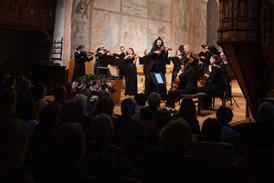
Of all the fruits of Benedict’s musical industry nothing quite shouted quantity as did the Monster Concerts he championed. Advertised as Benefits or Grand Annual Concerts these affairs would pack out major venues - the opera-houses, Hanover Square Rooms, Exeter Hall, St James’s Hall or even the Royal Albert Hall – with audiences in the thousands.
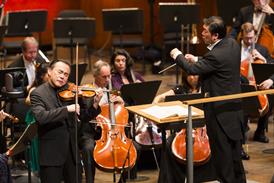
Legends of the day – singers, instrumentalists, choruses and orchestras alike – would be in the wings waiting to take their turn in a bill that might last five hours. Benedict would be standing with them, nervously checking everyone’s arrival in the inevitable chaos and then, discarding impresario cloak and donning tails in a flash, serenely taking his own place on stage.
String enthusiasts in the audience were never disappointed at the Monster Concerts, invariably witnessing turns by Ernst, Joachim, Piatti, Bottesini and the like in between the solo piano, orchestral and vocal items. These were the artists with whom Benedict was collaborating day in day out for other promoters, be it John Ella’s Musical Union or Chappell’s Monday and Saturday Pops for which Benedict soon became resident accompanist.
One ‘Monster’ aspect was the sheer size of the crowds who came to listen, music-lovers from all strata of Victorian society:
’The general public invariably supports Sir Julius, and is grateful to him for affording it an opportunity of making acquaintance, once a year, with nearly all the musical celebrities of the day. People who cannot afford to visit opera-houses and concert-rooms frequently during the season are enabled to keep themselves au courant of its novelties by attending a Benedict concert, at which, in the course of a single afternoon, they can command a resumé of the past trimester’s novelties. As teacher, composer, and leader, the kind old knight has rendered invaluable service to musicians and music-lovers in this country for well-nigh fifty years past. He is a national institution, the object of popular affection, as well as respect and admiration; and his audiences are not made up of mere fashionable cliques or bourgeois confederacies, but are eminently representative of all classes of musical society’ (The Theatre, 1 August 1881)
Another claim to Monsterdom was of course the length of the programme:
’…I know not how many years Benedict’s “grand annual morning concert” was the great function of the season in that time…the programs were of appalling length…However Benedict’s concerts were not to be despised. You could hear at a stroke (though rather a long one) every musical celebrity of the day, vocal or instrumental, who could be scraped together. If, with heroic resolution, you meant to “do” the whole thing, it was certainly desirable to make about the same preparations as regards viands and light literature as might suffice, say, for a journey to Perth; then, fortified against famine and the uninteresting numbers, you could smile serenely.’ (Musical Opinion & Music Trade Review, 1 June 1894)
Quantities aside, one special ingredient of these Monster Concerts lost to modern programming was their juxtaposition of instrumental with vocal items.
As I’ve argued before on this platform, the separation of the worlds of opera and of string playing is recent and lamentable. Back in Benedict’s time, in his and other concerts, audiences would expect to hear both genres on the same stage in one sitting, and this proximity of opera singers to instrumentalists must surely have fed the techniques of all concerned, giving a vocal quality to the string players and an instrumental quality to the singers.
Add to this the show-piece repertoire for instrumentalists of the days, operatic fantasies, and it’s no surprise that so many string players were famed for their true cantabile tones.
Of course the musicians would have known one another from their ’day jobs’ working together in the opera-house, instrumentalists in the pit and singers on stage. But their interaction would continue and flourish at concerts such as Benedict’s Monsters, and the collaborations would often continue into the act of co-composition, whereby Benedict joined with string players like de Bériot and Piatti to write compositions that made the best of both parties’ musical strengths.
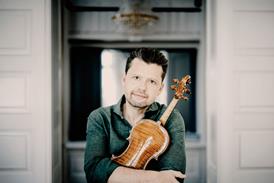
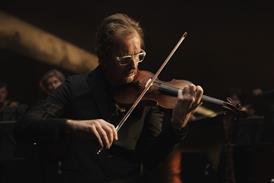
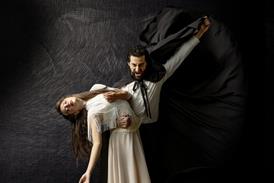
Music in the Burnhams is staging its own Monster Concert on 22 July 2026 as part of its Julius Benedict Festival. Alongside string players Adrian Bradbury (playing a Piatti Fantasy) and Chris West (playing a Bottesini Fantasy), the five-hour programme - including two intervals, picnic and cocktails! - will feature arias, ballads and a recitation (by Dudley O’Shaughnessy of Netflix Top Boy fame).
And so the spirit of Julius Benedict’s Monster Concerts, encouraging string players and singers to be heard one after the other on an epic scale, lives on!












No comments yet