




Ahead of the release of his EP The Voice of the Violin, the violinist discusses the contrasting characters of a 1694 Stradivari and a 1731 Guarneri ‘del Gesù’, and explains why experience has shifted his focus from virtuosity to communication
Discover more Featured Stories like this in The Strad Playing Hub
This recording centres on your relationship with two exceptional instruments, a Guarneri ’del Gesù’ and a Stradivari. What differences do you experience between them in terms of response, colour and projection, and how do those characteristics influence your interpretative decisions?
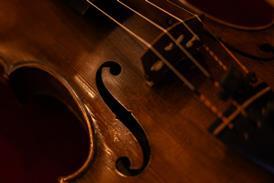
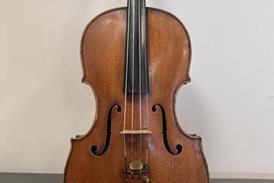
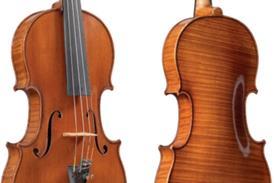
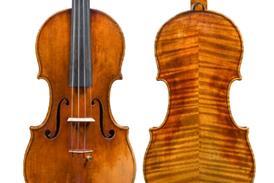
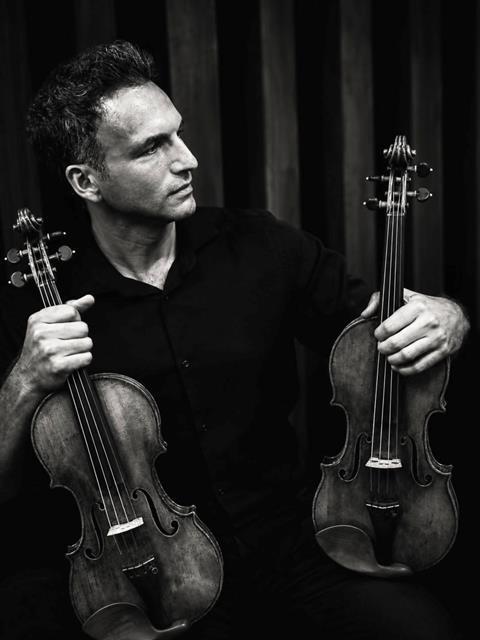
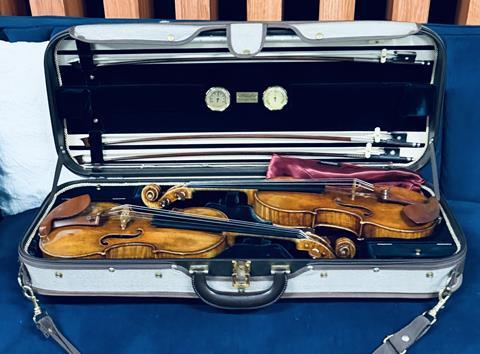
I think of them as two very different personalities, each with its own voice. My 1731 Guarneri ’del Gesù’ ’Stanley Goodman’ has an extraordinary intensity and depth, almost a human quality to its sound. There is a certain grain and complexity that I love, and it can move from incredible power to the most intimate expression.
The 1694 Stradivari known as the ’Bonvalot, Lady Margaret’ on the other hand, has a wonderful transparency, elegance, and clarity. It invites a different kind of musical expression.
What fascinates me is that neither instrument dictates how I should play. They constantly challenge me to listen differently and discover new possibilities. I’ve even shared this exploration with audiences through Facebook and Instagram challenges, inviting people to guess which violin they’re hearing.
And of course, finding the right bow is almost another adventure in itself! Sometimes you feel you need a little magic wand, perhaps Harry Potter’s, to find the perfect combination. The relationship between a violin and its bow is incredibly intimate, and even a small change can transform the way an instrument speaks.
The EP spans works by Bach, Ysaÿe, Milstein and Massenet, repertoire that places very different demands on the violinist. Did you find yourself gravitating towards one instrument or the other for particular pieces, and if so, why?
Yes, absolutely. For Bach and Ysaÿe, I gravitated towards the 1694 Stradivari. I was particularly drawn to its clarity and transparency, which allow the different voices and layers of the music to emerge.
For Milstein’s Paganiniana, I chose the Guarneri ‘del Gesù’. It has an extraordinary directness and intensity that I felt suited the virtuosity and character of the piece. But I never wanted it to become simply a demonstration of technique. For me, virtuosity should always serve the music.
Massenet’s ’Méditation’ from Thaïs was another world altogether. I wanted to explore the warmth and intimacy of the Guarneri, allowing the musical line to unfold naturally.
Ultimately, it’s about finding the right conversation between the instrument and the music. And for the bonus track, I’ll leave it to listeners to guess which violin I chose!
You describe The Voice of the Violin as an exploration of how a solo violin can evoke an entire orchestral world. What technical and musical approaches do you use to create that sense of breadth and dimension when performing alone?
That’s really at the heart of this project. I’ve always been fascinated by how much a single violin can communicate. It can sing like the human voice, imitate a bird, create rhythm and harmony, and suggest an entire orchestral texture.
It requires a great deal of imagination. You have to think beyond the notes themselves, almost as if you’re conducting an orchestra, hearing the different voices and how they interact. But ultimately, technique is only a means to an end. I don’t want listeners to think about how much one violinist is playing. I want them to forget there’s only one instrument and become immersed in the musical world.
That’s also why I wanted the recordings to remain as natural and unedited as possible. I’m much more interested in preserving the spontaneity and emotional honesty of a performance than achieving an artificially perfect result. Music is a human experience, and sometimes a little imperfection is precisely what makes a performance come alive.
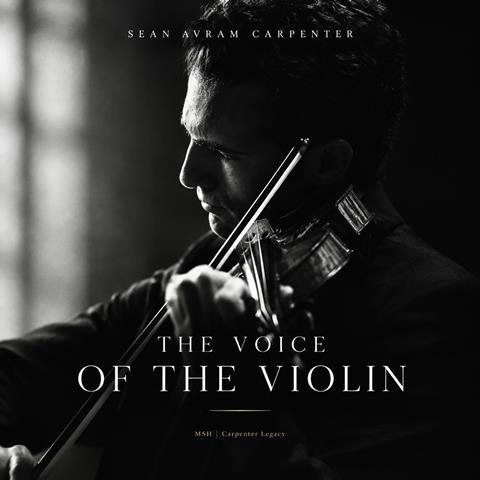
At 45, you speak of entering a new artistic chapter and finding greater depth in your playing. Looking back on your younger self, what aspects of musicianship do you feel can only be gained through experience, and how has your relationship with the violin evolved over time?
I think one of the greatest misconceptions about classical music is that artistic development has an expiration date. We spend so much time celebrating young prodigies that we sometimes forget musicianship continues to evolve throughout a lifetime.
When I was younger, I was perhaps more focused on the physical and technical aspects of playing. With experience, your priorities change. You become less interested in proving what you can do and more interested in communicating something meaningful. You begin to appreciate the weight of a single note, the importance of silence, and the emotional meaning behind a phrase.
At this stage of my life, I feel I’m entering a particularly exciting artistic chapter. With major collaborations ahead, including two projects with the renowned conductor and composer Dirk Brossé, I felt it was important first to return to something much more intimate: the solo violin.
With The Voice of the Violin, I wanted to rediscover just how much one instrument can express on its own. For me, it’s not about demonstrating what the violin can technically achieve, but about exploring what it can make people feel.
Perhaps that’s what changes most with experience: you become less interested in showing everything you can play and more interested in saying something meaningful through the music.
Photos courtesy MSH | Carpenter Legacy
Find the EP here and at www.seanacarpenter.com












No comments yet