










The Swiss-Italian cellist speaks about his recent competition victory ahead of release of his debut album, Temperamento
Discover more Featured Stories like this in The Strad Playing Hub
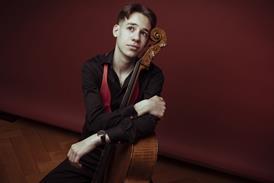
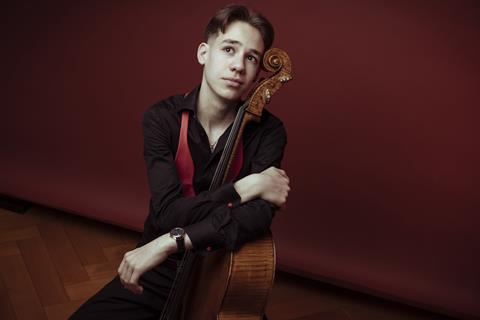
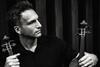
At the age of 16, Swiss-Italian cellist Lyam Chenaux was named the winner of Les Prodiges 2026, a French talent programme watched by 2.8 million viewers on France Télévisions.
Off the back of his competition victory, Chenaux has recorded his debut album, featuring music by Falla, Albéniz, Cassadó, along with Ravel, Glazunov, Shchedrin, Fauré and Piazzolla in a tribute to Spanish music. The album, entitled Temperamento, will be released on 27 November on Warner Classics.
Tatiana Korsunskaya accompanies Chenaux on piano, while Gautier Capuçon joins Chenaux for duet arrangements of Schubert and Shostakovich, and guitarist Thibaut Garcia features on Albéniz’s Chants d’Espagne.
Chenaux began playing the cello at the age of five. Currently studying with Thomas Grossenbacher at the Zurich University of the Arts, Chenaux has enjoyed competition success, including at the 2025 David Geringas International Cello Competition and the Young Musician Competition in Tallinn, Estonia. He was selected to join the Soloist Academy at the Verbier Festival in 2026.
Chenaux spoke with The Strad about his competition victory, as well as the influences behind his new album, and what it was like to play with acclaimed musicians Capuçon and Garcia.
How did your victory in Prodiges have an effect on launching your career? What was your most memorable moment from the competition?
This victory helped me in a lot of ways. Of course, the main thing is that it gave me visibility on social media and on the internet, which is a very important thing in today’s classical music world. Promoters and festivals also started contacting me about concert bookings, which had never happened to me after winning competitions previously. Suddenly, I was stepping onto much bigger stages and playing for new audiences.
Winning this prize also made me lucky enough to record my debut album with the prestigious label Warner Classics, and the album announcement alone gave me a lot of visibility and real credibility in the professional music world.
The most memorable moment for me was when my victory was announced, I was very emotional – and also the incredible feeling of playing with a full symphony orchestra, realising how much this could change my life.
Tell us about your Spanish-influenced album, Temperamento. Why did you pick this theme and choose this repertoire for your debut album?
I have always felt Spanish-inspired music differently. Even though I am not Spanish, I feel this music deeply in my heart. I feel something special when I play it, there is so much fire, rhythm, and contrast between joy and nostalgia and many other emotions, and I want the listeners to feel that sparkle when they listen to my album.
I also wanted this album to be my ’business card’. Therefore, it reflects my personality, and I think this is why this repertoire suits me so well.
The name came from Tempérament in French, which in Spanish translates to Temperamento, a word that describes perfectly the album… and me! I did not necessarily want to record ‘standard’ repertoire due to my age, as I know that in ten years I would probably not be so happy about this album if I recorded the big, famous cello concertos or sonatas right now.
With pieces by composers like Manuel de Falla or Gaspar Cassadó, I felt I had enough freedom to bring my own voice. I will leave the great classical cello staples for (hopefully) upcoming albums.
Gautier Capuçon features on two cello duets on your album. What was it like working with a cellist of such status, and what did you learn working with him?
I have to say that I was extremely lucky to be able to record duos with him. It is a big honour for me to share two pieces with him on my very first album, including the famous Prelude of the Five Pieces by Shostakovich and a unique and rare arrangement from the Schubert sextet.
During the recording, I learnt so many things from him, especially the way he approaches the microphone and records the pieces – how he projects the sound, manages the pacing and keeps the energy take after take. He was also giving me advice and thoughts on my playing, on phrasing for example, which was very generous of him.
This was overall an amazing experience, and I think that I can only be thankful to him for everything that he has done for me. But it wasn’t only him, because the day when we recorded together, many people working for Warner Classics came to the studio to listen and support us. It was a little bit crazy for me to finally meet all those people working behind the famous recordings of this label, and everyone made me feel completely at home.
Thibaut Garcia also features as a special guest. Tell us your thoughts on the pairing of cello-guitar instrumentation.
It was also amazing to work with the world-class guitarist Thibaut Garcia, whom I had previously admired when I was a child. I thought, alongside my friends and the people working at Warner Classics, that this piece by Isaac Albéniz called Córdoba would be beautiful with a guitar, especially since it was originally written for piano and is so deeply rooted in the Spanish guitar tradition. We asked Thibaut Garcia and he immediately said yes for the recording, for which I am very grateful.
This cello-guitar instrumentation is not so often played in chamber music, which is quite unfortunate because the two instruments melt together very well. On a musical and technical level, you have to adapt your sound: the cello has to be very clear and intimate so it doesn’t cover the guitar, while the guitar brings an incredible rhythmic pulse and harmonic colour. It was a truly memorable experience for me to record with him.
Lyam Chenaux’s debut album, Temperamento, is out now on Warner Classics.










No comments yet