







Ahead of a world premiere on 16 January with Guy Johnston and the BBC Symphony Orchestra, the composer shares his insights behind his new five-movement work
Read more Featured Stories like this in The Strad Playing Hub
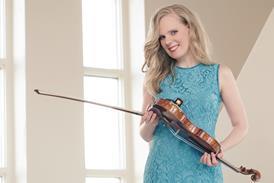
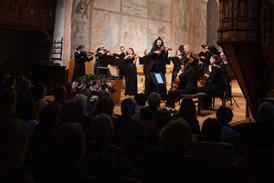
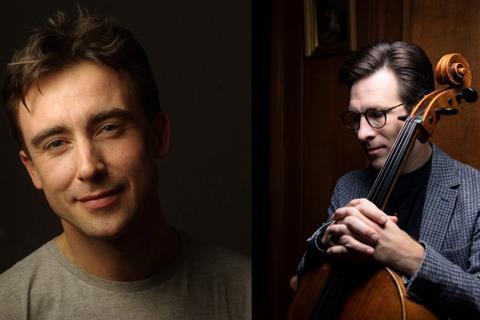
On 16 January 2026, Joseph Phibbs’s Cello Concerto will receive its world premiere performance by Guy Johnston with the BBC Symphony Orchestra, conducted by Clemens Schuldt at London’s Barbican Hall.
Phibbs is aiming to bring out ’Guy’s extraordinary expressive qualities as well as his dazzling technical prowess’. The concerto is in five movements, the first and last scored for cello and strings only.
The concerto appearance is part of Johnston’s wider cello odyssey to record the major British cello repertoire. It follows the release of the Bliss Cello Concerto with the Royal Liverpool Philharmonic Orchestra on Onyx Classics in July 2025. Johnston has also recorded Tavener’s The Protecting Veil with Britten Sinfonia, set for release on Signum in 2026.
Phibbs spoke with The Strad about this latest installment in British cello concerto repertoire:
What was the initial spark or inspiration behind writing this Cello Concerto, and how did that idea evolve during the composition process?
The cello was my main instrument as a child. I’ve always loved much of the core repertoire, but it was only after discovering the three solo suites by Britten - which came as a revelation - that I felt inspired to try my hand at writing for the instrument.
By good fortune Guy commissioned a sonata in 2021, and after the premiere I suggested the idea of a concerto. I’m a huge fan of Guy’s, so was naturally delighted when he agreed. The process writing the sonata proved a big help when tackling the concerto - partly the advantage of knowing Guy’s playing intimately at that point, but also having discovered an approach to the instrument that I felt was in some way personal.
The concerto is structured in five contrasting movements, from Invocation to Vocalise. How did you conceive this architecture, and what narrative or emotional journey does it represent?
I first planned to compose a concerto in four movements, although over time these became five. As with many of my works, each movement has its own distinct character and mood, though one which forms part of an overall design.
The two outer movements are scored for cello and strings alone, and could be heard as an introduction and coda to the remaining three movements, which conform to a traditional concerto scheme (fast-slow-fast). These are Aubade - upbeat and energised - followed by Elegy - reflective and at times impassioned - and Notturno, a dramatic and restless dialogue between the soloist and orchestra.
The final Vocalise, simple and lyrical, ends the work on a note of resolution.
You explore the cello’s full range, from its deepest tones to its soaring upper register. Which movement do you feel most fully captures the instrument’s character, and why?
The long fourth movement probably covers most ground in this respect, with fast music scurrying in the low end and lyrical music at the top. While I love the classic upper register, I didn’t want to overlook the richness and depth of the G and C strings.
Read: Sentimental Work: Guy Johnston
Read: Premiere: Joseph Phibbs on his new string quintet
Read more Featured Stories like this in The Strad Playing Hub












No comments yet